

Amid new materials, smart technologies, rapidly evolving European regulations, and circular models, the sector is undergoing profound transformation. We discussed this with Carlo Branzaglia (Bologna Academy of Fine Arts), Paola Fabbri (University of Bologna), Stefano Farris (University of Milan), and Paolo Tamborrini (University of Parma and Turin Polytechnic).
Once an element designed for protection and containment, packaging has become a field of experimentation where materials research, technological development, design and new consumption models converge. In this context, discussing packaging innovation means addressing many directions: from material transformation to smart technologies, right through to circular economy models. European regulations are being introduced at a rapid pace, often in non-linear directions, while companies are caught between rising costs, aesthetic expectations, and legal obligations. And design, historically a mediator between technology and the market, must translate all these requirements. A complex set of trajectories that are redefining the very role of packaging within product-service systems. To understand which directions to take, we have gathered four perspectives: Carlo Branzaglia, lecturer in Design Systems at the Academy of Fine Arts in Bologna and member of the Executive Board of ADI (Association for Industrial Design), whose research focuses on the relationship between design and production chains; Paola Fabbri, professor of Materials Science and Technology at DICAM – the Department of Civil, Chemical, Environmental and Materials Engineering at the University of Bologna, where she specialises in materials for sustainable packaging and industry-applied research; Stefano Farris, full professor of Food Packaging at the University of Milan; Paolo Tamborrini, full professor of Design with dual affiliation at the University of Parma and the Polytechnic of Turin, scientific director of the Innovation Design Lab and chair of the degree course in Sustainable Design for the Food System.
Materials: amid regulatory evolution and new research trajectories
One of the main areas of innovation concerns materials, at the heart of a shift driven by both scientific research and recent European directives. As Paola Fabbri points out, recent years have seen a rapid shift in priorities: “The transition from Horizon 2020 to Horizon Europe (the European Union’s framework programmes for funding research and innovation, ed.) marked a profound break: terms such as ‘bio-based’ or ‘organic’ have disappeared from official documents, replaced by ‘recycled’ and ‘recyclable’, in a paradigm shift that has left many industrial investments without a regulatory framework. The problem is not trivial: terms such as ‘bio-based’ have a precise, analytically measurable meaning, verifiable, for example, through carbon footprint analysis. Recyclability, on the other hand, depends largely on the infrastructure available in a given area: a material that is theoretically recyclable in Germany is not necessarily so elsewhere. We have created a system of very little clarity,” continues Fabbri. “I am thinking of the term ‘bioplastic’: overused and misinterpreted, employed in a deliberately vague manner.”
Against this backdrop, EU Regulation 2025/40 (PPWR), the Packaging and Packaging Waste Regulation, introduces stringent targets to reduce, reuse, and improve the recyclability of packaging, and obligates companies to rethink their packaging systems. The risk, however, is that this regulatory push will be perceived as a constraint rather than an opportunity.
On the research front, the main shift concerns single-material packs. “These designs, which predominantly use a single polymer with additional layers reduced to a minimum, represent the most effective approach to increasing the recycling rate, replacing multi-layer structures that are difficult to separate,” explains Stefano Farris. This is the most effective approach to increasing recycling rates, replacing multi-layer structures that are difficult to separate. Alongside this strand, the development of materials from alternative sources continues. “We can obtain cellulose fibres from residues of the agri-food industry, such as beer, coffee or cereals, but also from natural biomass such as Posidonia oceanica or common reed,” adds Farris. These solutions fit within a circular economy framework, with the aim of reducing the use of virgin resources and repurposing waste materials.
Beyond substitution: the limits of ‘alternatives’ to plastic
Meanwhile, there is a growing need to move beyond a simplistic view based on direct substitution. “Talking about alternatives to plastic without technical expertise,” observes Fabbri, “means operating on an emotional level. To act effectively, you have to understand the processability, rheology and manufacturability of materials: parameters that cannot be ignored simply because of current trends.”
The most obvious example concerns paper. Often cited as the natural substitute for plastic, it has significant limitations in its barrier properties against water vapour and gases, reducing its effectiveness, particularly in food packaging. To compensate for these shortcomings, laminations and coatings are used, which compromise the logic of single-material design. Many materials perceived as sustainable have concrete performance limitations, and the resulting hybrid solutions, whilst improving certain characteristics, often complicate recycling processes.
In this context, innovation primarily concerns the ability to use existing materials more consciously to optimise performance for specific applications (food, cosmetics, industry).
Active and smart packaging: new functions for preservation and control
Alongside the development of materials, packaging is playing an increasingly active role thanks to the integration of advanced technologies. One key direction is active packaging: packaging that interacts with the package’s internal environment, for example, by absorbing oxygen or releasing antimicrobial agents. These solutions help extend product shelf life and improve food safety by influencing storage conditions. They can be integrated as additives within the polymer, as thin layers applied to the surface, or as physical elements inserted into the packaging. Alongside these is so-called intelligent packaging, based on sensors and indicators: “Systems capable of monitoring parameters such as temperature, freshness or the presence of gases, providing real-time information on the product’s condition,” explains Farris. “Time-temperature indicators, for example, track a product’s thermal history throughout the supply chain; freshness indicators change colour depending on the product’s condition.”
Despite their potential, the large-scale adoption of these solutions remains limited. “The main obstacles relate to costs, the impact on the consumer and the management of responsibilities along the supply chain,” adds Farris. This point is crucial: if an indicator signals a break in the cold chain, who is to blame? Until a shared answer to this question is found, the adoption of these technologies will remain limited.
Connected packaging: amid digital and traceability
Another area of innovation is the integration of digital technologies, which transform packaging from a passive object into an active node in an information network. QR codes, RFID and NFC systems provide access to information on traceability, authenticity and associated services. According to Farris, “IoT technologies enable packaging to communicate in real time throughout the supply chain”. More recently, integration with artificial intelligence systems is opening up new possibilities: from predicting product deterioration to optimising logistics, and from analysing sensor-collected data so as to improve the design of the materials themselves in a continuous feedback loop.

Designing beyond slogans
Packaging design is also undergoing transformation, in which technological drivers must constantly contend with “an increasingly diverse user sensibility in terms of usage contexts, multi- and intra-cultural modes, accessibility and inclusion,” says Carlo Branzaglia. “Sustainability is no longer an optional ethical add-on but a constitutive dimension of the project.”
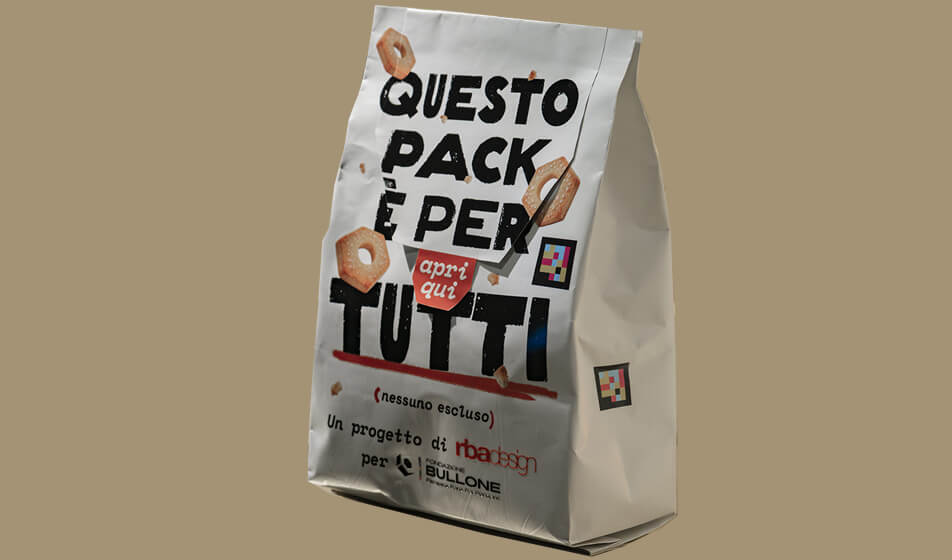
Design has always played a central role in building brand identity. “It is no coincidence that several of the leading branding agencies, both nationally and internationally, have their roots in packaging design,” adds Branzaglia. “But the competitive landscape has changed profoundly. The proliferation of brands, the massive presence of private labels, and the emergence of brands originating from the service sector rather than manufacturing: in this crowded landscape, packaging is becoming an increasingly sophisticated tool for differentiation.”
Added to this is an ethical dimension that poses an educational challenge. “Designers must become a ‘link’ between materials research and communication, learning to understand technical properties in order to convey honest and accurate messages,” explains Fabbri. “The designer,” adds Branzaglia, “is increasingly a facilitator within the sector, capable of generating engagement and awareness among the various stakeholders.” The challenge today is to make complexity understandable without reducing it to slogans.
Circular systems and models: networking to change scale
Innovation in packaging is not just about the product but about the system in which it operates. Models based on reuse require dedicated infrastructure and sector-wide involvement. Refillable packaging, returnable containers, and distribution systems with container collection: these solutions already exist but fail to scale because there is often a lack of collection points, verification systems, and agreements between manufacturers and distributors.
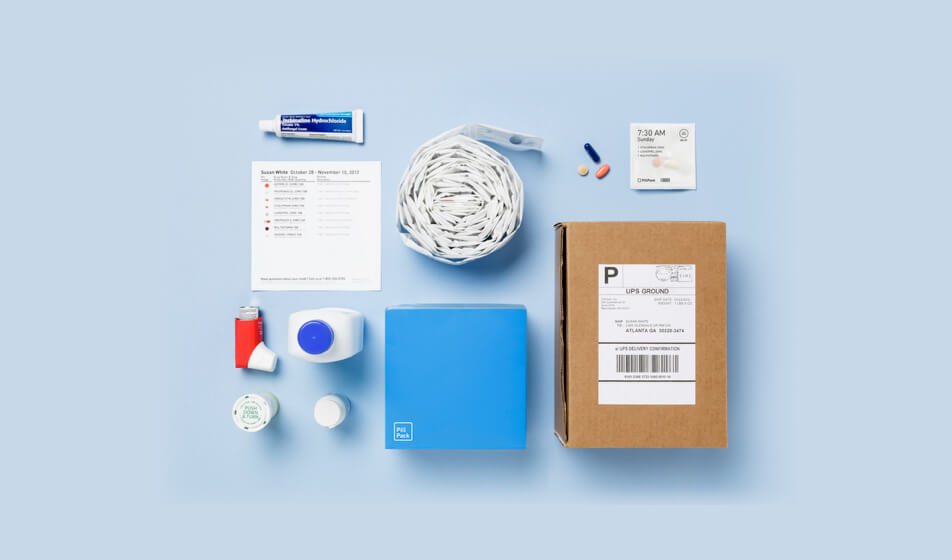
“There are examples that demonstrate how systemic innovation is possible when there is a willingness to build relationships among different stakeholders in the local area,” explains Paolo Tamborrini. “This is the case with PilPack, a medication dosing management system developed by IDEO for Amazon: not just a simple pack, but a system that connects the patient, the doctor and the pharmacy.” Tamborrini emphasises the need to account for differences among design challenges, where diversity also encompasses accessibility – in physical, mental, cultural, and behavioural terms. In an ageing society, attention to those with functional limitations is not only an ethical imperative but also a multiplier of design quality: what is necessary for some proves useful for everyone.
Printing as a hub for sustainable packaging
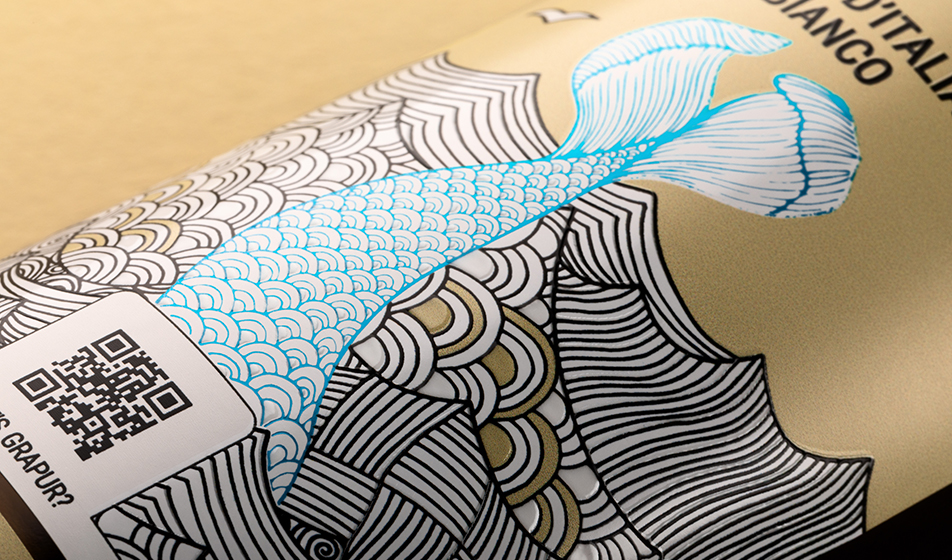
The role of printing and finishing processes emerges as a cross-cutting issue spanning materials, design and industrial supply chains. Inks, varnishes, adhesives and surface treatments are essential to defining packaging performance and have a significant impact on its recyclability, even when the substrate is designed according to single-material principles.
From a technical perspective, the sector has widely adopted lower-impact solutions, such as water-based inks, low-migration UV systems, and more flexible digital printing technologies to reduce waste. Graphic and technological choices are intertwined with increasingly stringent material constraints, requiring an integrated design approach in which visual communication and materials engineering must engage in constant dialogue.