

From adopting innovative airless technologies to pioneering the use of plant-based polymers: in Lodi, packaging design is a multidisciplinary process in which technology meets human sensitivity, transforming every container into an active component of the formula.
Over to the brands
There is a precise moment when a cosmetic preparation ceases to be merely a mixture of extracts, oils and fragrances and becomes a finished product, ready to meet the market and the consumer’s hands: it is the moment it meets its container. For L’Erbolario, this is not simply an end-of-line phase or a purely aesthetic choice dictated by marketing laws, but rather a complex matter of applied chemistry. The philosophy of the Lodi-based brand, founded in 1978 as a small artisan herbalist’s shop thanks to the vision of Franco Bergamaschi and Daniela Villa and now a leader in phytocosmetics with a presence in 45 countries, is based on a principle as simple as it is technically challenging: packaging is, to all intents and purposes, a functional element of the product system. Not a mere accessory, but a meticulously designed chemical-physical barrier to ensure the stability of plant extracts that are often extremely delicate and susceptible to oxidation and environmental fluctuations. This central role of the material demands millimetre-level precision, born of a constant multidisciplinary approach. This is a technological and human ‘behind-the-scenes’ story that we have explored thanks to the contribution of those who, on a daily basis, manage the balance between creative drive and industrial rigour: Giulia Baudi (Marketing Product Manager), Clara Sasso (Regulatory Affairs Manager) and Erika Senzalari (Senior Packaging Quality & Development Specialist). From their words, it is clear that managing these collisions between physics and chemistry requires such a degree of human control that it explains why, at the Lodi headquarters, artificial intelligence has not (yet) been incorporated into the design processes. In a field where ‘machinability’ must go hand in hand with impeccable colour rendering on bio-based substrates, the expert’s eye remains the most reliable algorithm for ensuring that every bottle runs smoothly on the automated packaging lines.
Innovation and identity
It is precisely on this balance between material innovation and brand continuity that the L’Erbolario team illustrates how packaging design has evolved to adapt to market changes without ever losing its soul: “Over time, our packaging design has evolved primarily in response to technical, production and efficiency requirements, as well as aesthetic value. We have worked on optimising formats and dimensions, standardising to facilitate storage and logistics, and reviewing weights and materials to ensure the required performance (strength, product protection, compatibility with the product and packaging lines),” they explain. “At the same time, we have introduced and are continuing to introduce more sustainable materials (bio-based and recycled), whilst always verifying their compatibility with industrial processes, long-term stability and aesthetic appeal, without compromising perceived quality. Printing and decoration technologies have also evolved, allowing for greater repeatability and control over the result (reproducible colours, resistance to products, light and wear), whilst seeking to maintain consistency across different suppliers and production batches. The maintenance of visual identity has been ensured through the standardisation of key elements: Pantone colours, structure and graphic design. The approach is therefore evolutionary, controlled and subject to continuous improvement: every change is tested (stability, transport, machinability) and validated before introduction, so as to adapt to market changes whilst maintaining technical and visual consistency over time.”
The physics of protection: the excellence of the TAG system
Delving into the technical details, the safety of a cosmetic product is inextricably linked to the performance of its primary container. A striking example of this “physics of protection” is the TAG (Techno Airless Glass System). This technology was awarded the Best Packaging prize by the Italian Packaging Institute for its innovation, and L’Erbolario has integrated it to combine the chemical inertness and purity of glass with the advanced functionality of an airless system. The mechanism guarantees total product protection, facilitates dispensing, and drastically reduces residue: a recovery rate of over 95% allows the consumer to enjoy the formulation’s freshness right up to the very last application.
The vision on PPWR
On stability and the new regulatory challenges set by the European PPWR, the team’s vision reflects a proactive approach: “Under European legislation, a cosmetic product is considered a cosmetic product only once it has been packaged. This principle underscores that packaging is, to all intents and purposes, an integral part of the product, and its characteristics are fundamental to ensuring its safe use. The new Packaging Regulation sets out various objectives, some of which are particularly challenging for companies in the cosmetics sector. However, we fully support these goals, as they aim to promote a circular economy based on the reuse and recycling of packaging by 2030. We closely monitor every regulatory update and, although many of the implementing provisions are not yet available, maintain close collaboration with selected suppliers to develop shared strategies and ensure we are prepared for all upcoming deadlines. Furthermore, for years we have prioritised, where possible, the use of recycled plastics or those derived from renewable sources, as well as single-material packaging solutions, which are easier to recycle.”
The challenge of polymers: Bio-based and Post-consumer Recycling
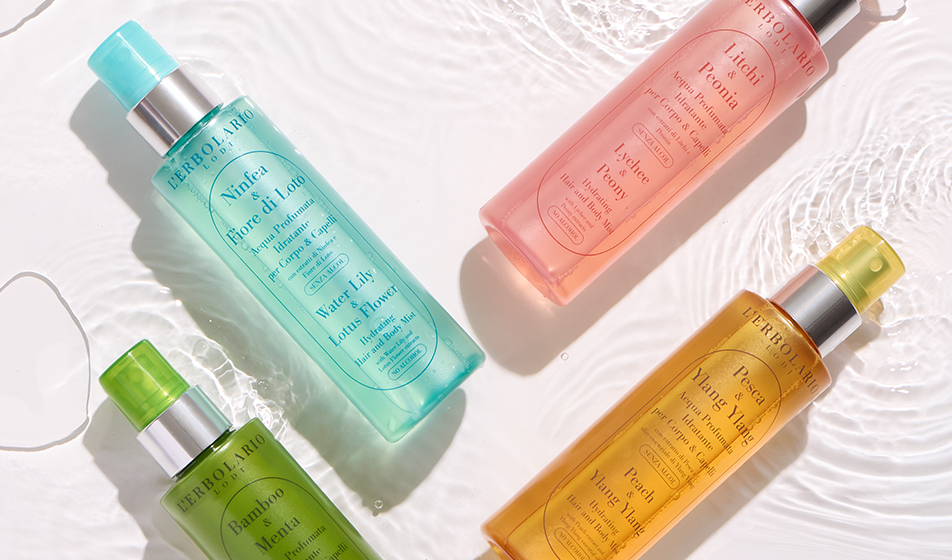
Commitment to genuine sustainability drives a relentless search for technologies that enable us to source high-performance, low-impact packaging. A cornerstone of this strategy is the use of Green PE, a material derived 100% from sugarcane – and therefore from a plant-based, renewable source – used primarily for tubes. This is complemented by Green PET, derived 30% from the same source, used for bottles. Innovation extends beyond renewable sources to embrace the circular economy through recycled plastics. The company has introduced R-PET, derived from the recycling of post-consumer plastic bottles, for bottles in the new ranges, alongside R-PE for tubes and R-PP for cream jars. The technical challenge, in this case, is to ensure that dimensional stability and chemical compatibility are not compromised by the heterogeneous nature of the recycled material.
But how do you reconcile this material complexity with the need for a perfect aesthetic finish? “Attention to detail has always been the driving force behind every packaging choice for us, from the shape to the selection of colours, finishes and materials. In the current climate, where we increasingly favour sustainable packaging made from recycled materials, it is more challenging to achieve consistent colours and finishes across different substrates. Nevertheless, we don’t give up and rely on our suppliers, who act as true partners in this relentless pursuit of perfection that has always set us apart.”
FSC paper and the primacy of traceability
Another key aspect concerns cellulose-based materials. L’Erbolario was among the first Italian cosmetics companies to use exclusively FSC® (Forest Stewardship Council®)-certified paper. This certification guarantees the proper management of forest resources and the traceability of the supply chain for all paper products: not only boxes, but also calendars, diaries, brochures, leaflets and catalogues. Of particular interest is the management of paper bags, made from wood sourced from sustainably managed forests and decorated exclusively with water-based inks. These bags are designed to be reused multiple times and are fully recyclable. Optimisation also extends to e-commerce logistics: the use of two types of filler paper has enabled the company to reduce the amount of paper used for order preparation by 70% between 2022 and 2025.
Looking to the future: Refillability and ‘Second Life’
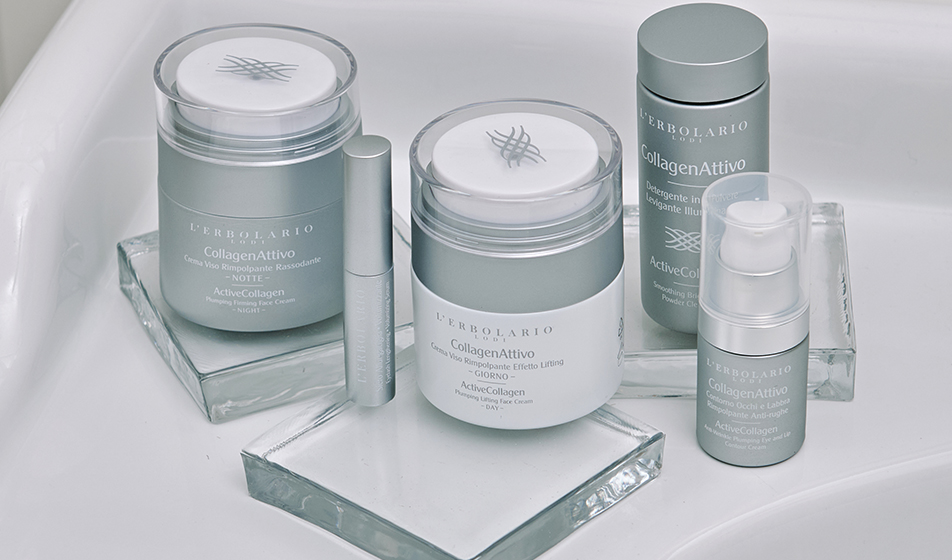
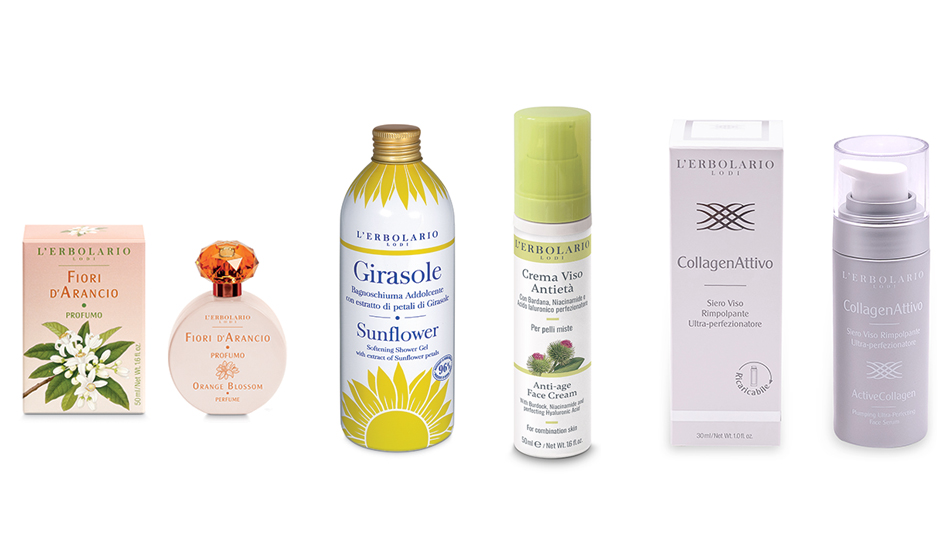
In addition to recycling, L’Erbolario is reducing material consumption by launching products with refillable packaging. Concrete examples include the face creams from the Collagen Attivo range, the Ecoricariche shower gel refills and the refills for scented wood fragrances. This choice not only reduces the environmental footprint but also enhances the primary packaging, making it more durable. Looking ahead to 2030, the Lodi-based team’s vision is one of uncompromising sustainability: “For reusable boxes, we are working on appropriate structural dimensions, the selection of high-performance paper materials and durable closure systems, and testing their integrity under varying transport conditions. Looking ahead to 2030, we hope to see widespread use of high-performance recycled materials and single-material solutions that combine durability, aesthetic quality and sustainability. This is a challenge that fully engages our research and development team, in collaboration with our suppliers, with whom we have developed solid partnerships geared towards these objectives.”