



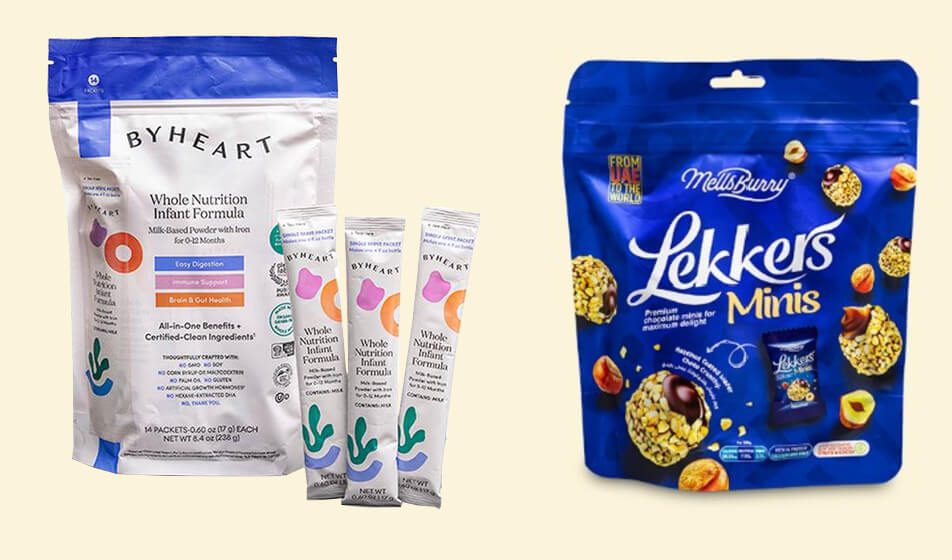
If there is one application printers should have packed into their growth suitcase right now, it is flexible packaging. It sits exactly where the market is moving: toward convenience, faster product launches, lighter logistics, stronger shelf presence, and more serious sustainability expectations. Flexible packaging is no longer a side conversation or a clever add-on. It is becoming one of the clearest ways printers can move up the value chain and become more important to their customers.
That matters for a very practical reason. Brands are no longer buying printed material alone. They are buying performance. They want packaging that protects the product, looks beautiful, runs efficiently on filling lines, survives distribution, supports recycling and waste-reduction goals, and increasingly carries smarter data. When a printer can help with all of that, the relationship changes. You are no longer just a supplier. You become part of the customers’ growth strategy.
We know that the demand for sustainability has become a design and engineering challenge, not just a marketing headline. The market is moving toward mono-material structures, lighter-weight constructions, more recycled content, and formats designed for easier recovery. But the real story is more sophisticated than replace plastic with paper or just use less material. Current award-winning packages show the direction clearly: recyclable single-web pouches, mono-material retort structures, redesigned caps that use less plastic, and paper-based formats that still depend on barrier technology to do the real work. The message is a good one for printers: sustainable packaging is becoming smarter packaging.
That change is especially important in Europe. For Italian printers and converters, the pressure is not theoretical. The EU Packaging and Packaging Waste Regulation is already in force and will generally start applying in August 2026, which means recyclability, composition, documentation, and packaging claims are moving closer to the center of every customer conversation. That is why flexible packaging growth opportunities will not go only to the companies with the most interesting and graphically-rich samples. It will go to the companies that can explain structure, barrier, end-of-life logic, and production choices with confidence.
Another demand om the rise is premium convenience. Flexible packaging is no longer confined to simple commodity pouches. The newest work in the market shows a remarkable combination of function and visual appeal: box-like pouches, spouted retort packs, zipper and Velcro-style reclosures, matte tactile finishes, laser scoring, windows, metallic effects, and structures designed to stand beautifully on shelf while still reducing weight and storage volume. That is a wonderful opening for print providers, because this is where graphics, structure, and brand experience meet. Great flexible packaging does not simply hold product. It sells product.
Agility is growing in importance, too. Brand owners are dealing with shorter product cycles, more SKUs, more seasonal and regional versions, multilingual packaging, and a growing need to test, launch, and adjust quickly. That is why digital printing in flexible packaging continues to gather momentum. It is still small compared with conventional production, but it is growing because it solves real problems: short runs, versioning, prototyping, personalization, and faster time to market. And for label printers in particular, flexible packaging is becoming an increasingly logical adjacent application. This is not a story about digital replacing everything else. It is a story about building a balanced production portfolio that can match the job to the right technology.
Then there is connected packaging, and this may be one of the most exciting developments of all. The shift toward 2D barcodes is turning flexible packaging into a much richer information carrier. Suddenly the pouch or sachet is not just a package; it is a gateway. One code can support point-of-sale, traceability, recall readiness, consumer engagement, authenticity checks, sustainability information, and future digital product passport workflows. For printers, that raises the value of placement accuracy, variable data control, code quality, inspection, and workflow discipline. In other words, the printed pack is becoming more intelligent, and that makes print more strategic.
But it also must be operational. Flexible packaging is shaped by automation, AI, and fast-change production logic. Packaging equipment suppliers and end users are dealing with the same pressures everywhere: labor shortages, shorter runs, greater SKU variability, rising quality expectations, and the need to reduce downtime. So, the conversation has shifted. The winning line is not necessarily the fastest line. It is the line that changes over quickly, holds quality consistently, captures data automatically, and helps operators solve problems before waste piles up. That should sound familiar to every printer who has ever tried to scale an application successfully.
So, what infrastructure should printers build if they want to offer flexible packaging with confidence?
Start with workflow, not hardware. A press is important, but flexible packaging is won or lost in the systems around the press. Estimating, prepress, color management, substrate profiles, approval workflows, repeat-order setup, and production scheduling all need to work together. If every repeat job feels like a brand-new science experiment, the business will struggle. The strongest flexible packaging operations are building workflow architecture that makes complexity manageable and repeatability normal.
Next, build material and converting infrastructure. Flexible packaging lives at the intersection of films, papers, coatings, inks, adhesives, lamination, slitting, and pouch-making. That does not mean every printer has to buy every piece of equipment on day one. It does mean every printer needs a plan. Who will laminate? Who will slit? How will barrier performance be validated? What happens when the customer wants a mono-material structure one week and a tactile paper-touch finish the next? The key is not owning everything immediately. The key is knowing how the structure gets built, tested, and delivered without guesswork.
Then build the compliance and quality infrastructure. In flexible packaging, a beautiful print sample is only the beginning. Customers increasingly need documentation, traceability, food-contact confidence, code verification, and audit-ready process control. Adhesives, coatings, and colorants may all matter in food-contact discussions. 2D barcodes must scan. Variable data must be right. Inspection systems must do more than catch obvious defects; they should help prove consistency. This is where printers can separate themselves very quickly. The company that can print, inspect, verify, and document is far more valuable than the company that can only print.
Do not forget the people in the infrastructure. Flexible packaging is too dynamic to depend on tribal knowledge alone. Operators, prepress teams, QA staff, and salespeople all need shared application understanding. The sales team should be able to ask smart questions about barrier needs, filling conditions, sealing, shelf life, and code requirements. Prepress should understand how structure and substrate influence color and registration. Operators need accessible training, embedded guidance, and support tools that reflect modern equipment, not manuals written for another decade. The best plants are not just building capacity. They are building confidence.
And here is the happy part: nobody has to pack the whole suitcase at once. Start with one market. One substrate family. One converting path. One compliance playbook. Maybe it is dry-food pouches, sachets for personal care, or short-run specialty packaging for premium brands. Build a repeatable offer, train the team, choose the right partners, and then expand. Flexible packaging rewards disciplined ambition. It is one of the few application areas where better technology, better workflow, better quality systems, and better customer conversations all reinforce one another. That is why flexible packaging feels so important right now. It aligns with nearly every major force reshaping print: sustainability, automation, product proliferation, data-rich packaging, premium branding, and the need for faster turnaround. For printers ready to invest thoughtfully, this is not just another application to add to the price list. It is a future-facing business model. And that is exactly the kind of thing worth packing for the journey ahead.