




When used effectively, AI today is a powerful tool capable of analyzing thousands of variables per second, synchronizing them to ensure consistent results and significantly reducing time-to-market.
Gemini, Claude, Copilot, DeepSeek and, above all, ChatGPT. Hands up anyone who doesn’t use a bot or an AI-based tool at least once a day. Whether we realize it or not, AI is now a fully-fledged part of our lives, beginning with our smartphones. According to ISTAT data (December 2025), the use of AI in Italian companies with at least 10 employees has doubled in just one year, rising from 8.2% in 2024 to 16.4% in 2025. According to a Microsoft report for LinkedIn, 75% of desk-based workers regularly use generative AI, and 78% of these users introduce their own personal AI tools into the office, often pre-empting company policies. In short, AI is no longer an experiment but a competitive necessity, and it is here to stay. Across all manufacturing sectors.
The introduction of AI – not just generative AI, but also in industrial sectors such as the labelling industry – is driven not by aesthetic preferences but by a structural need stemming from increasing workflow complexity and sharply reduced operating margins. In this context, AI facilitates a shift from a reactive, post-hoc approach to one of proactivity and strategic foresight. When used effectively today, AI is a powerful tool capable of analyzing thousands of variables per second, synchronizing them to ensure consistent outcomes and considerably speeding up time-to-market.
Smart labels
According to the data, the Italian labelling industry is viewing the introduction of artificial intelligence into its production processes positively, marking the shift from a traditional, analogue-based model to an advanced ecosystem centred on digital data management. According to Smithers’ white paper 5 Ways Generative AI Will Transform Packaging by 2030, the impact of AI is comparable to those events known as ‘generational disruptions’, such as the advent of the Internet in 1995, which radically break with the past because they do not merely improve an existing process (incremental innovation), but completely rewrite the rules of the game (radical innovation). In other words, AI is not just a new tool in the toolbox but an entity capable of wielding tools on our behalf, forcing an entire industrial supply chain to undergo a structural metamorphosis to avoid obsolescence.
And we are not just talking about the inclusion of smart physical components, such as RFID tags, in labels, but about the optimization of the entire production cycle through machine learning algorithms that allow systems to learn patterns from production data, improving performance without rigid programming by adapting dynamically.
This paradigm shift sees AI becoming a crucial part of the production process. That is why we can truly talk about a smart label that goes beyond being just a container for readable information, evolving into a key component of an integrated system that combines digital functionality and production optimization.
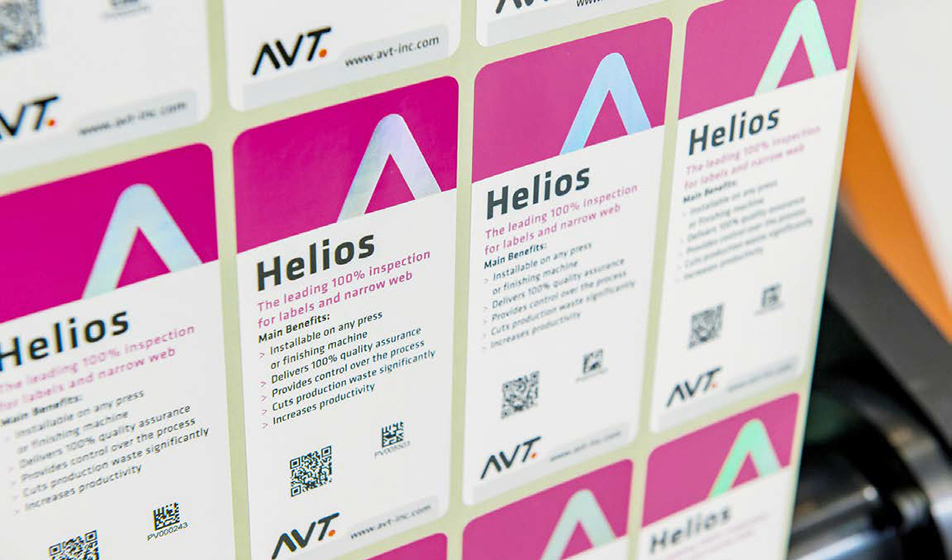
AI-Powered End-to-End Workflow
According to Spherical Insights, an American analytics firm, the Smart Labels market is projected to reach approximately $35 billion by 2030. This influence extends across the entire supply chain, from design and production to quality control, product traceability, disposal, and marketing. Generative Design enables the management of an increasing number of products by instantly adapting labelling and packaging to specific geographical regions, events, or individual consumers, thereby reducing graphic design times and the risks of plagiarism, while also responding to the market trend towards shorter, more personalized print runs. Machine Learning assists printing presses in ‘learning’ how to manage variables to enhance adaptive efficiency. With AI-based Smart Calibration systems, manual intervention, ink density, and cylinder pressure are minimized, resulting in labels generated through real-time data processing. Quality control no longer relies solely on a simple scan for imperfections or colour smudges; thanks to Deep Learning-based machine vision systems, onboard electronics can instantly correct colour drifts or registration errors, as well as ‘understand’ what they observe, distinguishing critical errors—such as an illegible DataMatrix code in the pharmaceutical sector—from acceptable aesthetic variations, like the natural grain on fine wine paper. This capacity to assess significantly reduces downtime and waste while ensuring full compliance with safety regulations.
Looking beyond production aspects, the smart label effectively acts as a bridge between the physical product and the digital realm. It is not merely paper and glue, but a vehicle for data that, through RFID, NFC, or dynamic QR codes, communicates with the entire supply chain—ensuring traceability, cold chain management, anti-counterfeiting, and disposal—and also engages the end consumer, turning packaging into an active marketing instrument. This applies even on a global scale.
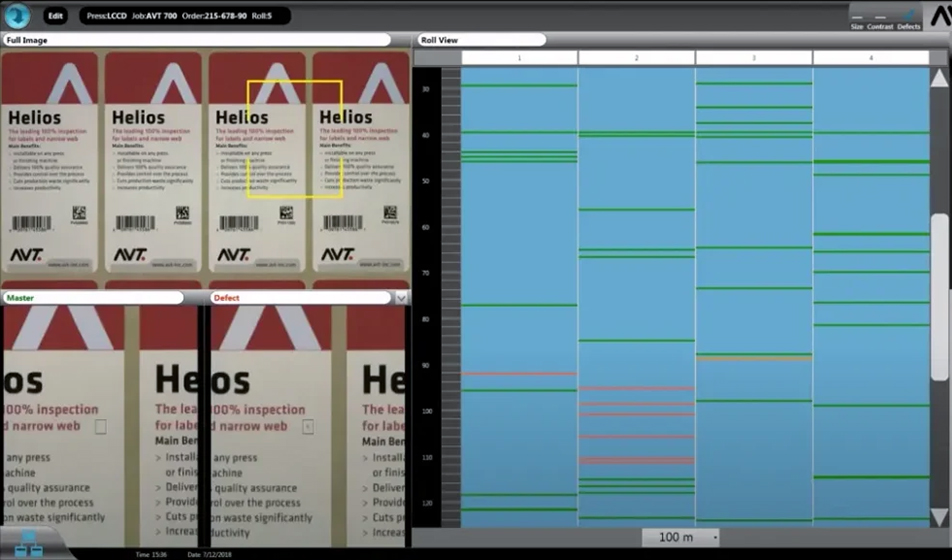
The eye that never tires: striving for absolute quality
One of the earliest and simplest uses of AI in the digital transformation of labelling is its application in inspection systems, which are evolving from a purely optical and electronic basis to a cognitive one. Until now, quality control has depended on statistical sampling or fixed-threshold vision systems, such as cameras that compare the printed label with a digital ‘master’ and flag even minute deviations. However, this method often produces false positives, causing production to stop due to minor variations mistaken for errors. The introduction of Computer Vision based on Deep Learning algorithms now enables overcoming these limitations: 100% of production is analyzed in real time with the machine’s true capability to discern. The key difference lies in managing acceptable variations. Consider natural substrates such as hammered, laid, or recycled-fibre papers, which inherently exhibit micro-variations in texture. While a traditional system might interpret a paper grain as a printing defect, an AI system trained with neural networks learns to recognize the substrate’s texture within that specific production context. Leading companies in the inspection systems sector, such as AVT in collaboration with Esko and ISRA VISION, have developed solutions that, for example, differentiate between an air bubble in a gold foil (a critical defect) and the natural porosity of paper. This ‘context learning’ process significantly reduces unwarranted machine downtime, elevating quality standards without sacrificing productivity.
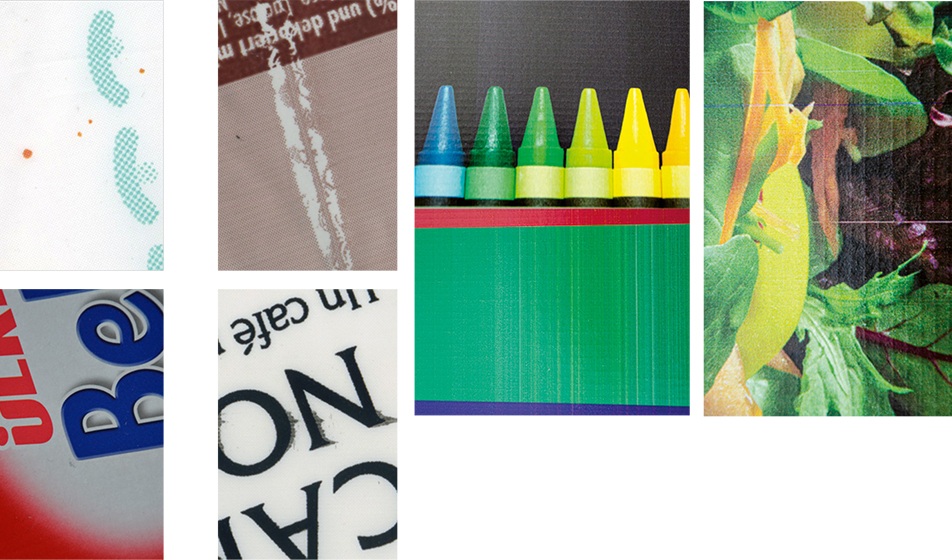
A clear example of this application is Bobst’s oneInspection technology. As detailed in the company’s international case studies, integrating AI allows for monitoring not only of graphics but also of the accuracy of finishing processes such as foil or UV varnish at speeds exceeding 100 metres per minute. This ensures even the smallest defect, down to 0.15 cm² with low contrast, can be detected. Testimonial evidence from leading converters operating globally, such as Marchesini Group, All4Labels, and MESH Automation, affirm that intelligent inspection has become the gold standard demanded by major brands in sectors like Life Science and Beauty. This helps mitigate the severe risks linked to product recalls: in these sectors, a label error is not merely an aesthetic flaw but can result in the recall of the entire batch, with costs potentially surpassing one million euros.
However, defect detection also has another significance: sustainability, which, with AI, can genuinely mean reaching zero waste. The previously mentioned Smithers white paper also emphasizes how predictive analysis enables action to be taken on colour errors or misregistration before the defect becomes visible to the human eye. This results in less waste and overall savings in substrates, inks, and energy. According to data from FINAT, the leading international association for the European self-adhesive label and related products industry, the label sector produces tonnes of initial waste each year: AI, serving as an early warning system, allows for the optimization of resource use, a core goal for brands that must consider their ecological footprint across the entire supply chain.
Finally, evidence from industry players such as Avery Dennison, a leader in self-adhesive labels and RFID technologies, highlights how computer vision is also essential for inspecting the smart labels themselves (RFID/NFC). AI not only checks that the tag is present but also analyses the structural integrity of the antenna integrated into the substrate, ensuring that the label’s functionality is not compromised during high-pressure printing and die-cutting.

The algorithm’s augmented creativity
The introduction of AI into labelling is reshaping the boundaries of graphic design, transforming the creative process from a purely manual activity into a collaborative effort between human intuition and computational power. It feels as though a century has passed since the experiments for an imaginary IKEA campaign for Patagonia carried out by Midjourney designer Eric Groza in 2023. The concept of Augmented Creativity does not suggest replacing the designer but evolving them into a supervisor of complex systems. In the McKinsey & Company report Generative AI: The packaging and paper industry’s next frontier, the 200 packaging industry executives surveyed argue that “generative AI has the potential to increase the economic impact of existing technologies by 15–40%, unlocking new levels of productivity in the ideation and design phase”, enabling a focus on creativity and significantly speeding up time-to-market. Tom Hallam, Project Director of Smithers’ Packaging Consultancy division, highlights how AI will enable “faster graphic and practical design (dimensions, shapes and materials), bringing products to market more quickly, especially for promotions or customizations”. Hallam is particularly considering “fashion and luxury brands [which can] create limited, if not unique, editions, where every label differs from the next, while maintaining colour and brand consistency guaranteed by the algorithm”.

The use of AI also extends to the more technical stages of pre-press and job optimization, automating repetitive tasks such as trapping, colour correction and format adaptation to leave more room for pure design. Esko, for example, already offers solutions such as Interactive Trapping, which, thanks to algorithms, analyses colour intersections and applies trapping automatically, or Dynamic Preflight, which scans incoming PDF files and automatically corrects resolution errors, missing fonts, or incorrect overprints before they reach the press. Schumacher Packaging, a German company specializing in the production of bespoke packaging in corrugated and solid board, has reported a 25% increase in efficiency thanks to this ecosystem, in which manual bottlenecks are increasingly reduced. Meanwhile, Hybrid Software’s AI-powered Matches scans company databases to find similar jobs already produced, comparing text, barcodes and images, so as to “avoid reinventing the wheel and ensure consistency between batches produced years apart or copying competitors”: in short, human creativity supported by technology to also reduce the risk of unintentional ‘citation’ or even plagiarism, a critical issue for designers.
It is no coincidence that the Grand View Research report, AI in Packaging Market Size & Share Report 2033, highlights the Generative Design segment as the primary driver of market growth, with a 37.2% share by 2024. This expansion is driven by AI’s ability to simulate finishes—such as screen-printed varnishes, foils, and embossing—with physical and hyper-realistic precision right within a digital environment. As McKinsey notes, this results in “design optimization for manufacturability”, reducing the need for physical print tests and samples, and thus conserving resources and improving the sustainability of the creative process. The outlook up to 2030 predicts a market where artificial intelligence will no longer be merely an “add-on module” but will become the core operating system of the entire labelling supply chain, based on vertical integration, with generative design blending seamlessly with production automation.
The machine that senses
The integration of AI into the core of the press room transforms production lines from passive mechanical systems into “aware” and adaptive entities. In the labelling sector, where profit margins are closely tied to minimizing downtime and optimizing substrate use, operational AI marks a significant step forward towards what is called “hyper-automation”. Central to this is Predictive Maintenance based on Edge AI, which—thanks to IoT sensors installed on critical machine components such as roller bearings, printing unit motors, and UV drying systems—analyses vibrations and temperatures in real time directly on the machine. Instead of adhering to a fixed maintenance schedule, the machine ‘senses’ wear and tear before faults occur during production, while also monitoring plate wear, humidity, and material tension loss. According to the Post-Drupa Technology Forecast for Print to 2034 report, this shift to smart monitoring is essential for saving companies thousands of euros per hour in productivity.
But AI also enhances the dynamic management of workflows. Diverse production runs and fragmented orders are no longer constraints: the algorithm can act as a logistics supervisor, organizing job scheduling and sequencing based on colour compatibility and substrate characteristics, minimizing make-ready times. As McKinsey notes in its report Generative AI: The packaging and paper industry’s next frontier, AI can generate “demand-driven supply chain optimization”, improving forecast accuracy and reducing inventory levels. For a label manufacturer, for example, in the Wine & Spirits sector, this means being able to manage both large orders and micro-runs for a boutique winery with equal efficiency. AI transforms the press room into a high-precision environment where every resource – energy, ink, paper – is utilized to its full potential.
And the human factor? Towards Artisan 5.0
Without succumbing to the fears that such a paradigm shift can understandably generate, the future of labelling is not shaped by the gradual replacement of humans but by their significant professional evolution: whereas automation in the past aimed to standardize output by removing the human variable, in practice AI today aims to enhance it, transforming those who utilize it into ‘orchestrators of complex systems’. According to the World Economic Forum report, Four Futures for Jobs in the New Economy: AI and Talent in 2030, 40% of the core skills needed for most job roles will need to be updated, with a strong focus on analytical thinking and human-machine interaction.
In the context of Italian label printing companies, this means that skills such as tactile sensitivity to paper or a keen eye for colour must be combined with advanced digital skills. It is no longer sufficient to understand the mechanics of the printing press; the artisan 5.0 must know how to train the algorithm. Let’s look at it this way: AI is not a replacement for our expertise but a powerful enhancer of professional abilities. As Michal Lodej, editorial director of FlexoTech, wrote back in 2021, “the true strength of AI lies in its ability to support the continuous expansion of human capability, whilst preserving the critical, creative and interpretative touch that only humans can provide”. AI may be able to produce mathematical perfection, but it remains our responsibility to continue printing the soul of the product.