

Extra virgin olive oil is as much a part of Mediterranean tradition as wine, but while in the world of wine the promotion of excellence has become part of mainstream culture, there remains plenty of scope here to communicate the value of the product. Furthermore, there is ample opportunity – and freedom from strict conventions – to experiment. We spoke to four Italian olive oil producers: Frantoio Abbatiello, Frantoio Gentili, Frantoio Muraglia, and Tenute Quattrò.
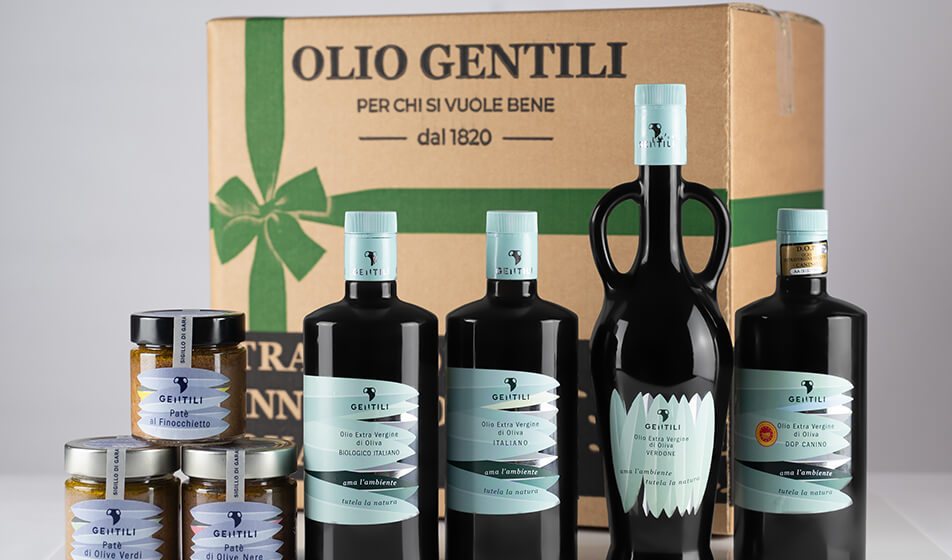
Behind the desire for a prestigious image of a quality product, there is often a generational shift that introduces new perspectives on work, as seen with Frantoio Gentili, now in its fifth generation of olive oil producers. Romolo Gentili explains: “In 2020, to mark our 200th anniversary, we decided to focus on our own oil – rather than just operating as an oil mill – as it has organoleptic qualities that make it not only a gastronomic excellence but also a nutraceutical product. We needed a suitable ‘outfit’ to convey this: the label design by Toni Traglia, featuring olive leaves with their shades of green and silver, is a way of expressing what we do and how we do it. In our packaging, we apply the same sustainability principles that guide our work: for the bottle, we’ve chosen a labelling system in which the label can be easily removed, leaving no plastic adhesive film on the glass to facilitate material separation. These may seem like small details, but they all add up to a product that is healthy and sustainable in every aspect. For transporting the bottles, we use compostable chips to ensure safety, but also to minimize environmental impact.”
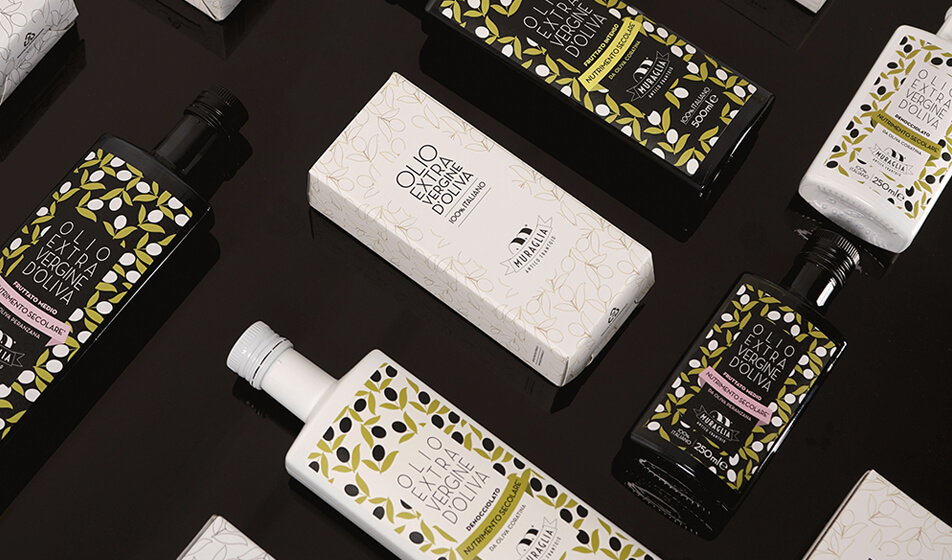
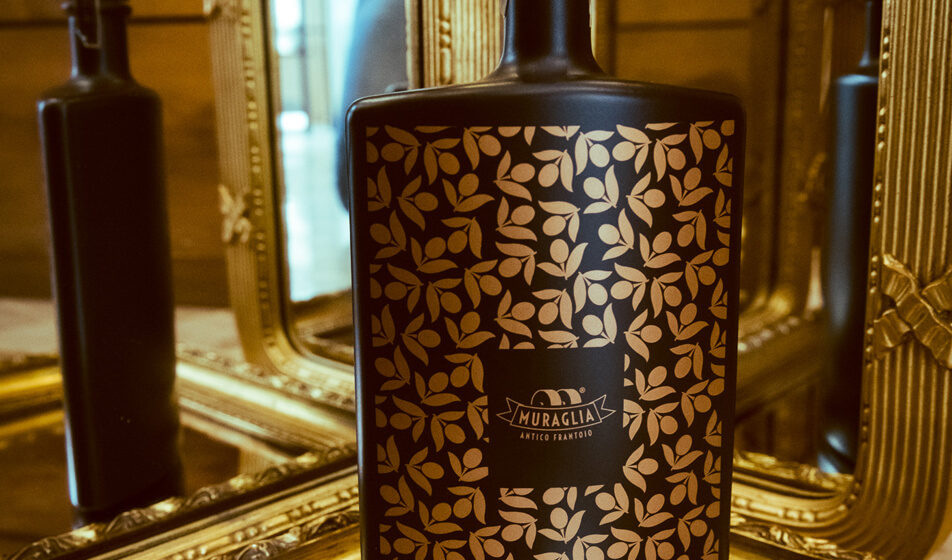
Frantoio Muraglia, a leading producer of Apulian olive oil based in Andria, also draws on five generations of experience. Savino Muraglia, Managing Director, explains: “Extra virgin olive oil is a living and extremely fragile product. High-end packaging must address a paradox: it must be aesthetically iconic yet protective in every technical respect. The oil’s worst enemy is photo-induced oxidation. Premium packaging must provide total protection (dark or opaque glass, or opaque materials such as ceramic). A high-end oil must not only be pleasing to the eye but also functional in use, with non-refillable caps and drip-proof seals. And touch matters as much as sight: the texture of a bottle foreshadows the structure of the oil it contains. The choice of container is not logistical, but strategic. Packaging varies to meet different consumer needs: gifts, daily consumption at the table and in the kitchen.”
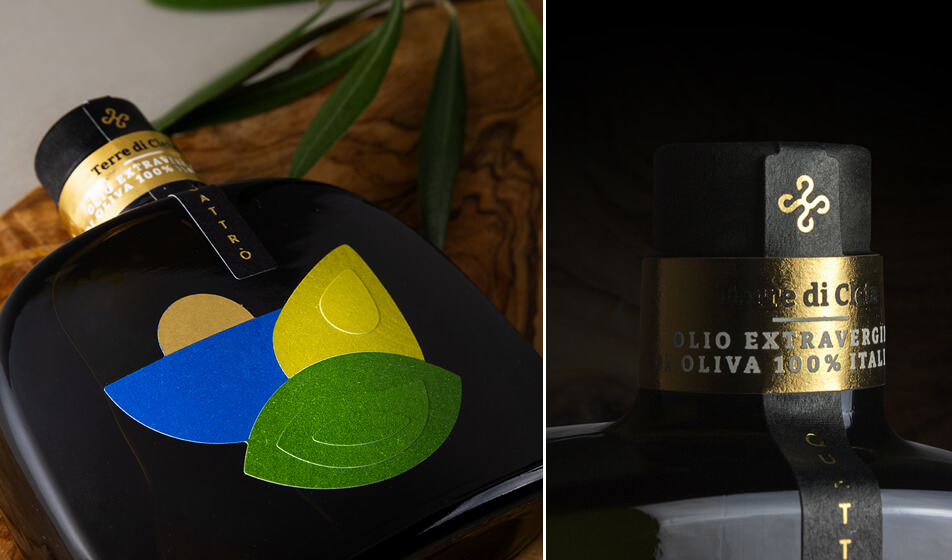
Oil as a synaesthetic experience is also the idea behind Tenute Quattrò, explains Francesca Ierace, one of the founding partners: “Terre di Cleta was established in Calabria in 2021, on the Ionian coast. From the very beginning, we aimed for a high-quality product: we, the logo and the bottle all originated together. We were looking for an eye-catching bottle; we found one that was love at first sight, different in every way. Lorenzo Richiardi of Numeroquattro designed the label, using Tintoretto Gesso paper with a water-repellent finish, playing with textures and material overlays. The colours represent our land: the blue of the coastline, which also evokes the journey of Cleta (the Amazon from which the oil takes its name); the green of the olive-covered hills; the yellow is a drop that signifies the oil and its fluidity; and there is the gold of the sun, an accent highlighting the value of the contents. The thick-walled glass bottle allows the contents to be seen and is an inert material that does not alter the taste of the extra virgin olive oil. The 250ml and 500ml sizes are designed for prompt consumption to prevent any change in the organoleptic characteristics. The label features a QR code that provides the consumer with various details: when the olives were harvested and how much oil was produced from them. Every year, leaves from our olive trees and a sample of oil are sent to the Biocos laboratories in Greece for genetic analysis, which maps the profile of our trees and guarantees that the oil comes 100% from our land. This protects the consumer by ensuring a traceable and transparent supply chain that confirms the olives’ ICEA organic farming certification. We do not use chemical fertilizers or pesticides, and pruning and harvesting are mainly carried out by hand to avoid soil and noise pollution. Mulching helps us keep the soil moist, lowering the temperature and allowing us to use only rainwater. Starting from the label, we can explain our production philosophy.”
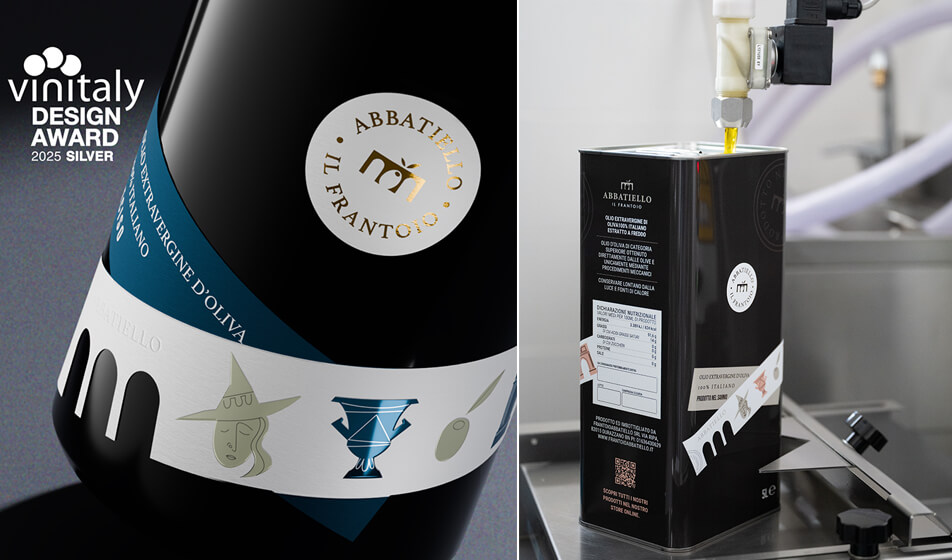
The label can create a tradition so deeply rooted that it becomes part of the recognizable landscape, such as the design featured on Frantoio Abbatiello’s labels. Francesca Telese, who founded the mill with her husband, recalls: “Frantoio Abbatiello was established in 2015; the early years were about finding our direction, and in 2018 it became our main business. When it came to giving our oil an identity, we looked to our local area, between Caserta and Benevento. The legend of the witches of Benevento is deeply embedded in local culture; it’s said that the witches would gather under a walnut tree, surrounded by ancient olive trees, whose olives were used to make ointments and potions. We chose the bridge in the Durazzano Valley, designed by Luigi Vanvitelli in the 18th century and part of the Carolino Aqueduct that carries water to the Royal Palace of Caserta, as our logo and the central theme of the label. These two elements intersect on the bottle, with the label designed by Durante e Associati featuring the witches gathered beneath the bridge’s arches, suggested by the die-cut shape.”
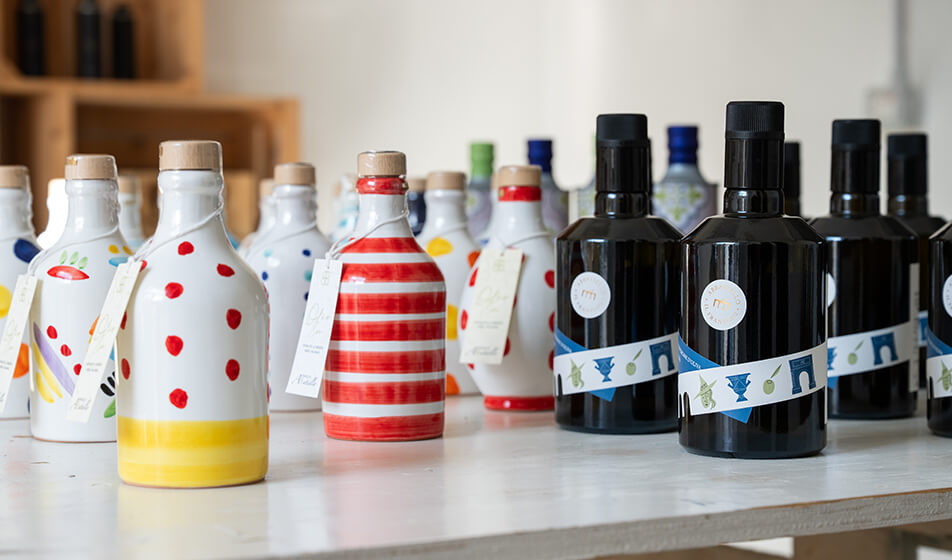
Telese points out that the current buzz in the olive oil world is also evident in packaging formats: “Until a few years ago, you’d only find the classic rectangular green marasca glass bottle, and the labels followed that standard. Lately there’s been a lot of creative experimentation, but this also means that, for now, it’s more challenging to find all the materials that work well together—bottle, labels, boxes of the right size, secondary packaging. A key difference between wine labelling and olive oil labelling lies in the timing and manner in which the product is consumed: a bottle of wine is opened to be consumed quickly, often during a meal, so the stain resistance of the paper is less important—once opened, it is unlikely to be kept for long. A bottle of oil, however, is used over a longer period once opened, so anti-drip treatment and grease resistance are essential, especially if aimed at the catering sector: it must look as good as new from the first to the last use, to convey to the consumer that the product inside also retains its characteristics intact from the first to the last drop.”
Savino Muraglia points out that the labelling of extra virgin olive oil must adhere to specific requirements: “The world of olive oil is experiencing a ‘renaissance’ in labelling, borrowing the language of luxury. As with wine, we use textured papers, foils, and embossing to convey premium positioning. The ‘family feeling’ of a range is fundamental. Unlike spirits, olive oil is legally required to include certain technical information (harvest season, nutritional values, origin), which takes up considerable space. The challenge lies in making this technical information look elegant, transforming a regulatory obligation into a guarantee of transparency. In large-scale retail, the goal is rapid shelf turnover; labels must reassure the consumer about price and ‘tradition’, often overusing images of olive trees and fields. In contrast, in the production and distribution of premium products, design does not aim to please everyone but to attract those seeking an experience. The label of a premium oil does not simply say ‘I am good’; that is why we at Frantoio Muraglia say: ‘the good in what is beautiful’.”
Another innovation in the wine world addresses the specific needs of extra virgin olive oil, notes Romolo Gentili: “You must be able to offer a range of sizes that meet the consumer’s needs but also the requirements for optimal oil preservation, which are: protection from light, protection from heat, and protection from oxidation, i.e., contact with air. We have focused on the 100, 500 and, above all, 750 ml sizes because our core business is in household consumption, and the 750 ml bottle offers an optimal balance between quantity and preservation over ten to fifteen days. For those who prefer to buy large quantities, tins are among the preferred formats, although the oil must then be decanted into bottles, exposing it to oxygen. Recently, bag-in-box packaging has also begun to be used for oil: compared to tins, it maintains a vacuum, exposes the oil to less oxidation, is lightweight and easy to handle, and is simple to recycle at the end of its life. These choices require explanation; otherwise, people will simply select what they are familiar with. That sense of familiarity is reflected in the design, as we did with the bottle for Verdone, a highly regarded monocultivar, whose bottle evokes a two-handled amphora—the very format in which oil was transported by the Etruscans and Romans in this part of Upper Lazio, a tradition that has long remained part of rural culture.”
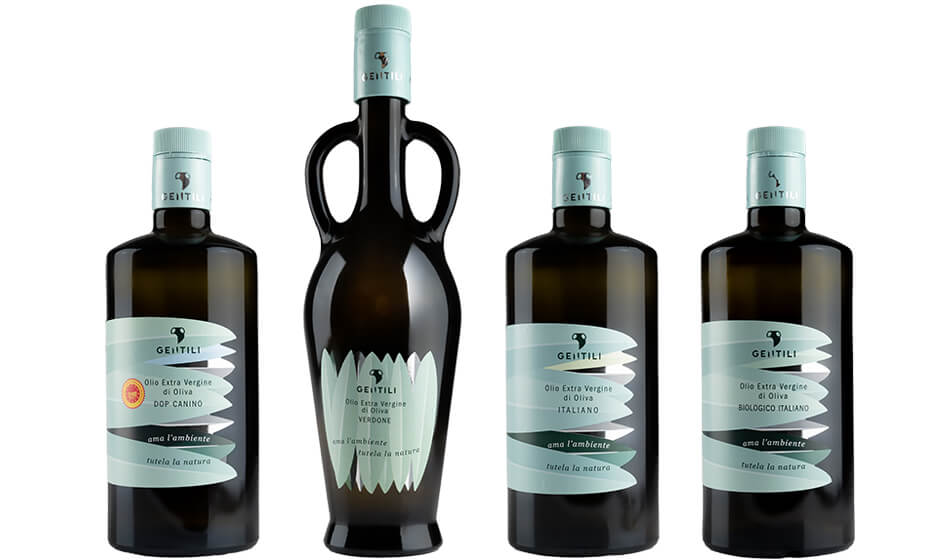
But who are these products of agri-food excellence aimed at? They are for different audiences who share a desire to make informed choices. In the case of Tenute Quattrò, these include the catering sector and specialized retail channels: “These are restaurants that, when they bring our bottle to the table, explain the work behind it, or small shops or oil shops – all places frequented by the discerning consumer.”
In the case of Frantoio Abbatiello, the audience consists of informed consumers: “The main audience is families, many young families; here too, we see a generational shift: they don’t just come to buy, they ask for an explanation of the characteristics, they taste the products, they bring their children; there is a new focus on a product that is an important part of our diet. There is a desire to be better informed. We are organizing a course for entry-level tasters, and the sign-ups show us that, as with wine, the audience is increasingly diverse: not just professionals, but also ordinary people who want to learn more. Just as in wine, where the oenologist’s job is to balance the characteristics of the grapes and terroir within a wine, in oil, a well-crafted blend has its own character.” And the future of this sector cannot be separated from sustainability, in packaging and beyond, as Romolo Gentili concludes: ‘If there is one area where the olive oil sector can lead innovation, it is sustainability. We have a photovoltaic system that utilizes production by-products to power the heating for the mill’s machinery; we have planted a bamboo grove for carbon sequestration and made many other choices that go beyond packaging alone. Many companies are only addressing this issue with a view to being prepared when it becomes a legal requirement; however, we do not believe that it is important to integrate these choices into our work in the long term, in order to produce a high-quality product.”