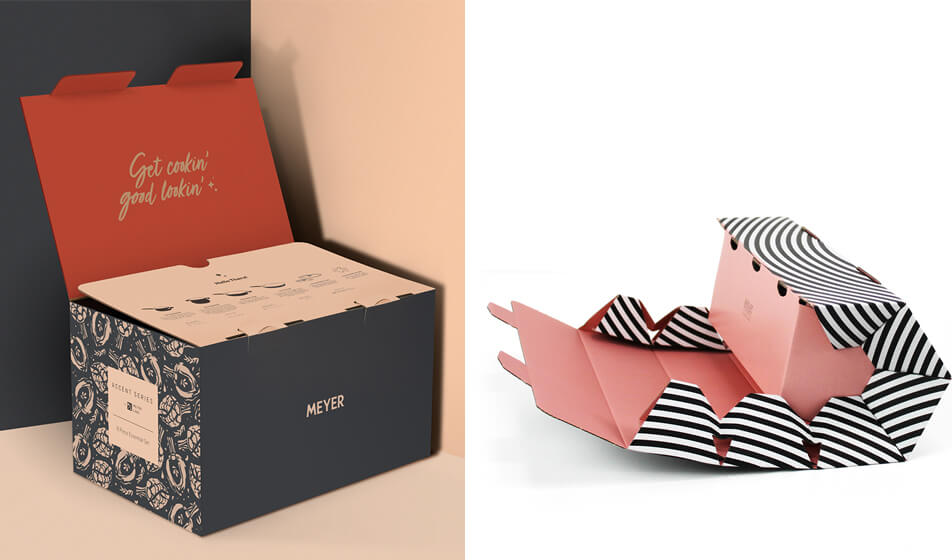


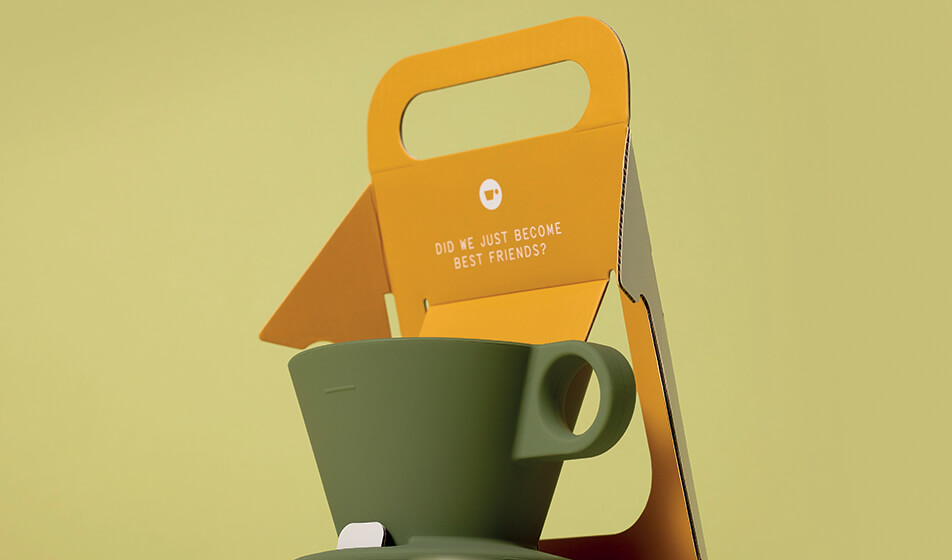
From a humble material par excellence to a design medium: lightweight, recyclable and versatile, corrugated cardboard — with its selected fibres, honeycomb structures, through-coloured finishes, increasingly sophisticated printing and embellishment techniques — is now a key player across high-end packaging, retail displays, exhibition stands and prestigious interior décor.
For graphic designers, designers and brands, corrugated cardboard is increasingly becoming an expressive language in its own right, sought after in contexts where one might expect to find more refined materials: shop windows, boutiques, showrooms, exhibition stands, event installations, high-end packaging and even interior furnishings. The factors driving its success include a wider range of substrates than in the past, printing technologies capable of delivering a wide variety of finishes, and market demand for proven circularity.
The availability of varieties beyond the classic flute
To speak of corrugated board in the singular today is reductive. The best-known variable is flute height: from B and C flutes, designed for strength and shock absorption, we have moved to E and F micro-flutes and N nano-flutes, as thin as card yet with the structural rigidity that enables precise creasing, complex die-cutting and high-quality print surfaces. Double and triple flutes open up possibilities for large-format display and structural applications. Alongside traditional corrugated board, honeycomb board has established itself: panels with a cellular paper core enclosed between two liners, offering an extraordinary stiffness-to-weight ratio. Brands such as Re-board and Xanita — the latter featuring a core made from recycled kraft paper and sugarcane fibre — are now standard for exhibition stands, totems, temporary furnishings and self-supporting structures, which can be decorated using direct printing and cut to shape using a cutting plotter.
The liner — that is, the outer covering — also plays a key role in defining the quality of the cardboard: coated papers with high whiteness offer maximum colour rendering, whilst recycled, Havana or Kraft papers lend a refined textural quality, which is currently in high demand, particularly in the premium segment, where a deliberately natural aesthetic has become highly prized.
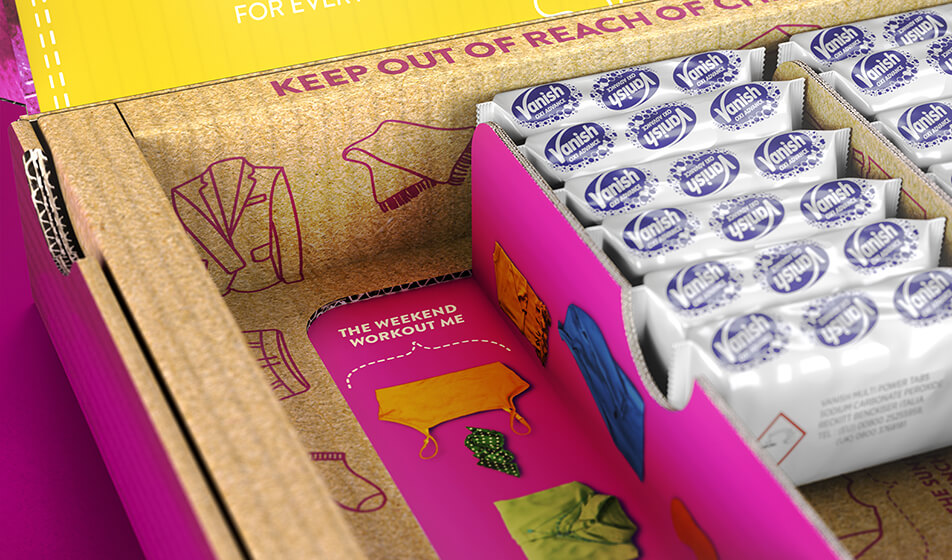
Then there is the whole subject of coloured materials. Dye-through cardboard, where the outer layer and the flute share the same shade — solid black, Havana, saturated colours — features details such as colour-coordinated edges, subtle touches that make all the difference in high-quality packaging, where the exposed cut edge must never reveal a grey core. Added to this are coated and laminated substrates, in which a structural flute is enhanced with a high-quality offset-printed liner or with special, textured and tactile papers, which give the cardboard surface a finish that is a pleasure to look at and touch. The combination of flute type, liner grammage and finish offers an almost unlimited choice of colours and effects, which the designer can tailor to strength, tactile quality and print quality.
Printing, finishing, converting
The creative evolution of corrugated board as a material suitable for a wide variety of applications goes hand in hand with the development of printing technologies. The latest generation flexo printing, with HD plates and fine screens, has taken direct printing onto corrugated board to levels of detail that were unthinkable just a few years ago. But it is digital technology that has multiplied production possibilities: single-pass systems have made even short runs and highly customised designs economically viable, using inkjet systems that print directly onto pre-formed corrugated board with water-based inks and thermal inkjet printheads. These systems can deliver such high speeds that they bring digital technology up to the standards of industrial printing. As for packaging, the e-commerce sector in particular can make use of all-in-one systems based on inkjet technology that start with a sheet of cardboard and produce a printed and formed box at the output, with graphics and dimensions that can even vary from one box to another, thereby promoting the spread of mass customisation.
Conversely, large-format printing now offers a range of options, with inks ranging from water-based to UV or UV LED, right through to the latest-generation Latex machines, which ensure that printed applications meet environmental compatibility requirements and are free from harmful substances. For rigid panels and honeycomb board, flatbed systems allow direct double-sided printing, whilst offset and digital roll-fed printing systems are the standard when the cover is printed on sheets and then laminated to the corrugated core.
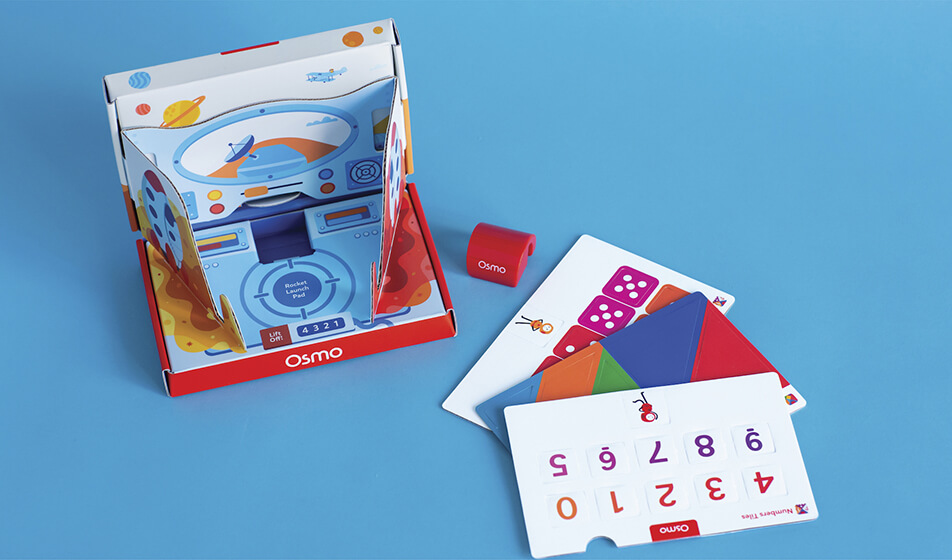
The most recent leap in quality lies in surface finishing. Thick UV varnishes and tactile-effect coatings, soft-touch laminations, embossing and debossing, textured effects, and die-cutting – including laser cutting – for precision cut-outs and perforations: everything that makes cardstock valuable today can now be applied to corrugated board, greatly enhancing its perceived impact. Digital finishing has also made inroads into large-format rigid materials, thanks to the introduction of a range of flatbed printing systems capable of applying varnishes, opaque white, spot colours, fluorescent inks, and tactile effects. Recently, dedicated finishing systems have been launched that offer a wide range of embellishments achievable without printing plates, making it cost-effective to decorate even small runs and one-off pieces on large-format rigid materials. The result is that cardboard can be both raw and sophisticated, and even when recycled, it remains visually rich.
The state of the art: from packaging to interior décor
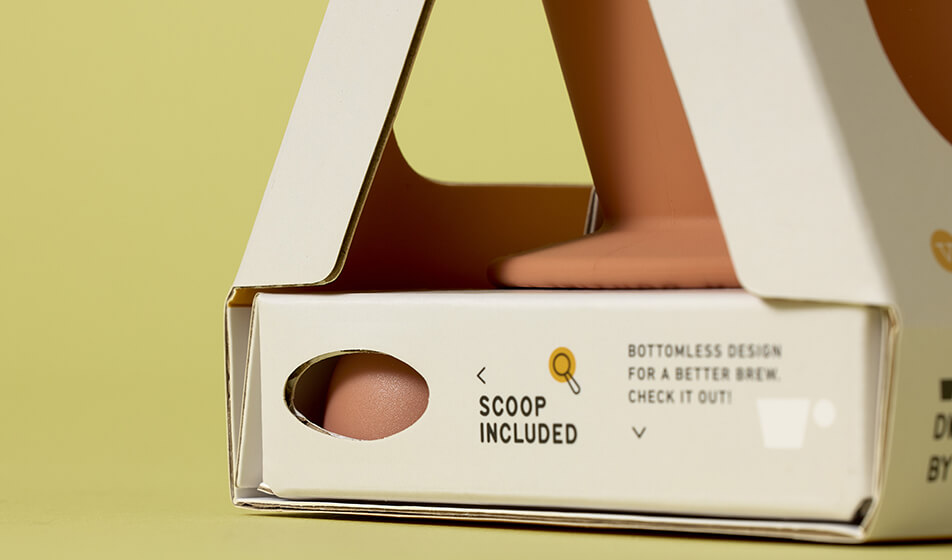
In luxury packaging, corrugated board has conquered territories once reserved for solid board. Dye-in-the-mass micro-corrugated board has become the material of choice for premium e-commerce and gift boxes that must withstand shipping without compromising an engaging unboxing experience for the consumer while enhancing the brand. The cosmetics, wine & spirits, gourmet food and fashion sectors rely on enhanced corrugated structures precisely to combine protection, lightness and brand storytelling. In retail and trade fair displays, honeycomb board has long been the material of choice and is now increasingly valued for its recyclability.
Floor-standing displays, corners, walls, totems and even entire stand structures are now created from printed and die-cut honeycomb panels: they can be assembled without tools, transported at low cost thanks to their light weight, and disposed of as part of the paper recycling stream at the end of the event. Increasingly, the creative use of cardboard is producing applications that take centre stage even in the prestigious shop windows of fashion houses.
It is no surprise that major brands are also turning to cardboard for pop-up stores and temporary shops: entire retail structures, including shelving and seating, are built from corrugated and honeycomb modules that last for a single season and then re-enter the paper cycle, with logistical and environmental costs that are hard to match for wood or metal.
For the exhibition sector – which has historically been criticised for its wastefulness – this represents an increasingly viable solution. The same applies to the events industry, where cardboard structures and furnishings enable striking, temporary set-ups with a low environmental footprint.
In the field of interior design, companies such as Lessmore – a brand founded by architect Giorgio Caporaso – have for years been producing chairs, bookcases, tables, and accessories made from recyclable cardboard – often combined with wood and other materials – designed for hotels, commercial spaces, shop windows, and homes. These signature design pieces make lightness and modularity their key strengths, proving that cardboard can withstand daily use and last, thereby dispelling the misconception that it is merely a disposable material.
The environmental value
From an environmental perspective, cardboard has a head start: it is a renewable and widely recycled fibre, with well-established collection networks and recyclability within the paper cycle. But the real advantage goes beyond the material itself: the challenge for designers and brands working with cardboard – as with other materials used for communication, packaging and installations – is ‘design for recycling’. Choosing finishes and protective films compatible with recycling, prioritising water-based inks and varnishes, and reducing paper weights and transport volumes by capitalising on its lightness are now possible thanks to the ability to conduct precise analyses of materials and processes.
Then there is the factor of durability and reuse: a display stand or a modular piece of furniture that can be dismantled and reconfigured extends its life cycle well beyond a single use, shifting the focus from simple recycling to true circularity. A Life Cycle Assessment (LCA), which compares the product’s entire life cycle rather than just its end-of-life stage, remains the most reliable tool for measuring these benefits. Certifications such as FSC provide guarantees regarding the origin of the fibres, but it is the consistency of the entire project that distinguishes genuine sustainability from greenwashing.
In this context, cardboard stands out as a mature material, offering designers a balance of creative freedom, technical performance and environmental responsibility, thereby dispelling the myth that it is inferior.