

Now that the PPWR regulation has come into full force, the luxury sector too must fully integrate sustainability into packaging throughout its entire life cycle. The challenges may also touch on cultural and behavioural aspects concerning the very concept of luxury. How does this affect design? We discussed this with two of the world’s leading figures in the field of fragrance design: Jérôme Dinand and Vincent Villeger.
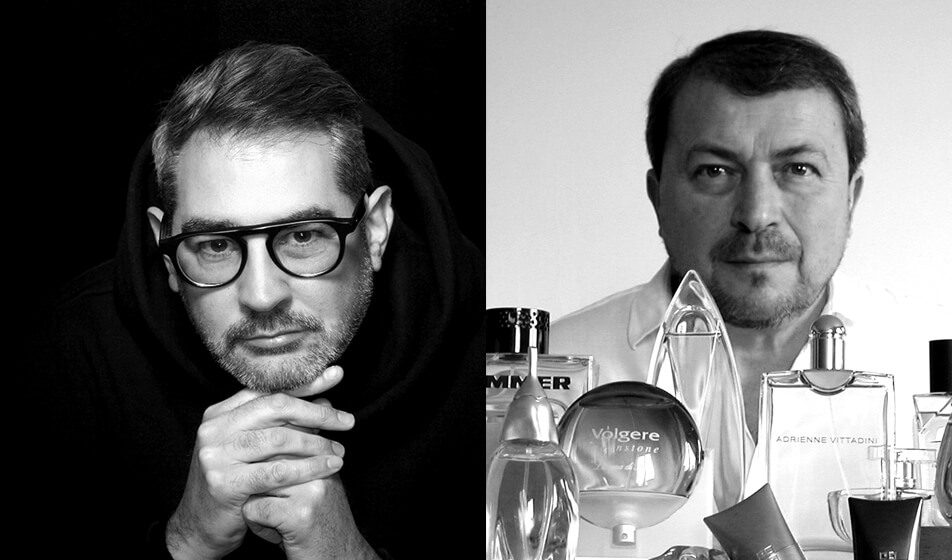
When a luxury brand is set to launch a new fragrance and is looking for an outstanding external agency, the shortlist of candidates is very carefully curated. Both Jérôme Dinand and Vincent Villeger feature on this shortlist without a doubt. Dinand represents the second generation of a family of packaging designers; after working for Ateliers Dinand – founded by his father Pierre in 1968 – he established his own firm and has also passed on the art of luxury packaging design to his son Jules. Villeger, a Frenchman who moved to the UK over 25 years ago, founded his multi-award-winning studio on the strength of his extensive experience as an insider in the luxury sector, including eight years spent within Burberry. They share – as peers – some major fashion houses as clients, and throughout these long-standing, high-level collaborations, they have often been ahead of their time in developing innovative solutions that are now regarded as essential requirements for packaging that integrates sustainability throughout its entire life cycle. However, the challenges posed by the new regulation are not only technical, but also cultural. We asked both of them to share their vision with us.
The evolving role of the packaging designer
As luxury packaging moves towards greater sustainability, designers are being asked to combine creativity with an increasingly complex understanding of materials, regulations and environmental impact. How are these responsibilities reshaping the relationship between creative freedom, brand identity, technical feasibility and sustainability goals? For Vincent Villeger, technical knowledge is part of creativity itself. «Technical understanding has always been central to my practice. I am a child of the factory floor. My understanding of manufacturing, materials and production gives me more creative freedom, not less». Sustainability has also informed his work for years; what has changed is the market around it. «The challenge wasn’t convincing myself; it was for the market to mature. Until the BBC showed us dead whales and plastic-filled oceans on television, many of us weren’t as mindful as we are today. That meant clients didn’t perceive sustainable design as adding value, and the industry didn’t always offer viable alternatives. Legislation is accelerating change now, but I’ve been designing this way for years. The key is that today the market values it».
Jérôme Dinand describes a continuous negotiation «between personal commitment and adaptation to industrial requirements». «The design of a fragrance bottle is already a challenge. These new constraints change the conception and execution of packaging, but do not necessarily affect creativity. At the same time as we adapt to regulatory issues, we develop alternatives for our clients, who are definitely eager to communicate a sustainable image through their packaging». This also means keeping pace with industrial change: «We stay informed about the evolution and constraints of our industry through professional exhibitions, press articles and discussions with different suppliers» concludes Dinand.
PPWR: a constraint or a driver of innovation?
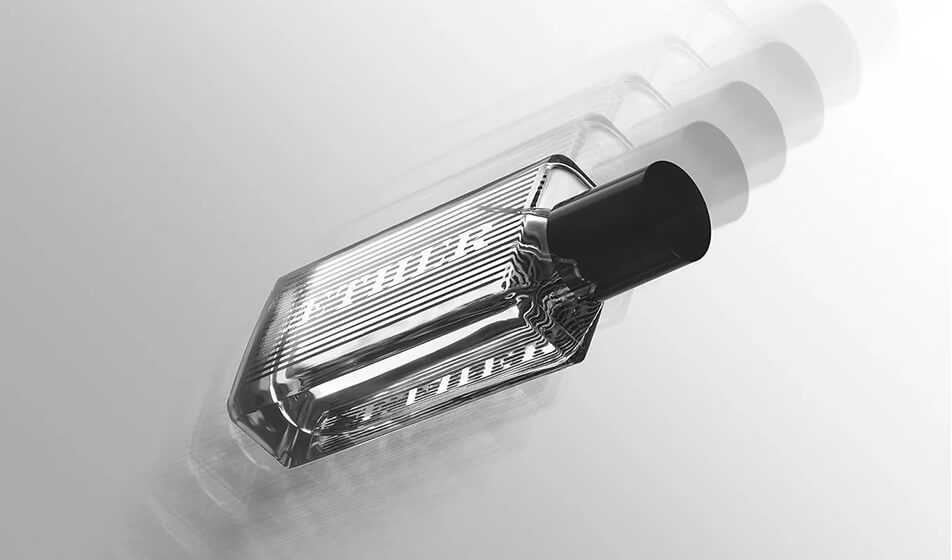
By promoting recyclability, material separation and greater efficiency, the PPWR is setting new standards for packaging development. Dinand sees the PPWR as the latest set of technical parameters with which design must work. «We deal with technical limits every day. Fortunately, improvements and innovations are balancing the different restrictions introduced by regulations such as the PPWR. Glassmakers are doing a great job regarding energy efficiency, lighter glass and the famous “3Rs”: reduce, reuse, recycle». He cites lightweight bottles, threaded necks and programmes for lightweight and infinitely recyclable glass, as well as mono-material spray caps. «I see the PPWR as a new generation of creative challenges, offering the chance to explore innovative manufacturing processes and sustainable packaging designs».
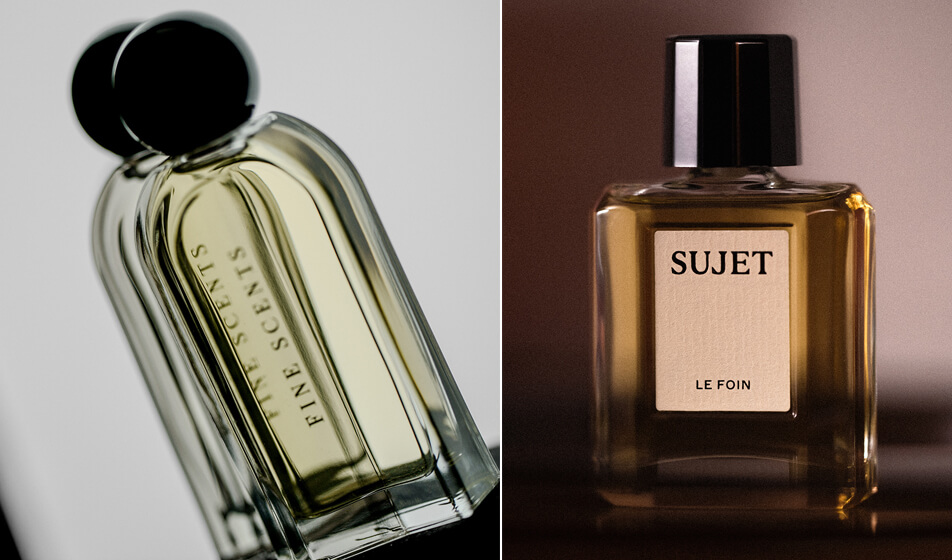
The pressure is not unique to packaging. «Fragrance creators are in a similar situation, permanently facing new regulations concerning ingredients and allergens. The main challenges are to maintain attraction and originality, and to convey quality and luxury even through simplicity». Villeger reaches the same conclusion. «I choose to see sustainability as an opportunity rather than a constraint. Every project presents limitations of one kind or another, and creativity has always been about what you choose to do with them. My role is to leverage the opportunities that sustainability creates rather than dwell on what it prevents. Often the result is a better design: simpler, more intelligent and more distinctive».
Redefining the codes of luxury
Weight, thickness and material abundance have long communicated prestige in luxury packaging, but Villeger believes that those elements are losing their authority as automatic signs of value. «Today there can be no luxury without sustainability. Excessive use of materials, or the continued use of unsustainable materials and processes, is increasingly perceived as a negative by luxury consumers». Reduction should not, however, be confused with minimalism. «There is still plenty of room for expressiveness». Less material may mean a different structure, replacing foam with moulded paper pulp or removing lamination. The designer must explain why these decisions matter, while recognising that «designers don’t hold the cheque book. It is absolutely our job to put these developments on the table, but we don’t always hold the final say».
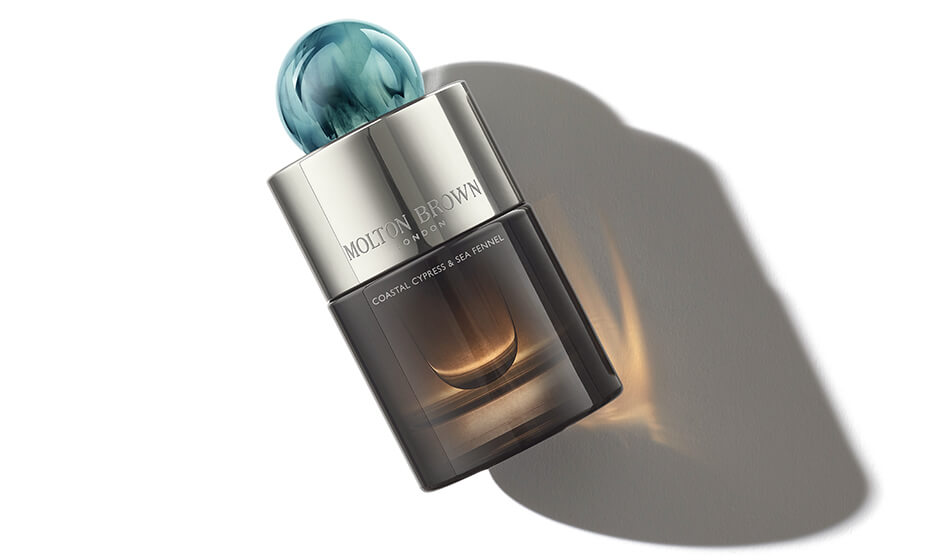
Dinand sees the codes shifting from weight and complexity towards «a subtle sophistication, an understated luxury mixing simplicity and attractive details». Lightweight glass, he notes, is not new. «Looking back through fragrance history, many prestige bottles from the twentieth century had lightweight glass, like La Rose Jacqueminot, Coty (1910) or Flèches d’Or, Lancôme (1957). Thin glass walls can be as nice as thick ones, inspiring the ethereal feel of a fragrance, surrounding its colour with delicacy and bringing more spirituality than a solid block».
There are physical limits: glass must retain sufficient resistance, yet niche fragrances have also changed consumer perception by using standard silhouettes refined through proportion, customisation and detail. «A little less of everything, with a touch of taste and quality, is becoming one of today’s selective codes» says Dinand. «Today a sleek design produced with harmony is better than overloaded, multi-material packaging that looks like a wedding cake».
The future of luxury finishing
Finishing techniques play a fundamental role in creating premium packaging, yet decorations and surface treatments can complicate recycling and sorting. In glass decoration, sustainability intersects with price, minimum order quantities, colouring restrictions and sorting. Dinand explains that the difficulties surrounding body-tinted glass have increased demand for coloured surface treatments: «Decorators have worked on solutions to improve the sustainability of their processes, such as water-soluble lacquers, UV inks and the elimination of heavy metals, in a transition similar to that of the printing industry. For sorting in industrial recycling, transparent colours are preferable to opaque lacquers». The use of one bottle across several fragrance variants has also increased demand for lacquered glass, while labels remain an option for brands wishing to retain flint glass.
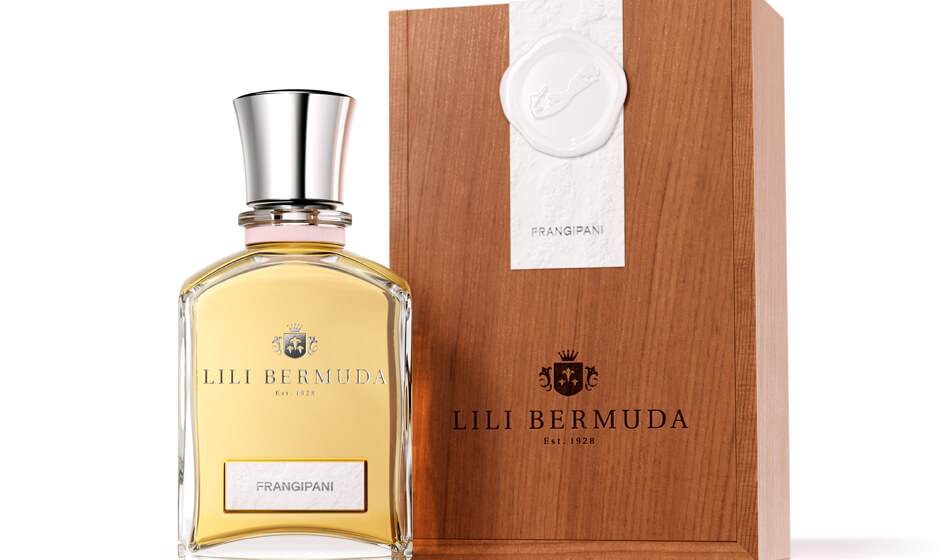
Villeger focuses on consumer perception. «One of the biggest challenges isn’t technical; it’s perception. If customers instinctively perceive a material as inferior, it will fail regardless of how sustainable it is. Part of my role is helping brands understand how those choices will be interpreted by their customers». He also separates fashionable finishing from actual material quality. «Soft-touch laminates are a good example. Personally, I can’t stand them; they’re a lazy shortcut to premium packaging. A beautifully tactile uncoated paper feels inherently far more luxurious to me. Let the material do the work, don’t cover it in plastic». The responsible material palette is now much broader. Says Villeger: «Twenty-five years ago, sustainable often meant brown, speckled recycled board. Today I can specify everything from the deepest black papers to high-shine metallic finishes while still meeting demanding sustainability objectives».
Designing a premium refill experience
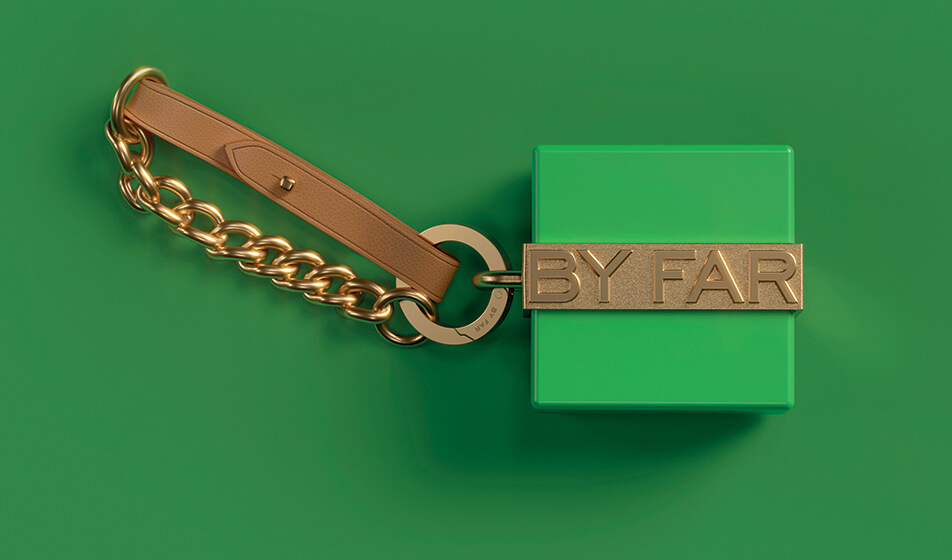
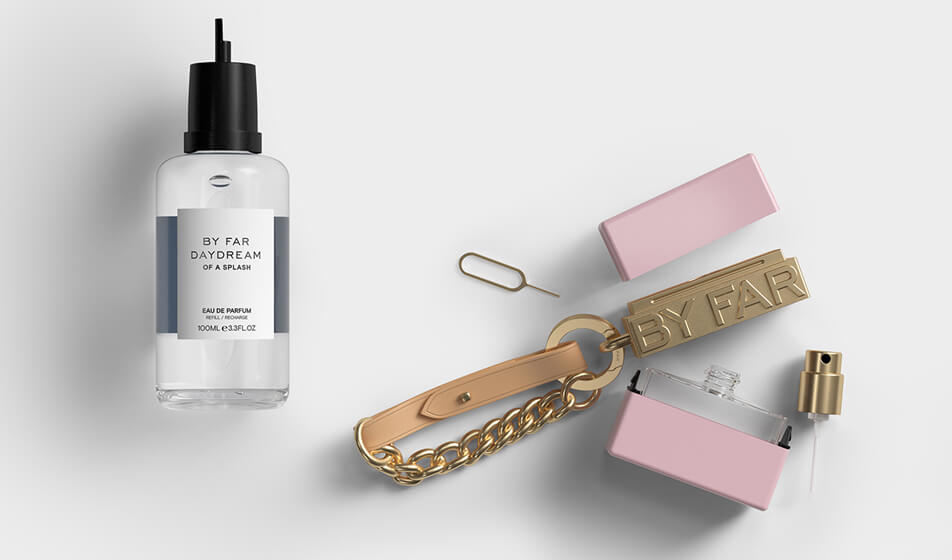
Refillable formats are transforming primary packaging into objects intended to last, be reused and remain desirable over time. Villeger, who designed his first refillable fragrance bottle back in 2006 for Givenchy Parfums, sees refillability as an opportunity to reconsider formats and habits, rather than simply add a function to the disposable pack. «Who says you have to decant 100 ml into another 100 ml bottle? By creating for By Far a 20 ml refillable bottle, it became small enough to transform into a customisable handbag charm with 168 possible combinations». Technical solutions are available, but use does not always follow declared preferences. «Consumers consistently say they value refillability, but commercial uptake still has some catching up to do». Dinand concentrates on the construction of the system. «Refillability is a central topic. Most of our clients are looking forward to launching refillable bottles. These primary packs are easy to design, as long as we avoid complicated accessories such as plastic cases or sophisticated spray-through systems». Premium quality depends on practical details. «A good refill experience means easy access and opening, attractive accessories, a practical refill bottle that is simple yet recognisable, and an adapted pouring system».
Sustainability claims and brand consistency
As environmental claims face greater scrutiny, luxury brands must communicate sustainability with precision and transparency. «Greenwashing and misleading claims are everywhere – says Dinand – and AI can also contribute to this confusion. To avoid an unclear perception of the product, there must be consistent storytelling, with advertising that matches the sustainable packaging». The pack itself must also be proportionate. «The size of the secondary packaging has to be balanced with the fragrance bottle. Environmental benefits can be expressed through a design with selective simplicity: a few good materials, perfect fitments, practical use, not oversized, pure. Sincerity and quality are the best ambassadors».
Villeger argues that credibility is built beyond the single pack. «The most effective place to communicate sustainability is at brand level, not simply on pack. You don’t build trust because one carton carries a claim. You build trust because a brand behaves consistently over time and across touchpoints». Packaging contributes through clear information and honest material choices, but «not every responsible decision needs to become a marketing campaign. Luxury brands also understand the value of restraint and discretion. Luxury is knowing when to remain quiet».
A new aesthetic for luxury?
Sustainability will generate a distinctive new aesthetic for luxury? Villeger does not expect sustainability to become a recognisable style. «I actually think the bigger shift won’t come from sustainability itself. It will come from the evolution of consumers and brands becoming more confident in expressing their individuality. Luxury customers are increasingly diverse. This gives brands permission to move away from a cookie-cutter idea of luxury and express more distinctive personalities. Increasingly, we want to understand what makes a brand unique rather than simply recognise the so-called traditional codes of luxury. Sustainability will support that evolution, but I don’t believe it will become a visual style in its own right». The change is from accumulation to selection. «The best luxury packaging doesn’t remove material for the sake of it. It removes everything that doesn’t deserve to be there. Everything that remains has to earn its place». Dinand is equally cautious about predicting one future aesthetic. «Trends and fashion are also key players. At some point, have we reached the limits of simplicity? Will it end up with a biodegradable fragrance patch, with no bottle, cap or pump? Not for luxury». For fragrance, the pack does more than contain the product. «Packaging is part of the olfactory experience. It protects and displays the precious liquid, preserves its memory even when empty, and becomes collectible itself. Packaging aesthetics are in permanent evolution, not only because of sustainability. The challenge for luxury is to become simpler in conception, yet original, and preserve its high-end feel for sight and touch».