

A niche dedicated to lovers of all things printed, which creates a direct line between independent creatives all over the world and devourers of books, comics, personalised stationery and limited edition design objects
A niche dedicated to lovers of all things printed, which creates a direct line between independent creatives all over the world and devourers of books, comics, personalised stationery and limited edition design objects. A combination of various printing techniques – some of which have just come back into fashion – and special substrates, with great care for sustainability. These are the thematic boxes dedicated to design, art and graphic arts, which are delivered to your doorstop and bring the excitement of opening a gift. We talked about the reasons behind their success with the founders of four Italian and international subscription boxes: Simona Basilavecchia of Hoppípolla, Annamaria di Matteo of Re-belle Box, Samantha Huggins of My Paper Box and Jarno Oostingh of Anders.
By Roberta Ragona | On PRINT #82
In September 2019 more than half of online shoppers in the United States said that they are currently receiving, or have received at least once, a subscription box. In the United Kingdom, Royal Mail data showed that 27% of consumers, with a strong growing trend, are subscribed to one of these services. As far as the Italian market is concerned, we don’t have data that photographs the current situation, but according to Gartner, a leading company in strategy and analysis consultancy, by 2023 75% of all business to consumer companies will offer some sort of subscription service. These changes will inevitably involve Italy as well.
Retail and streaming television seem distant worlds, but it is services like Netflix that have popularized the idea of purchasing a personalised package rather than a single product, and the idea of a subscription as a long term investment.
The ubiquitous presence of social media has created two-way relationships between curated boxes and online communities with specific interests, which are often not served by the general market and are willing to spend more for personalised content. Niche products represent about 20% of the market, and 15% is dedicated to hobbies and entertainment: curated boxes dedicated to design, art, and graphic arts live precisely at the intersection of these categories.
Boxes in these sectors share a particular attention to the potential of various printing techniques to create a new and unexpected experience for clients. They mix ad hoc, personalised and limited edition products, with other products coming from excellent craft, independent design and organisations who work between stationery and editorial experiences.
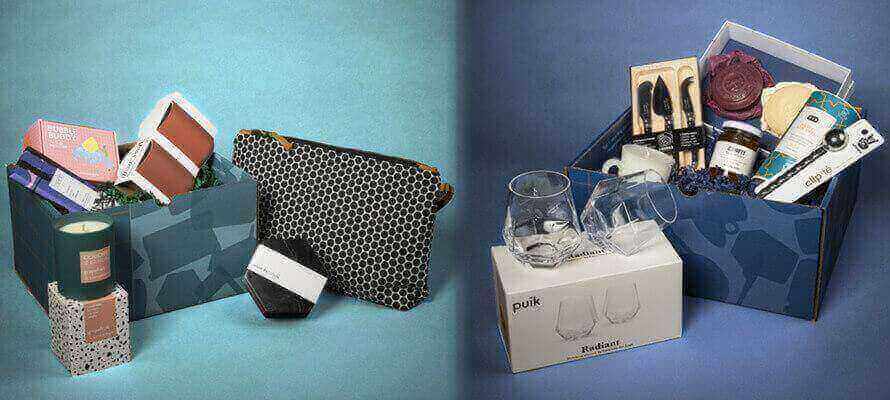
Naturally, paper is front and center: the experience begins with the shipping packaging and continues with its contents. The printing techniques go from digital printing to letterpress, making the most of the limits as creative tools like two-toned prints do, or using Risograph technology, in between offset and screenprinting, to create artistic imperfections.
Attention to design and unusual materials give new life even to the most tried and tested products of industrial printing for the merchandising sector. This is the case for temporary tattoos, which have made a comeback thanks to a new generation of designers who have discovered they aren’t only for children, and for brass brooches with enamelled prints, which work well for graphic designs with strong colours and contrasts. Surface design involves printing techniques like classic screenprinting and traditional weaving techniques such as jacquard, modernised by contemporary subjects.
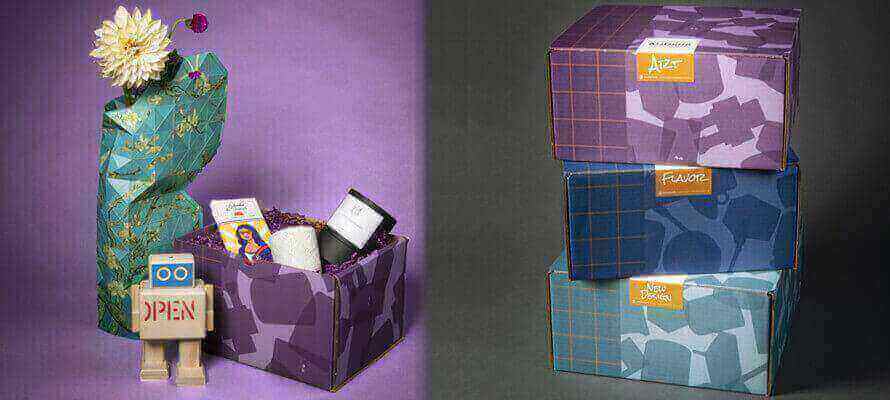
Jarno Oostingh and his partner Mike Russell founded Anders, a subscription box dedicated to European design aimed at the American market. Jarno tells us: When you have the luxury of being able to afford a lot of things, people start looking for meaning and connection in the products they buy. You go beyond just collecting stuff because you can, you want to (also) have products that have a story to them. This is why we only select products that have a cool story to them, either about the designer, materials, sustainability or history. Especially in the U.S., our focus-market, people really demand convenience and I think that’s because of decision fatigue. This has led us to always include shipping and gift wrapping in the price and narrowing down our collection. I think to succeed the contents of the boxes just have to be unique. In our case it’s European designed products you can’t get in the U.S. yet. That makes it easier for a potential customer to identify why they would choose your box over someone else’s”.
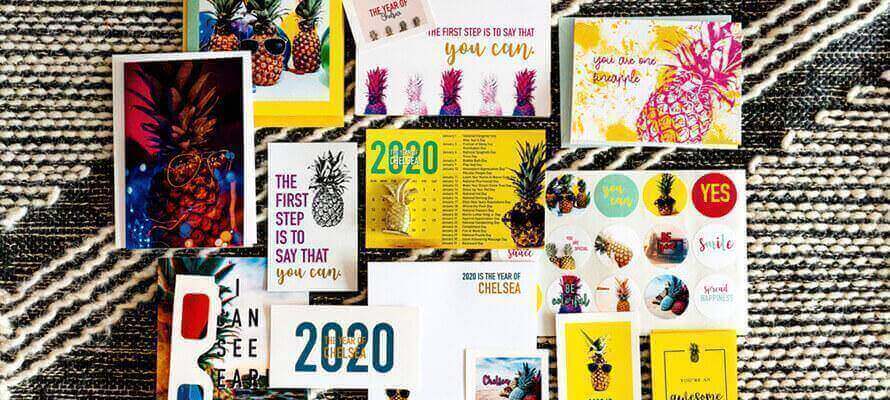
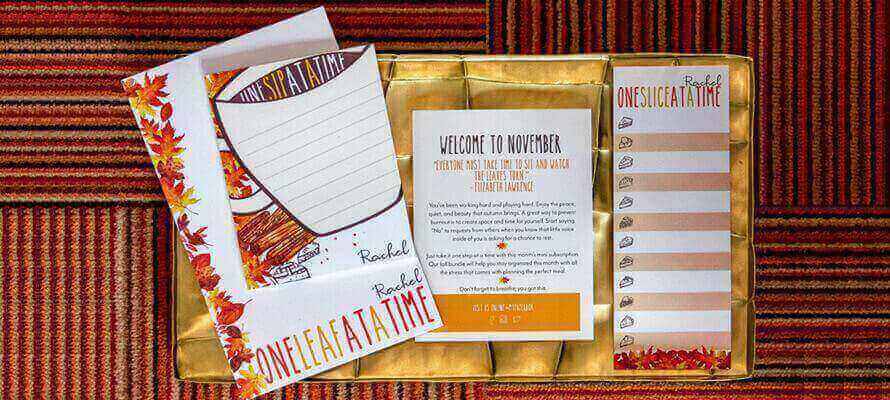
Many economic analyses start from the assumption that a purchase happens following analytic reasoning, but the psychological aspect is essential: on one side how convenient a box is – both because of its price and its delivery to your doorstep -, on the other the desire for something new. The areas of the brain associated with gratification and euphoria are activated when we open a package. Samantha Huggins, who is the founder and CEO of My Paper Box, a personalised stationery subscription box, says: “Besides the products, the “Unboxing” Experience is essential. Even though everything is handmade, we try to make everything look “retail ready. When we first started, we reached out to people that do Unboxings online; we saw how valuable this was and continue to do this. One of the best parts of the subscription box is the surprise. Most people are afraid of purchasing something that they are not 100% certain of what is inside. Online unboxing shows the experience and products of past boxes. Being able to see the reaction of how this makes others feel helps showcase the box. They would like to feel the same way.”
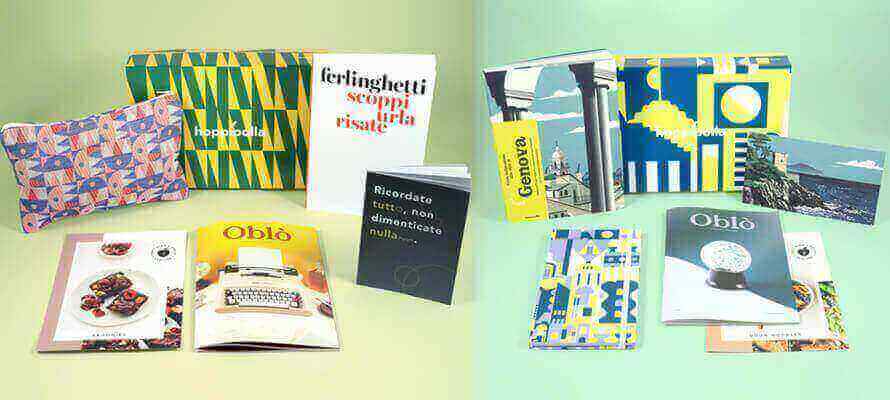
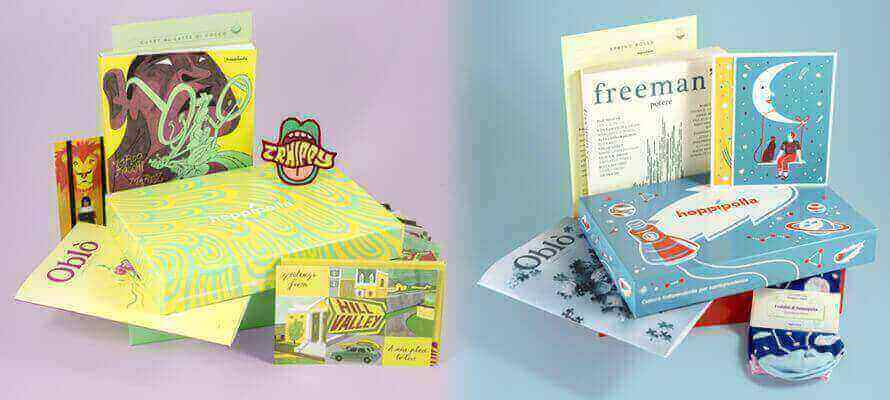
Involving creators and influencers is important not only to reassure potential new clients, but also to expand the audience: according to the latest research, affiliated links are the fastest growing source of traffic. And content such as Instagram Stories is making sharing the experience in its entirety more and more important. Another very important element is the sustainability of the entire supply chain, as highlighted by Simona Basilavecchia, one of the four founders of Hoppípolla, a curated box and editorial project dedicated to independent design, publishing and illustration culture: “All our products are made in Italy, we have built trust with our suppliers and we only use eco-friendly, FSC® certified paper. This year we have also decided to change the frequency with which we release new boxes: we’ve moved from monthly subscriptions to bi-monthly ones, in order to give our clients more time to explore and enjoy the products of their boxes.”
The retention of subscribers doesn’t depend only on the customization and quality of the products, but also on the creation of related content such as videos and how-tos, where building a community around the products becomes central. Simona Basilavecchia says: «We start by deciding what the theme of the box will be, then we plan its contents so that there is always a recurring thread, because our boxes are first and foremost an experience. We always try to use different substrates so that we’re not repetitive, preferring material with a low environmental impact. Once we decide what materials to work with, we contact the illustrators whose style we think fits in with the theme. I think the fact that the box is illustrated by a new illustrator each time makes a significant differnece, to the point that, unlike other subscription boxes, Hoppípolla can be purchased empty, as it’s not a single use packaging, but a product in its own right. This is why, after receiving several requests, we decided to make the box available on its own, so that anyone can feel free to create their own Hoppípolla».
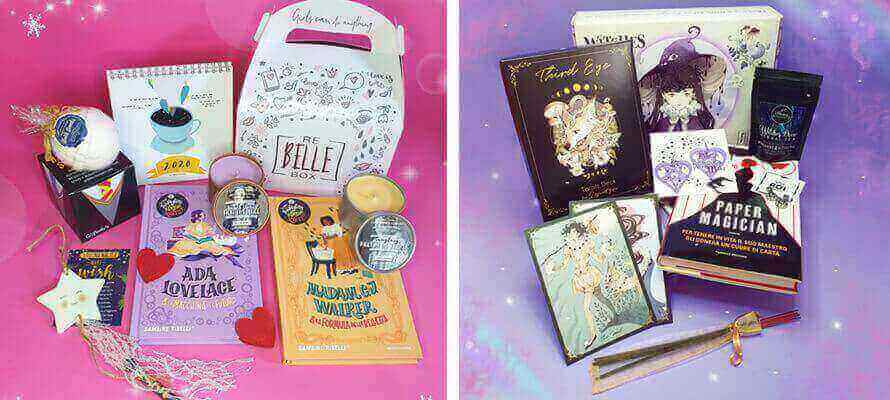
This market is primarily female and millenial: 66% of subscribers are women, with the majority of clients being in the 25-34 (33%), or 35-44 (26%) age brackets. Experts predict that the sector which will grow the most and is the most interesting to clients is curation boxes dedicated to products for children, from baby care to entertainment and editorial products. The future of subscription boxes is incresingly tied to successful interactions with physical shops, as Annamaria di Matteo of Re-belle Box, an Italian box ‘by women for women’, says: «It’s not easy, but it’s doable. We are developing relationships with bookshops: we’ve been working for a while with various publishers for the launch and the promotion of new products, close to our project in spirit, and our first retailers are experiencing excellent results”.
The importance of experience as the common theme in all boxes that successfully build a community returns: “From a business perspective it might be interesting for brick and mortar stores to sign people up in-store and get repeat business through online fulfillment. For online brands making a connection in the physical world can make a big difference. I think events (in whatever way) are a great way for both offline and online businesses to have a memorable point of contact with consumers, because it goes beyond a regular shopping experience”, says Jarno Oostingh.
Anders
In Dutch Anders means “different”. Its founders are Jarno Oostingh, a Dutch marketing and media expert, and his husband Mike Russell, an American army veteran who served in Europe for twenty years. Upon returning to the United States, they realised there was a gap in the North-American market for accessible but innovative design products, because coming into contact with different worlds opens our eyes to new possibilities and is a source of inspiration.
Hoppípolla
Founded in November 2016 by Simona Basilavecchia, Paola Tartaglino, Francesco Rellini and Nicola Minerva, Hoppípolla is a limited edition box entirely made in Italy and sent as a subscription service. The idea was born from the desire to create a box dedicated to independent culture in design, publishing, and illustriation, creative fields full of talent which often struggles to reach its potential public.
My Paper Box
My Paper Box is a subscription box for personalised stationery created by Samantha Huggins. After graduating in graphic design and working in the graphic and printing sectors, Huggings distilled her various experiences in a service that brings together the creativity of designers and personalised products.
Re-belle Box
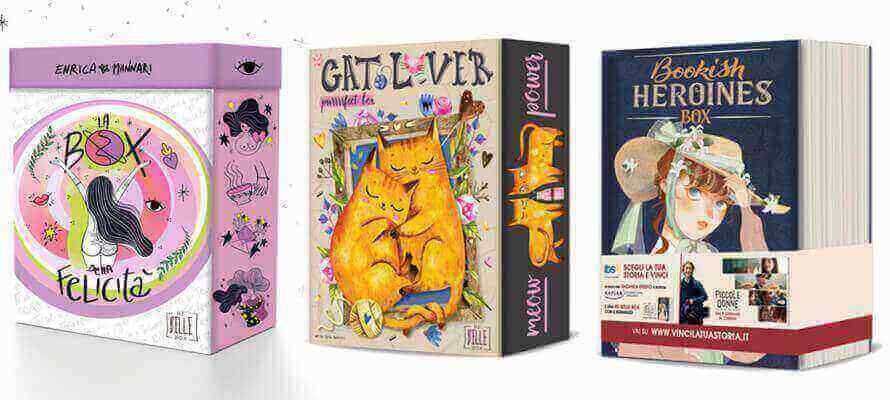
Born in 2018, it is an Italian box made by women for women. The first Re-belle box was released for International Women’s Day. It was born from the desire to give space to art and craft by women, it has a particular focus on who’s behind the product and their stoy, and has a focus on self-care and inspiration.
6 other boxed dedicated to creativity that printlovers must know about
Art Crate
Artists’ prints created by the best contemporary designers, in themed boxes for interior design.
Bibliophilic Excursions
The box for readers: each one collects objects on the theme of a book, to make the reading experience even more immersive.
Cloth & Paper
A box with a minimalist and luxurious style dedicated to work tools, in which even a simple planner is considered a sartorial accessory.
Papergang
The subscription box offered by Ohh Deer, a British company specialised in stationery and gifts with an ironic style and an eye for illustration.
Postmark’d
A box for those passionate about writing by hand. It is dedicated to the pleasure of taking some time to write and post a personal thought.
Scribble
Everything you need to write: from stationery to the right mug to creative writing guides and workshops with the best agents.