


After some difficult years, the sector is showing signs of recovery: the supply chain is reacting, ingenuity and redesigning itself
“Do not hope to get rid of books”: said the great Umberto Eco. He was entirely correct in telling us that it would not be a technological revolution that would close the long history of paper books. After some difficult years, the sector is showing signs of recovery not only because of the liveliness of young people who read manga, discuss books on TikTok, frequent bookshops, and influence the charts but also because, amidst ups and downs, the supply chain is reacting and redesigning itself. We could ferry ourselves into the future, trespass and learn to be different publishers.
By Anna Aprea | on PRINTLovers 100
Never before have the data we have on the performance of the Italian publishing industry belied the idea of a sector in distress. Our industry is growing by EUR 300 million compared to 2019; it ranks first in Europe and sixth globally. New segments of the public – with a clear prevalence of girls in the 11-19 age bracket – are approaching (printed) books through social media; physical bookshops, increasingly attended by young people, are consolidating their position as the first purchasing channel and produce 53.8% of the segment’s turnover. Overall, the entire sector seems to be flourishing again, proving capable of absorbing new trends, reshaping itself, and creating unprecedented opportunities for contact between the public and books in their various formats, including audiobooks. After years of the toughest challenges, we are now aware of the consequences of the energy crisis and the increase in paper prices, which have risen 57 per cent in the last two years. In short, despite the difficulties, we can maintain an optimistic outlook.
A transformative push
There is more than one reason for a rebound in vitality, and they operate in different directions: both in the market with the increase in book purchases by younger people and in terms of production responses. The entire sector, in all its components – production, distribution, sales – is accompanying the transformative drive with an increasingly structured offering, attentive to sustainability, the marked increase in female readers, and changes in demand. “In this period, there is greater attention to what is happening on several fronts,” explains Antonio Strepparola, Mondadori Bookstore Buyer. “In the meantime, print runs are no longer made based on rough estimates, but with models capable of reducing risks and yields; there is attention to paper costs; we buyers study the correct bookings for the large chains, evaluating the author’s history, trying to understand whether to trust a first-time author or not. In short, there is more sensitivity on the part of all players.”
Girls lead the way
We don’t read much in Italy, as we know: only 43% of the population does so, but – good news – young people are on the rise. 96% of girls and boys have read at least one non-school book in the last twelve months; the figure was 75% in 2018. As always, women – actually 11-14-year-old girls – are at the forefront: more than 6 in 10 have read at least one book in the year. According to AIE data, the market for children’s and young adults’ books has reached 268.4 million; if we add comics, it reaches 283 million.
About comics
A critical development segment for the entire book chain is comics, which in Italy (in specialised bookshops) sold EUR 71.2 million in 2022, an increase of 28.5% compared to 2021. If we add to these figures the sales in trade channels, we arrive at 107.9 million euros (plus 8.6% compared to 2021). “The growth,” added Strepparola, “is driven by manga, which, after three years in double figures, is now experiencing an adjustment. In particular, explains the Mondadori buyer, Anime, the animated version of the manga, is going strong, which, contrary to what you might think, is not a male-only phenomenon. The boom in comics led the Mondadori Group, in June 2022, to acquire Edizioni Star Comics from the Bovini family, one of the most important publishing houses in the Italian comics sector, together with Grafiche Bovini (a company controlled by the same family) and Starshop, i.e. Star Comics’ entire distribution system. From January 2024, they are, to all intents and purposes, in the Mondadori family.
Pre-books are going strong
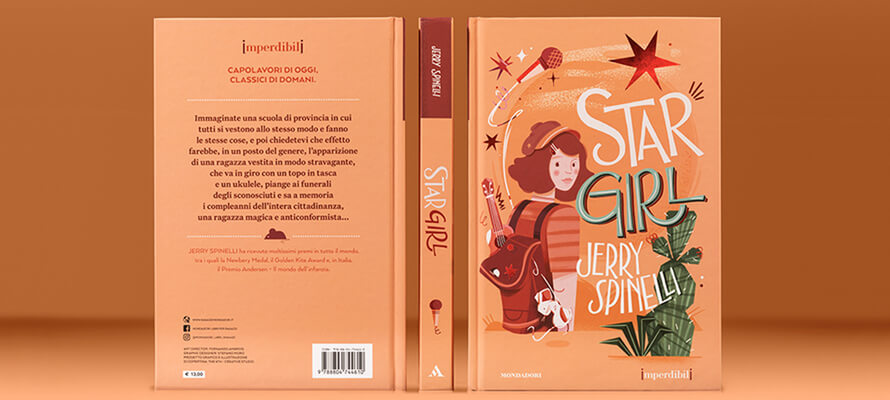
The figures for books dedicated to very young children, in the 0-3 age bracket, also emerge positively. Printed not only on paper and cardboard but also on fabric, sponge cloth, and plastic, active books owe their fortune to the established habit of reading aloud by parents and teachers. Young children are increasingly experiencing books, and pre-reading involves 70% of them; before the pandemic, it was 49% (AIE data). Consisting of a few pages with flaps to lift, punched holes, paths to follow, and windows to open, these books were once produced almost exclusively in China but can now also be made in Italy, thanks to technologies developed to print hardback books with windows or puzzles following an automated workflow.
Generation BookToker: firepower
Bringing younger people closer to reading is a phenomenon, as we have said, that could reshape the contours of the supply chain. Young people read more, integrate content with the digital world, show great curiosity for self-publishing, and stay in touch with the book universe thanks to social media. The book-lover communities on TikTok are staggering in numbers. #Booktokitalia, the accepted hashtag for boys and girls aged between 12 and 18, has around two billion views, and the international one has more than 93 billion. Firepower that can make a title cool in a few minutes, bring books that came out years before back into the charts, and increase sales from one day to the next, from one video to the next.
Romance wins
What are the favourite genres of the new generation of readers? In addition to the comic books, they are all mad for romance, which is experiencing a season of renewed popularity (with sales doubling from 2019 to date); there is also Spicy, which mixes eroticism and romance, and high fantasy with stories set in imaginary worlds or dealing with climate change. Dystopian novels and LGBTQIA+ fiction are also prevalent. In short, we are facing a mutation not only in tastes and bestseller lists but also in the forms of promotion and sales.
In the spiral of relaunching bookshops
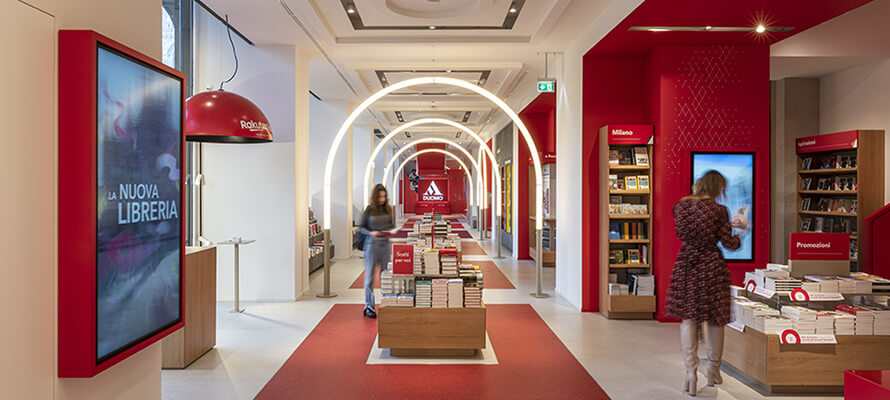
This horizon of change also includes the recovery of bookshops, which have gained ground at the expense of online and retail. Many young people intercepted on digital channels are going to bookshops, thanks also to the intense offering of side initiatives: book presentations, workshops, meetings, small exhibitions and, last but not least, the technologies incorporated in the spaces. The digital equipment of the Mondadori bookshop in Piazza Duomo in Milan is emblematic: interactive totems, digital signage to display new products in real-time, an immersive room for video experiences, a Trovalibro touchscreen, tablet stations and even a bell from which audiobooks can be selected.
In the beginning, digital printing
At the origin of this astonishing resilience of the book is, as is well known, digital printing, which has acted with great force in the market: it has made it possible to reprint titles requested by bookshops just in time; it has reduced paper waste and given efficiency and sustainability to production and logistics. “Thanks to digital printing, the pluses of which are cost, speed and service,” confirms Emilio Scirea, Mondadori’s technical consultant, “publishers can repeat print runs of even just two or three hundred copies without any particular economic repercussions. The break-even point between the traditional and digital printing processes is now 1500 copies. It is no coincidence that between 20 and 30 per cent of the Mondadori Group’s production uses digital printing. With the progressive improvement in quality and production efficiency, publishers have made the most of the potential of the catalogue, enhancing all available titles, even those not particularly visible in bookshops. Thus, the offering has expanded. The digital push has acted at all steps of the chain. Looking at the effects today, new businesses have gradually emerged, from customised productions to web-to-print to print-on-demand platforms that have enabled several graphic design companies to respond to self-publishing (albeit amidst enormous market competitiveness).

Publishing 2030 Accelerator
For many years, publishers, paper mills, and printing press manufacturers have shared common goals: waste reduction, process optimisation, and above all, responsible sourcing of materials from certified papers to vegetable-based inks, from vegetable glues in bookbinding to biodegradable materials in cover lamination and packaging. To further speed up the introduction of sustainable practices, at the recent Frankfurt Book Fair in October 2023, the International Publishers’ Association and the Federation of European Publishers jointly presented a project entitled Publishing 2030 Accelerator, a best-practice laboratory for the development of a model to calculate the carbon footprint produced throughout the production cycle, from the printing of each book to its distribution.
Canon Future Book Forum 2023
At the centre of a network of exchanges between the paper book, its different formats and the many methods of accessing content, there is now also the reflection of printing press manufacturers, first and foremost Canon. The focus of the recent Canon Future Book Forum 2023, held in Pong, Germany, is the possibility of welding all the book formats together at a crossroads. “We read simultaneously through many devices and in many formats: the time has come,” explained conference speaker Peter Fisk, “to think of a book that should reflect these changes.” How? The answer, he said, starts with liquid design, which can offer readers an innovative experience by combining the features of the physical book with the functionality of digital formats: instantaneousness, customisation, and efficiency. Everything leaves room for liquid and imaginative design because “the book is no longer a product but a content service,” said Fisk. We will have to start from this point – the rise of transmediality and hybrid formats – to invent an outline for the book’s evolution, its new wholeness.
AI, a new turning point
As the concept of the book changes, in a prospective interconnection, publishing changes. And if we look at this universe in the light of the potential of artificial intelligence, despite the possible distortions that we are discussing and will discuss at length, we glimpse the profile of a powerful ally advancing. Some tools are already improving the long process of producing content and services: we use them to predict the potential readership of an unpublished work, monitor information on trends of interest, make increasingly accurate translations, respond to customers, and simplify classification and research activities. Of course, we will have to deal with an excess of initiatives; we should be careful that a logic of discrimination does not take root, and we ought to select recognised and recognisable sources and integrate and compare knowledge. But hasn’t this always been the role of publishers? The near future is here; new possibilities are opening up and are all to be imagined.