



If the concept of “customer centricity” came to life in the 1950s, it was only with the internet and the widespread roll-out of smartphones that the perfect social and technological situation was created for omnichannel
If the concept of ‘customer centricity’ came to life in the 1950s, it was only with the internet and the widespread roll-out of smartphones that the perfect social and technological situation was created for omnichannel. But what’s the difference between multichannel, cross-channel and omnichannel? And how can a brand create infinite contact points – all inter-connected – with their clients?
By Lorenzo Capitani | On PRINT #81
“John Anderton!
You could use a Guinness
right about now.”
_
Like Ulysses’ sirens, the orographic advertising billboards call the Tom Cruise character by name in the 2002 film Minority Report by Steven Spielberg. This joke is the perfect summary of what today we call omnichannel. Today the scene set in 2054, which isn’t in Philip K Dick’s short story of the same name from 1956, is no longer science fiction and technology has already gone beyond fantasy: a company a thousand miles away from me not only knows who I am and what I have been doing recently but can also offer me something that actually is of interest to me. And it’s doing it by taking advantage of the traces I more or less consciously leave behind me. Ford, the greatest supporter of industrial standardisation, had recognised a certain value in personalising a product when he was aiming at “producing one perfectly good, low-cost car, but backed by continuous customer-centric service”. It was only in the 1950s that the concept of ‘segmentation’ came into being and ‘customer centricity’ developed, but it was with the Internet and the widespread roll-out of the smartphone (in Italy alone today we have 1.4 a head) that the perfect technological and social convergence was created. Information and data are available and gathered from thousands of different sources and client behaviour can be codified and analysed in real time.
Multi-channel, cross-channel or omnichannel?
Customisation has the client at the centre and passes through all the points, of which there are many, where it’s possible to come into contact with him or her. Often though, there is a tendency to simplify things and multi-channel, cross-channel and omnichannel are synonymous. In reality, they are evolutionary steps in a logic of iteration that over time has passed from a single point of contact – the physical store – to potentially infinite contact points. However, multi-channel means the development by the company of several points of contact (such as social media, apps, mail, chat-bots …) that enrich the range of existent channels, such as the classic website.
The next step is the so-called cross-channel that presupposes the design of integrated serves between several channels (typically two) for exchange and interaction. A good example is chain services like MediaWorld, Sephora and H&M, which enable you to make orders online and pick up the goods from the sales point. Another example is geo-localised advertising that aims to push users into a physical store: it’s no coincidence that the Waze navigator shows certain stores and not others in its maps.
Omnichannel is taking it all a step forward. Not only is the customer at the centre but there’ll be an interconnected system between all the contact points. There is, therefore, data transfer between the different channels and coherent content strategies. In this way the user is able to not only interact with the company in a large number of different ways but can also live the exact same experience on all the touch points without any interruptions moving from one to the other. I find what I’ve put in the cart on my smartphone there still when I access it on my PC. The data tells us that this is how it works in practice: navigation begins on the mobile device and the purchase is completed on the PC especially when expensive products are being bought.
Omnichannel communication
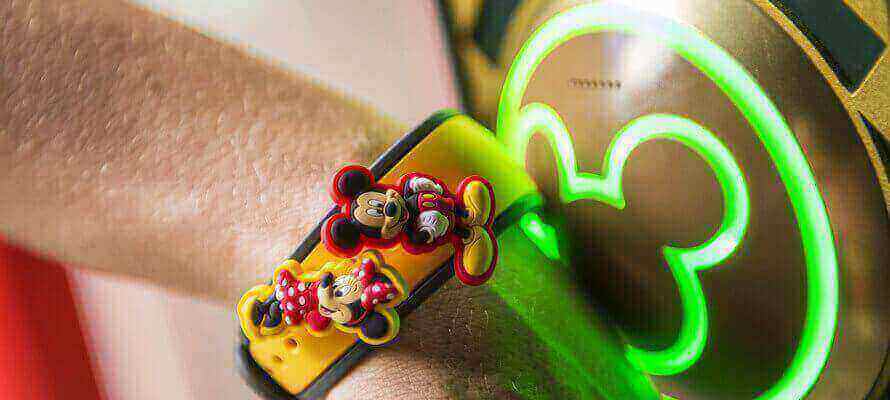
Today the customer no longer distinguishes between online and offline and wants to interact with a company in many ways, from sales point to internet site, from e-commerce to social networks, according to what he or she is doing. In order to follow clients’ behaviour and be able to manage the communication in real time on different contact points (offline and online) adopting marketing strategies based on data is necessary. That’s the case with Disneyland Paris: from the absolutely responsive website (and this means recognising the device and adapting form and content) you can plan your journey down to the smallest detail. Once you’re in the park you can use the My Disney Experience app to localise and book attractions in order to get waiting times, to book restaurants, purchase fast passes and share photos and videos. What enables all of this is the Magic Band bracelet that functions as an access key to all the services, from the hotel to the parks. In this way every instant of the Disney experience is traced, and produces and uses data to customise the offering.
This is one example but there are hundreds of them, more or less sophisticated, such as UniCredit that – very recent news – has decided to become increasingly digital to improve the effectiveness of what is called the customer journey, in other words the client interaction. With the Team 23 strategic plan, which envisages an investment in IT alone of €900 million a year, the bank is aiming to “dematerialise the processes and leave the counters with just personalised consultancy and high value services for private individuals and SMEs such as insurance consultancy and savings management,” explains Remo Taricani, Unicredit’s co-Ceo Commercial Banking Italy. “All the rest will be done with a new app that will have a user base of 7.4 million just in Italy.” So we’re looking at not only payments but also new services such as the aggregator of accounts open in different institutes, a digital mailbox specifically for investments and services tied to current accounts and cards manageable only from your smartphone. In this way it’s possible to dialogue with the individual directly, identifying their needs and to switch on or off functionalities.
A complex strategy
Put this way, it’s ‘just’ gathering data and using it as a guide for targeting the offer. But the adoption of a real strategy based on the customer experience isn’t an insignificant project and requires a profound transformation in a company’s way of doing business, its organisation and culture. In UniCredit’s case it means not only investments but also shutting down 500 branches. The transformation towards omnichannel, as Marta Valsecchi, Operations Manager of the Politecnico di Milano’s Digital Innovation Observatories, underlines, “has to be pervasive within the organisation, perfectly integrated with the company’s business strategy and therefore shared not only with the customer relationship functions but also with the top management.” Roles, processes and responsibilities therefore have to change. In addition, there needs to be a technological leap: companies often have local, unconnected systems, developed at different times for their own purposes. Harmonisation is the more complex gap, and time in this transformation is the worst enemy. It can’t take years to integrate or digitalise. We’ll see further on when we talk about retail that the accounts have to be done for warehousing and distribution. There need to be the implementation and rapid integration of the necessary platforms for adopting a unique strategy for marketing and communication, sales and really data-driven customer care, and a coherent management of the content and information at the different points of contact. Because, in reality, it isn’t the customer at the centre of everything but their data: millions of pieces of information that have to be gathered, built-in and analysed to get a unique view of the customer. These are not insignificant operations when we think that a giant like Amazon struggles to build its sales data in with the data on which its purchasing suggestions are based: so we buy a book, it arrives home and exactly the day after we get a mail suggesting… the same book.

The data, the unknown
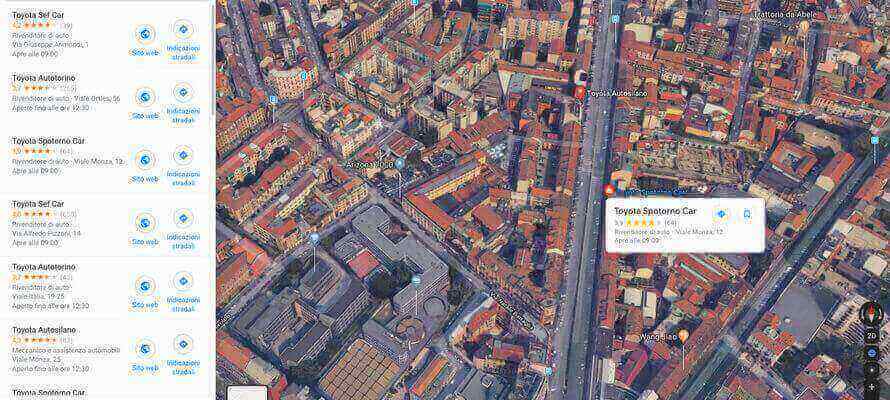
People often think that they just need to get a platform to solve the problem. Having said that CRM is only a tool and not the solution, acquiring the data isn’t enough: business intelligence is needed and above all data mining in order to select, explore and model huge masses of data so as to discover regularities or unnoticed relationships and be competitive and get there before others. This is what Toyota did. In Italy 99% of car purchases take place offline and so in 2019 the firm wanted to incentivise visits to its dealers with an omnichannel strategy that took advantage of local campaigns by using geo-localisation, search, Maps, YouTube and Google’s Display Network, which monitors all the activity connected to a Gmail account. “In one month we managed to increase the visits to dealers by 52% compared to the previous year, with an increase of 14,000 visits in 30 days,” explained Davide Fraccalvieri, the Japanese car firm’s Marketing Communication Manager. The visits to the dealerships were measured using the anonymous, aggregated data of authenticated Google users who had activated the locations’ history.” In this way Toyota managed to measure the conversions every time the users, after interacting with an ad, completed a specific action, such as phoning for an appointment, accessing the web site, visualising road directions, and getting a more complete vision of the campaign’s online and offline performance.
But what does this data have to be like, and how does it have to be organised? It can be structured or unstructured according to how it is memorised or not on the database; individual – traceable back to a single user – or aggregated in groups of customers; declared directly by the user himself or herself (for example, registering or browsing transparently) or obtained through passive monitoring; historical or gathered in real time. All of this is aimed at the segmentation of the market to identify behaviours, characteristics or shared needs, and at the creation of profiles and recurring models. Valsecchi continues, “Having understood the client, they have to be met at every available touch point, triggering all the mechanisms useful in offering them a product that is the closest possible to their needs – even the ones not expressed – building their loyalty, activating promotions and trying to avoid as far as possible the so-called churn,” in other words, the ‘abandoned cart syndrome’ that afflicts e-commerce with staggering percentages. The UK behavioural marketing company SaleCycle has estimated at an average of 74% the global rate of abandoned carts on e-commerce sites. The sector data highlight that travel is the field with the highest percentage, 81.8%, followed by financial services (77.8%), while the sector with the lowest rate is fashion (71.5%).
My name is ‘No one’
Meeting clients means not abandoning them, means cuddling them and leading them. But above all, it means never hassling them. Because while it’s true that to suggest a product and recall an abandoned cart you need to refer directly to them, it’s likewise true that nowadays the sensation of being perpetually spied on is generating a negative reaction that is pushing us towards anonymity. How many of us haven’t made purchases on a site, haven’t downloaded an app or have refused the umpteenth loyalty card because we have to register and we didn’t want to hassled by even more notifications, newsletters, mails, messages… ?
And this is where the real challenge comes, which goes beyond respecting privacy or the GDPR: how to profile and execute omnichannel with anonymous clients? In other words, I know what you’re called, I know what’ve bought and what you like, but if I don’t know who you are? It’s the question they put themselves in RCS MediaGroup when they started up their omnichannel transformation. If the focus was at first the subscribers and identifiable registered users by first name and last name, the attention shifted towards what is RCS’s biggest audience: anonymous users. To be able to analyse the behaviour of contacts a data management platform has been created that allows, through cookies (small text files that save browsing data on a site), the gathering of the readers’ ways of interacting and having the possibility of implementing push marketing actions. In this way it is possible to identify, for example, users that during the purchase process haven’t completed the conversion and can once again be offered a product of interest (or related objects) or shown promotional banners when they go back to the site. In addition, an in-depth understanding of the user is possible through the synchronisation of offline and online data. That’s why – also in the light of GDPR – the ok that gets requested every time you access a web site for the first time is indispensable. Without cookies, a company is blind. It’s no coincidence that most Data Management platform developers are the major operators like Oracle and Adobe.
Omnichannel in retail
If it’s true that in 2018 the number of Italians using the web for all the phases of the customer journey, from searching for information to the purchase stage, grew by 2.5 million, it’s equally true that physical stores remain at the centre of all retailers’ marketing strategies, from Amazon Go to the biggest fashion sites. If omnichannel is more or less within everyone’s reach in digital, retail has to deal with the real challenges. One example should be enough. I’m in Paris and I’m browsing on the e-commerce site of my favourite jeans. Which language should the site be in? In French because it detects my IP address or in Italian on the basis of my cookies? And if I got there through a social network? I find a model I like, I’d like to order it and have it delivered at home: I’m only in Paris for the weekend. What can we do? The availability I see is that of the French warehouse, granted that they have it, or of the Italian? And how does the availability change if I’m logged in, and therefore recognisable, or anonymous? And what happens if the pair I’ve chosen is available in the French warehouse but not in the Italian one which they would leave from if I choose home delivery. And why doesn’t it offer me the chance to pick them up in the store? However, if I have the time to get them delivered in Paris but after getting home I need to make a return what should I do? Do I send them back to France, return them to the store nearest to me or to the local e-commerce location? They’re all questions that have to be dealt with in using real omnichannel and that hide the organisational difficulties that go much further than harmonising the client’s data. Most times the difference between owned stores and franchisee stores, with their own warehouses and accounting, makes a simple exchange of sizes between sales points impossible.
Today most times all you can do is see the availability of an article in-store and book it while browsing the e-commerce site, as happens with Decathlon. But there are also more virtuous examples such as Yamamay, which entered an agreement with Accenture in April 2019 to join the opportunities of digital with those of the physical store so as to create an omnichannel customer experience. The user can start an activity on one channel and continue with it on another, without needing to start again from the beginning. Inside the Milan sales point, the personal shoppers have mobile payment technologies to guarantee assistance from the client’s entrance up to the moment of payment, without this having to be done at the cash desk. Other omnichannel-type technological news items under development are interactive touch-screen monitors and a 3D hologram that allows moving three-dimensional images to be seen, with the effect of a virtual fashion show. Another powerfully omnichannel element is Anna, a mobile chatbot created by Accenture to offer clients a personalised fashion consultant. It is accessible through Google Assistant and is activated thanks to Artificial Intelligence; it provides suggestions about clothes and accessories only after carrying out an analysis of each person’s style. Accessing the fashion stylist can take place through your own Google account, without having to install apps on your smartphone: following Anna’s advice, the user can connect to the Yamamay site to proceed directly to the purchase, benefiting from the click&collect service too.
In short, as the Politecnico di Milano research, The Pillars of Omnichannel CustomerExperience Management, reveals, “Italian companies are still a long way from putting into practice real omnichannel for their customers, preferring a quick-win approach on single channels rather than an integrated management of the different marketing and communication channels”. The transformation is definitely taking place but there is still a huge amount to do.