



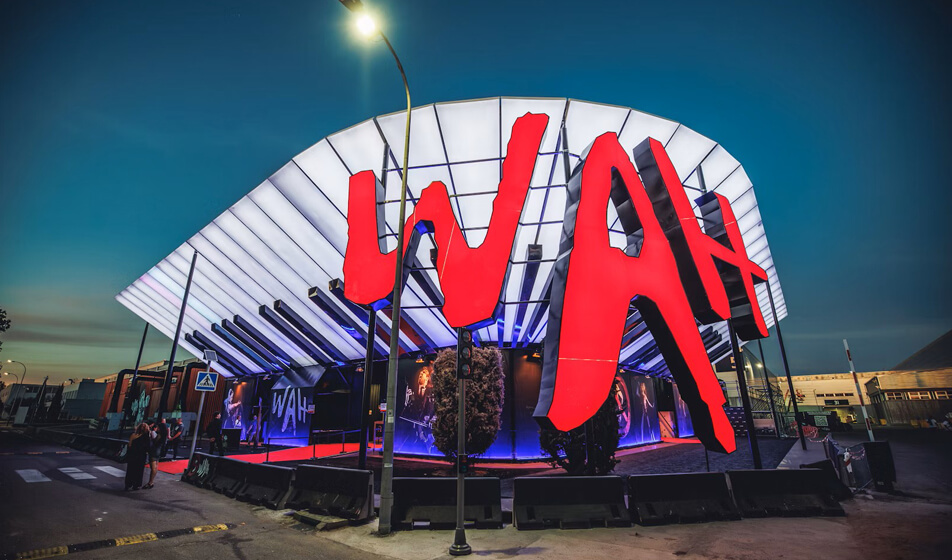
With Daniel Sunderland, President of FESPA Global, we explore three application fronts that are rapidly evolving—retail, Out-of-Home and interior decoration—to understand where the market is headed, which innovations are raising the bar, and why, among print providers today, the winners are those who choose a strong positioning.
A second-generation screen printer, born and raised in Mexico City, Daniel Sunderland has more than thirty years of industry expertise and a long track record in associations, which have brought him to the helm of FESPA, where he also serves as American Ambassador. With a background in Business Economics and an MBA from IPADE Business School, Sunderland combines managerial vision with hands-on production culture—shaped in a market that, in recent years, has had to navigate shocks and restarts, from the pandemic to new balances between demand, technology and sustainability. As President, in June 2025 he launched “FESPA Future”, a vision designed to help the specialty print community move beyond “survival mode” and return to confident growth. The program puts innovation, education, youth engagement and digital transformation at its core, summed up in the new promise “Connect, Inspire, Support”: sharing knowledge and research (including the relaunch of the Print Census), creating opportunities for collaboration and opening up to new application markets—an approach aimed at making the sector not only resilient, but truly “future-proof”. We asked him to share his view on the evolution of wide format printing, a cornerstone of specialty print that represents the core business of FESPA and its members.
Wide format has grown far beyond visual communication. How would you describe today’s market in terms of creativity, demand and growth prospects?
We’re in a phase where, in printing, almost anything is possible: whatever you can imagine can be printed and produced. This allows brands and communication professionals to connect with audiences in ways that would have been unthinkable just a few years ago. In addition, increasingly advanced rendering tools and AI—together with new generations of printheads—are improving the quality and realism of the final result. In this context, creativity becomes the real differentiator: that’s where the added value sits compared to what the end customer can “simply buy”.
That said, the market is quite polarized. On one side there are high-end companies looking for top-level workmanship and willing to invest, because they understand the impact it has in bringing people into store. On the other, there are businesses that just need to “get the message out”, with limited budgets and no need for the WOW effect—so they’re price-driven. As a company, I believe it’s more effective to choose one of these two positions: trying to cover both—and excel at both—is difficult. Better to focus and be truly the best in a specific area.
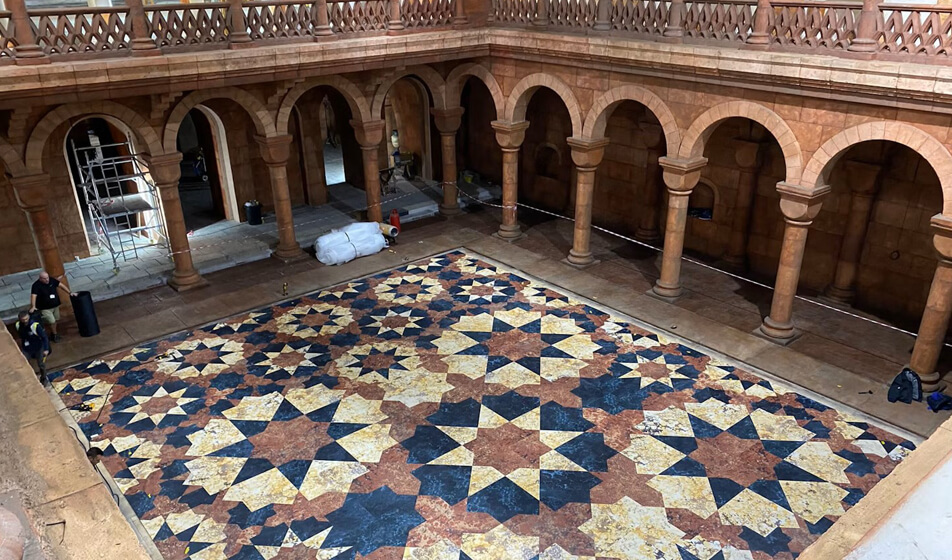
Technology continues to drive transformation. Which innovations—across systems, inks and materials—are redefining production efficiency and quality?
Customers have specific needs, and we printers help them meet those needs in the best possible way. The moment a solution becomes “standard” and widely adopted, customers raise the bar: they ask for higher definition, more sustainable or more durable processes, faster speeds and more cost-effective inks. For me, that is the true engine of innovation: technology exists to enable printers to respond to market needs. Today, thanks to engineering specialization and the circulation of know-how, progress is moving faster than ever. It’s an exciting time to watch.
If I had to point to one area that is concentrating a lot of innovation right now, I’d say sustainability. But the truth is that change is significant on many fronts: that’s why I recommend visiting the main FESPA event in Europe every year. It’s one of the few places where you can see the best and the newest from all over the world. In May 2026 it will be held in Barcelona.
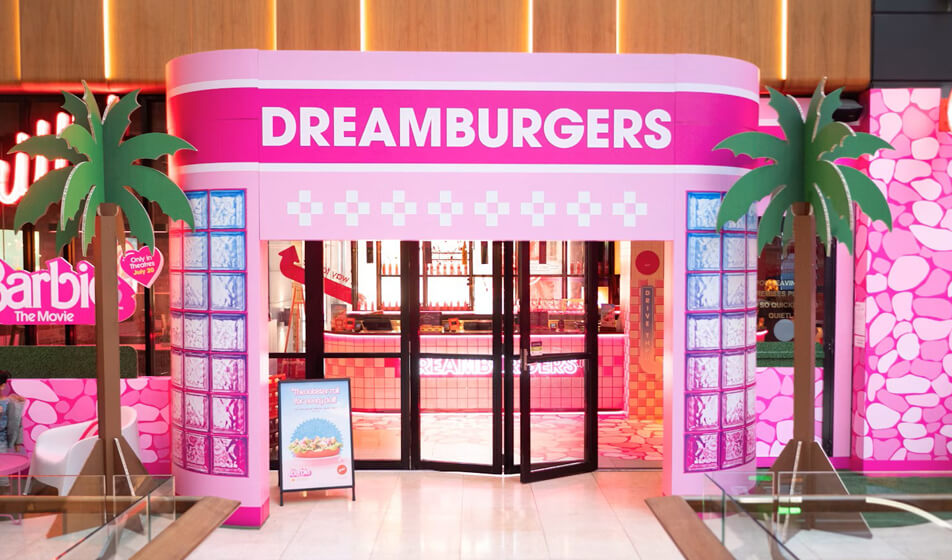
Retail remains one of the most dynamic environments for print. How are the design and delivery of in-store communication changing?
The need to encourage repeat purchases and refresh the offer more and more often pushes retailers to get new products onto shelves as quickly as possible—and more frequently. But they also need to communicate it: that’s why the number and intensity of campaigns throughout the year are increasing, and with them the volume and frequency of print requests.
Faster machines and smoother communication between printers and designers are essential to make the whole process efficient. Today we’re talking about a single supply chain that connects production and promotion. In the past, communication started when the product was ready; now timelines are so compressed that promotion begins while production is still underway. To secure approvals and start print phases, fully developed renderings of the store’s final look are required. Technology has been decisive: it has reduced lead times and made production more streamlined.
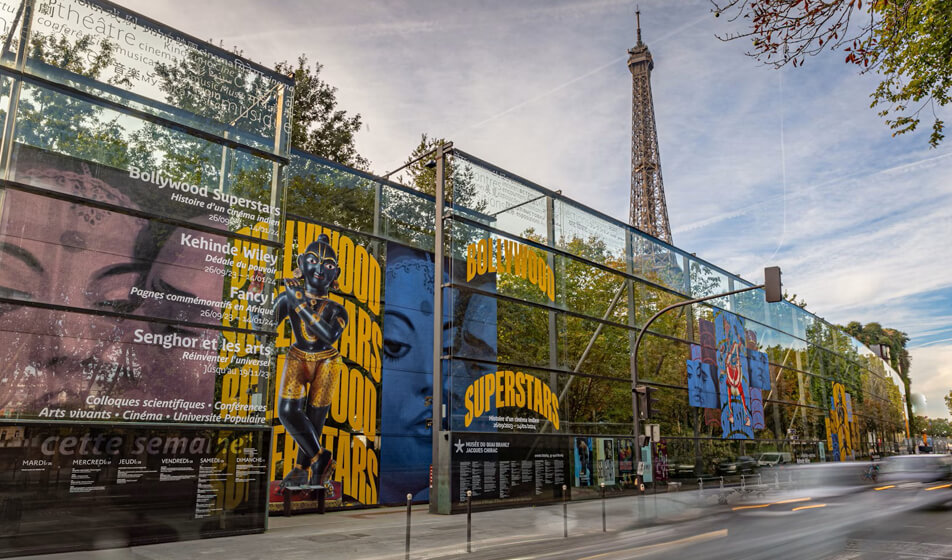
Out-of-Home is settling into a new balance between print and digital. Which solutions are helping the segment stay competitive?
It’s true: digital displays are increasing. But in most cases, these installations coexist with a printed component. In other words, digital isn’t necessarily reducing overall print volumes; rather, it’s increasing the level of customization required for each location. In any case, the costs and installation requirements of digital mean the main market is still largely tied to print.
To remain competitive, it’s crucial to keep up with higher quality standards, offer strong customer service, and be able to rely on top-level installers. It sounds simple, but in practice it’s harder than it appears—and that’s also why it’s important to closely follow upgrades and innovations that emerge, for example, during the FESPA Shows.
Interior decoration opens up new creative and commercial opportunities. What is driving the growth of printed textiles, wallpapers and customized surfaces? And how are printers positioning themselves in an increasingly design-driven market?
Many marketing strategies work on individuality, and digital makes it possible to print different graphics without having to reconfigure machinery each time: as a result, average run lengths are shrinking. This is especially true for textiles, where volumes are growing significantly. It’s an extremely versatile material and, particularly in interior decoration, it can be updated “as you like” at relatively contained costs.
At the FESPA Shows there is a section called “Printeriors” that showcases ideas and applications on how to use new materials and bring print into personal spaces. As the market expands, many customers are requesting these processes and are encouraging their print providers to invest in machines to enter these segments.
FESPA connects a global print community. From your point of view, which areas show the greatest growth, and what should professionals focus on to remain relevant in the near future?
The way I see it, the risk of positioning yourself only as “the cheapest” is that it becomes very easy to be replaced by someone who, for any reason, can sell the same product for just a few cents less. Regions that can offer lower prices—because they have cheaper supplies, or because they benefit from government subsidies, or because they pay less tax—are often the ones growing fastest. To stay competitive, I believe it’s essential to truly differentiate and build a strong customer service offering.
FESPA Awards: the creative barometer of wide format
The FESPA Awards are the international prize that selects and celebrates the best specialty print projects from the global FESPA community, showcasing applications and solutions that anticipate the market. Looking at the projects awarded globally in 2025, some very concrete trends emerge.
In PoP and display, “design-for-logistics” dominates: flat-pack structures, quick in-store assembly, structural materials and premium finishes (embossing, spot varnishes) that bring cardboard into high-end territory. In wrapping, decoration also becomes function: high-performance films, applications on complex surfaces, “camouflage” patterns and increasingly rigorous workflows. Roll-to-roll pushes scale: textiles and mesh in maxi widths, where finishing (stitching, reinforcements) and logistics matter as much as printing. Printeriors expands the interior: wallpaper, films and ambient panels, often rolled out across multiple sites. In signage, the approach grows more architectural and tactile: more responsible materials, illuminated elements and 3D details. The common thread? Performance and end-of-life enter the brief: more responsible materials, optimized processes and a refined aesthetic. The next edition of the FESPA Awards will be in 2027. Submissions are open at: www.fespaawards.com