


The more stringent regulations will serve as a foundation for developing intelligent marketing strategies.
The period 2024-25 is changing the criteria for information reported on labels. However, the more stringent regulations will serve as a foundation for developing intelligent marketing strategies. The growing emphasis on sustainability and transparency will encourage brands to innovate in design, materials, and production processes.
By Lorenzo Capitani | On PRINTlovers 105
Seven seconds is the average time a consumer takes to decide on a purchase based solely on the packaging. 70% of purchasing choices are made directly at the point of sale, and 85% of decisions depend on the colour of the packaging. These are the magic numbers of what marketing theory commonly calls ‘impulse buying’—instinctive, unplanned buying driven by emotions that takes place without going through a normal process of rational decision-making driven by necessity or a sense of urgency.
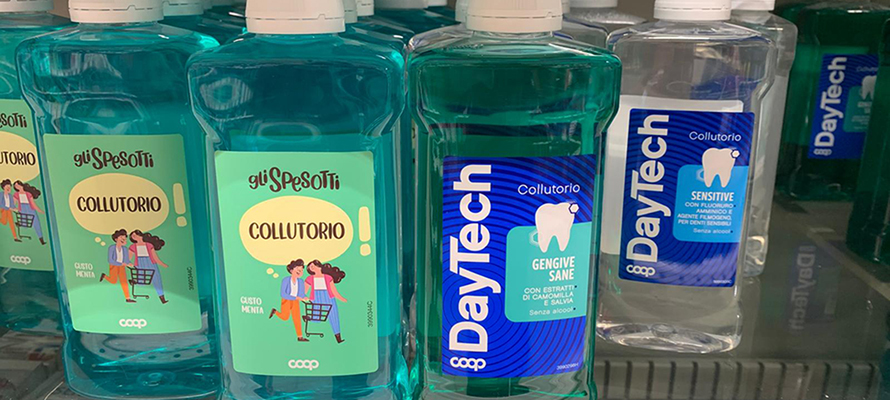
Packaging plays a crucial role in this because it significantly influences consumer behaviour. According to the 2022 study “European Consumer Packaging Perceptions”, conducted by Ipsos for Pro Carton (European Association of Carton and Cartonboard Manufacturers), a sample of 7,000 European consumers aged 19 to 64 revealed that 46% were willing to pay more for a product with superior or perceived superior packaging. Research by Trivium Packaging in 2023 indicates this percentage rises to 73% if the packaging is or appears sustainable. This is because we buy what we see, often unable to directly touch, try, taste, or even see the product outside the packaging. The more we like it, the more we are willing to spend. For example, Coop mouthwash is sold with two different labels, both quite basic, but at different prices, with one costing 50% less than other brands that have labels perceived as premium, perhaps because they are laminated.
Stimulating touch through sight
In 2000, Federico Marchetti founded Yoox, marking the beginning of a successful period that would establish the platform as a global leader in the e-commerce of fashion, luxury, and design goods. However, in an interview with the Harvard Business Review, Marchetti expressed his obsession with one question: “How could I sell luxury items, which require a strong emotional component, online at a time when- before the advent of Facebook and the iPhone- nobody believed that people were ready to make purchases for thousands of euros without touching, trying on, or seeing the products?” In hindsight, we might say the solution was simple: all you need to do is take careful photos and describe them accurately. After all, how many of the things we buy online do we physically see before purchasing? The same applies to most items we buy off the shelf.
One example is the wine we often buy based on what is called reminiscent impulse, which is when memory comes into play. Unless we go shopping directly at a winery, when we are at the supermarket, we base our choice on the type of wine, our experience, our knowledge or the reputation of a winery and its label. This explains the luxurious, shiny, refined labels of champagne and Barbera’s more rustic and apparently less sophisticated labels: the former rely on the memory of prestigious brands, parties and special occasions, while the latter wink at the simplicity of a genuine, natural and organic product.
This high level of recognizability is essential in many sectors and is even emblematic in the wine industry, where, according to civinization.com, “75% of purchasing decisions are not predetermined, 90% of consumers do not possess a high level of product knowledge, and in 65% of cases, decisions are made based on the emotions evoked by the packaging. ” Today, it is more important than ever to be immediately visible: on the shelf, consumers buy not only for what they see (85% of consumers make purchasing decisions based on colour, as the Color Marketing Group states on its website) but also for the tactile nature of the packaging. However, in e-commerce, the sensory experience is conveyed only through photographs. Therefore, there is a need to create packaging that generates a desire to touch through visual appeal.
Put this way, though, packaging seems to be a realm of creative freedom, where anything that can stimulate purchase is permissible.
The regulatory framework
In reality, as those who design packaging and labels know only too well, one has to deal not only with market trends or external factors – such as the environmentalist boom in refillable packaging, which was abruptly halted by the pandemic – but above all with regulations that are becoming increasingly stringent regarding consumer protection information. While the creative aspect of the packaging can differentiate the product, the labelling must comply with precise rules, established at both national and European levels: the information required must be clear, easily visible, understandable, and not misleading and indelible, transforming packaging into a tool for marketing as well as for transparency and safety for the consumer. Limiting ourselves to the food sector in Italy, the reference standard is the Regulation on the Provision of Food Information to Consumers (known as FIC) 1169/2011, which came into force on 13 December 2014, establishing the basic rules for what information must be present on food packaging. According to the definition adopted in the EU, a label is any trademark, brand, sign, image or other written, printed, stamped, branded, embossed or impressed graphic representation on the packaging or container of a foodstuff”.
The information to be provided to consumers is governed by a set of general rules, in particular:
- Regulation (EC) No. 178/2002 of the European Parliament and of the Council of 28 January 2002, which establishes the general principles and requirements of food law;
- Regulation (EC) No. 1924/2006 of the European Parliament and of the Council of 20 December 2006 on nutrition and health claims;
- Regulation (EU) FIC No. 1169/2011, the most important, which establishes the general principles, requirements and responsibilities governing food information, in particular food labelling, which must be accurate, clear, easily understandable and not misleading, and must not be ambiguous or confusing.
Additionally, there are specific rules for certain food products such as wine, eggs, honey, olive oil, and foods intended for young children. These rules include the obligation to indicate the method of production or rearing, the origin, the variety or designation method of a product, as well as national regulations on specific issues not governed by the EU, which each member country can impose, provided they comply with the general labelling rules established by the FIC regulation.
The regulation mandates that labels contain specific mandatory information for prepackaged foods (foods packaged prior to sale) as well as optional information intended to inform and attract consumers- essentially, marketing information. To clarify, the mandatory information includes the following:
- name of the food;
- expiry date;
- nutritional declaration;
- name or company name of the producer;
- storage instructions;
- clear and complete list of all ingredients used in the food;
- a clear and complete list of all allergens, including those present in the pure ingredients and those from the technological tools with which the food has come into contact that may have released potentially allergenic substances;
- net quantity.
In particular cases, it is also necessary to indicate:
- the country of origin or place of provenance (e.g. meat or milk);
- the instructions for use;
- the percentage of alcohol if it is a drink that contains more than 1.2% alcohol by volume.
However, nutritional claims (e.g. “contains omega-3”), the nutrition label (the famous, or infamous, Nutri-Score) – not to be confused with the nutrition declaration (see below) – and the country of origin (unless mandatory) are voluntary.
EU food labelling regulations currently allow the use of nutrition and health claims even on products high in fat, sugar or salt (e.g. “rich in vitamin C” on a product high in sugar).
The Nutri-Score classifies products based on their overall nutritional quality, with scores ranging from A to E (from dark green to dark orange). Adopted in France, it has been replaced in Italy by the NutrInform Battery, a ‘battery’ indicator that shows the energy and nutritional content of food per single portion as a percentage of the recommended daily intake. In 2022, the Italian Competition Authority took a clear stance by sanctioning companies that used the Nutri-Score, as this system could mislead consumers if not accompanied by supplementary information.
As you can see, the standards are exact, but some gaps remain to be filled. In their current state, no EU standards define the terms ‘vegan’ or ‘vegetarian’ or criteria to establish whether a product is suitable for those who have made this dietary choice; for example, thresholds for traces of products of animal origin. Food companies that produce these foods can voluntarily apply the ISO 23662:2021 standard for food ingredients suitable for vegetarians or vegans, and there are also several voluntary private certification systems.
The mandatory elements
At the risk of sounding pedantic, we’d like to remind you that food labelling is essential for informing consumers and complying with current regulations. Let’s examine the main elements one by one.
- Name of the food
The product’s name must be unequivocal and immediately understandable to the consumer. There are two types of names: legal names, defined by specific regulations (as in the case of ‘jam’ or ‘chocolate’), and descriptive names, which, although more flexible, must still ensure precise identification of the food beyond its commercial name.
- Indication of the date
The date of consumption, or best before date, must include the phrase ‘best before’ or specify the date after which the product is no longer safe, particularly for highly perishable items. Alternatively, it may state ‘best if used by’, meaning the date until which the product will maintain its optimal quality if stored properly.
- Nutritional declaration
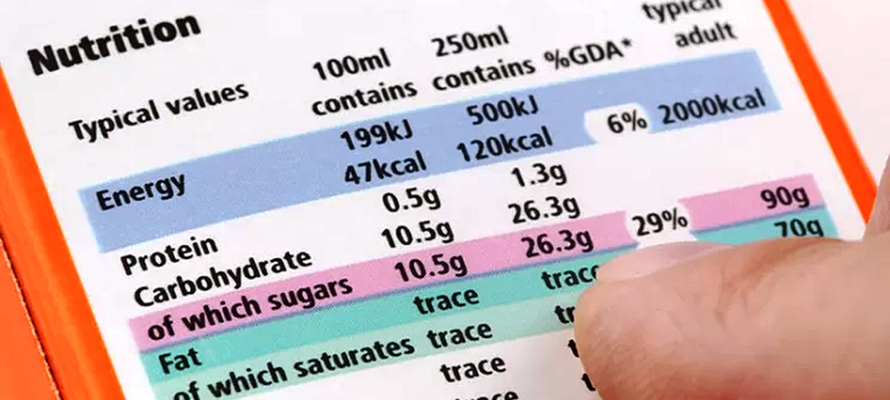
This table must present the essential nutritional values, expressed per 100 g or 100 ml of product, while also allowing for the indication of values per portion. The following items are mandatory:
- energy value (kJ and kcal);
- total fats and saturated fats;
- carbohydrates and sugars;
- protein;
- salt (equivalent to sodium content).
Optional information, such as fibre or vitamins, may be included if it is significant and backed by scientific analysis. Regulation 432, issued in 2012, outlines 222 permitted health claims regarding vitamins, minerals, and other non-plant substances. The primary permitted claims are:
- reduced risk of disease (e.g. “plant sterols have been shown to reduce/lower blood cholesterol levels”);
- psychology and behaviour (e.g. “pantothenic acid contributes to maintaining normal mental performance”);
- impact on weight, sense of hunger or satiety (e.g. “Glucomannan as part of a low-calorie diet contributes to weight loss”);
- role of substances in the body (e.g. “Calcium is necessary for maintaining healthy teeth”);
- child development and health (e.g. “Iodine contributes to normal child growth”).
- Name or company name of the producer
To ensure the product can be traced and to facilitate communication with the consumer, the full details (name and address) of the responsible food operator, who may be the producer, packager, or distributor, must be indicated on the label.
- Instructions for use or storage
The label should clearly indicate the storage and usage methods (for example, “store in a cool, dry place” or “cook in a pan for 8-10 minutes over medium heat”).
- Ingredients
The list must be clear and complete, including all ingredients used, such as additives, identified by their legal names and listed in descending order by weight during preparation.
- Allergens
The list must be clear and complete, including all allergens such as milk, gluten, nuts, and soya. It should be highlighted to ensure the safety of consumers with food intolerances or allergies. Not only must the allergens present in pure ingredients be highlighted, but also the technological tools used in production that the food has come into contact with, which may have released potentially allergenic substances.
Currently, it is not mandatory to indicate the presence of gluten; instead, it is required to declare the presence of “cereals containing gluten, ” such as wheat, rye, barley, and oats, which are among the 14 allergens that must be listed. Furthermore, the label “gluten-free” is optional and may only be used if the product contains less than 20 ppm of gluten, as stated in Commission Implementing Regulation (EU) No. 828/2014 of 30 July 2014.
- Net quantity
To enable consumers to make informed choices and compare different products, it is mandatory to indicate the actual content using standardised measurements: weight in grams (g) for solids or volume in millilitres (ml) for liquids.
Labelling issues
But how should labels be created in practice? According to EU Regulation 1169/2011 and its updates, a food label must adhere to precise technical standards to ensure consumers receive accurate information. Legibility is a fundamental requirement: the characters should have a minimum size of 1.2 millimetres (measured by the height of the letter x), which can be reduced to 0.9 millimetres only for very small packages with a surface area of less than 80 cm². The text must exhibit a significant contrast (e.g., black text on a white background) and use clear, easily legible characters. The choice of font is left to the producer, provided it ensures clear legibility.
As far as positioning is concerned, all mandatory information should be placed in the same field of vision, be easily identifiable and not be hidden or obscured in any way by other written or graphic elements. The indications should be indelible and reported in the official language of the member state in which the product is marketed, with the option to use multiple languages.
When space allows, the presentation of nutritional values should ideally follow a tabular format, with the text preferably aligned to the left. The units of measurement must adhere to the metric system (grams, kilograms, millilitres, litres) for net quantities, while the nutritional values should be expressed per 100 g/100 ml, with any portions indicated in units easily recognisable by the consumer.
The overall dimensions of the label should be proportionate to the size of the package and, in any case, sufficient to legibly include all mandatory information. Regarding the addition of digital technologies, such as QR codes or other systems, these can be used to provide extra information, but they cannot replace the mandatory information that must always be physically present on the label.
Finally, regarding materials, safety and sustainability must coexist. As established by EC Regulation 1935/2004, all materials intended for food contact must ensure high standards of safety and chemical inertness. Generally, three main categories of materials are allowed: paper and paper derivatives, plastic materials (regulated by the most recent EU Regulation 10/2011), and metallised films. Paper, in its various forms – from adhesive to thermal to coated versions – maintains a prominent position, especially due to the increasing certifications for food contact. In the realm of plastic polymers, PP, PE, and PET dominate, offering increasingly innovative and sustainable solutions. Labels must be able to withstand extreme conditions, from the cold of frozen foods to the heat of baked goods, ranging from -40 °C to +150 °C, without losing their characteristics. Today, sustainability is no longer optional. The SUP (Single Use Plastic) Directive has accelerated the search for eco-compatible alternatives, and certifications play a key role. In addition to mandatory REACH/RoHS compliance, voluntary standards such as ISO 22000, BRC, and IFS are becoming prerequisites for operating in the sector. This trend reflects the growing attention to food safety and the quality of production processes.
Costs remain a crucial variable: balancing performance, sustainability, and budget is a daily challenge for producers. However, as industry analysts point out, format optimisation and technological innovation are helping to make even the most advanced solutions more accessible.
In this rapidly evolving scenario, the key to success appears to lie in the ability to integrate regulatory compliance, technological innovation, and environmental sustainability. This presents a complex yet essential challenge for a sector that serves as a fundamental link in the food value chain.
News on the horizon
In 2024, specific updates were introduced regarding the transparency of information on food labels, aiming to improve the understanding of nutritional and allergenic characteristics of products. One of the most significant changes is the introduction of new labelling requirements for allergen information, which demands clearer identification of ingredients such as nuts, dairy, eggs, and gluten, especially in packaged products, where the visibility of this information has been enhanced. Furthermore, it has been established that certain nutritional information must be presented in a more easily readable format, even for small packages, where producers were traditionally exempt from including all nutritional details.
Another significant change concerns information on ingredients, which now must be clearer regarding changes such as the use of vegetable oils, which must be specified in detail, especially to avoid confusion between refined and non-refined oils. The indication of the presence of additives must also be more rigorous, with the obligation to report the identification of substances such as preservatives, colourings and artificial flavourings with greater attention to the labels of ‘free from’ products.
Regarding 2025, the legislation specifies that all pre-packaged food must include a nutritional label in a clearer format, utilizing a standard method that is immediately understandable to consumers. Implementing the traffic light nutritional labelling system, which visually indicates (using the colours green, yellow, and red) the fat, sugar, salt, and calories levels, will be mandatory for all food products to enable consumers to make more informed and quicker decisions.
Furthermore, there will be an increasing emphasis on sustainable practices and the labelling of food produced through environmentally friendly agricultural methods. Products labelled as organic or with a low ecological footprint should more clearly indicate their origins, including enhanced labelling that certifies their geographical origin and production method, similar to products with Fairtrade certification or other environmental labels.
In summary, 2024 brought substantial changes in the clarity of information on allergies and ingredients, while 2025 will see the mandatory implementation of more visible and standardised nutrition labels, placing greater focus on sustainability and public health.
The stricter regulations, which may seem restrictive today, are destined to become a fundamental basis for building intelligent marketing strategies. At the same time, the growing attention to sustainability and transparency will push brands to innovate in design and materials and production processes.
As author and branding expert Marty Neumeier states in his book The Brand Gap, “Packaging is the promise that a product makes to the consumer – a promise that should be upheld in every aspect of the product and the experience.”