



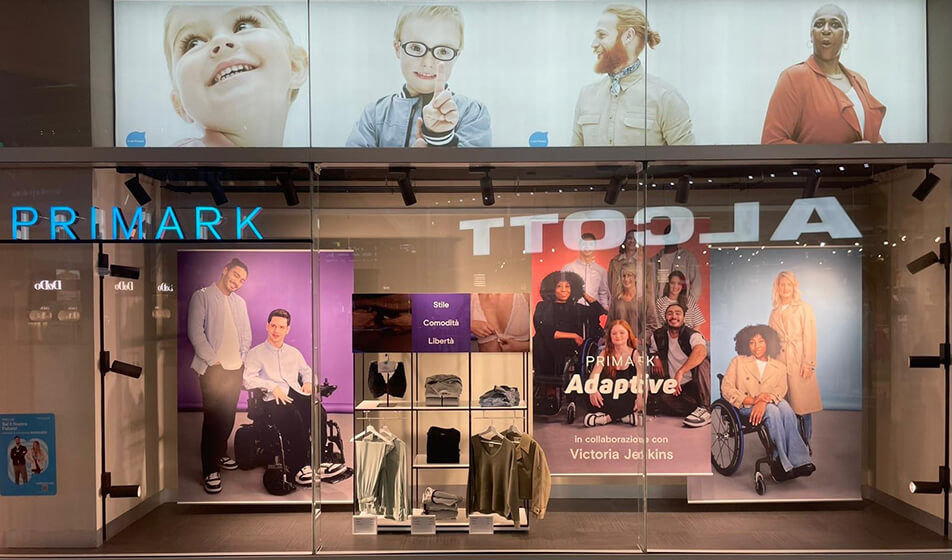
A shop designed with human diversity in mind makes life easier for all customers, especially if the brand only sells through retail channels. This is true for Primark, which has made accessibility about more than just price—it’s about paying attention to people with characteristics such as disabilities and neurodiversity. We talked about this with Charlie Magadah-Williams, Head of Inclusion and Community Impact at Primark.
It all began with a webinar during Inclusion Job Day – a recruitment event for people with disabilities and those belonging to protected categories – held on October 24, during which Girls Who Print Italia was invited to discuss ableism in the workplace. Among the participating companies was Primark, which showcased its Adaptive clothing line, stores fully accessible to people with physical disabilities and neurodiversity, and communication grounded in an authentic representation of diversity. This is a significant step for the Irish brand, which has been present in Italy since 2016, building its identity on the democratization of fashion and gradually advancing ethical and environmental sustainability in the fast-fashion supply chain. We therefore wanted to explore all facets of this strategy by reaching out to Primark’s global D&I manager, Charlie Magadah-Williams.
In recent years, Primark has increased its focus on diversity and inclusion. What is the company’s overall policy regarding people with disabilities today?
We have always been an inclusive company: that is who we are and what we stand for. Primark aims to be an accessible retailer with fashion for everyone: our goal is to make people feel good and look their best, all at an affordable price. We also strive to remove barriers to inclusion, facilitate access to products, services, and experiences, and create opportunities for a better future in the communities where we operate. Our accessibility initiatives are just one example of the work we are doing in this area.
Unlike its competitors, Primark does not sell online. How are stores designed and set up to support people with physical, sensory, or cognitive disabilities? And what services or tools — from staff training to visual, tactile, or digital aids — have you put in place to encourage independent shopping and make the in-store experience easier and more comfortable?
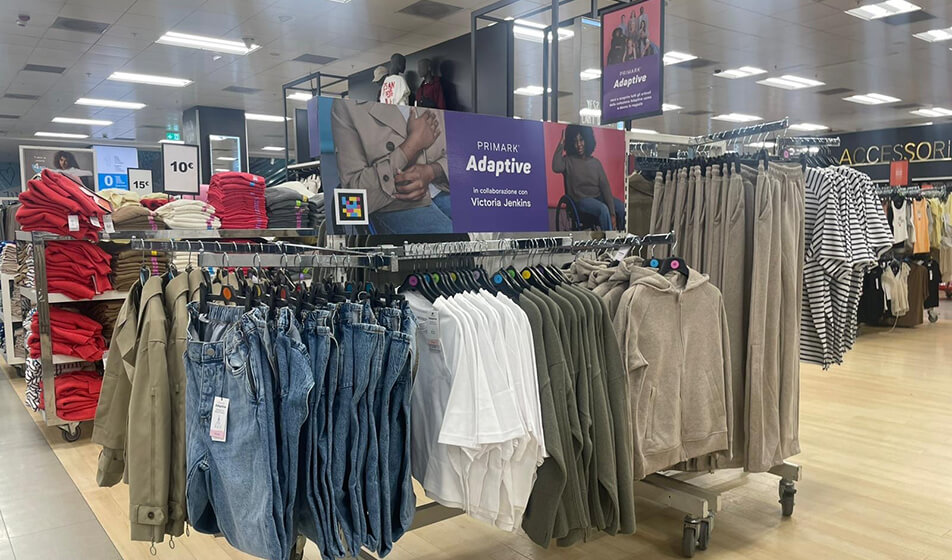
The in-store experience is at the heart of the Primark model: our stores are places of connection and engagement with the brand. That’s why we continue to invest in making them more welcoming and inclusive, equipping them with accessible checkouts and changing rooms, and carefully selecting the stores where we stock our Adaptive collection to ensure centrality and ease of access for customers.
Adaptive items are displayed on lower rails to be more accessible to wheelchair users and positioned along main routes to offer an independent and comfortable shopping experience. In 2024, we partnered with AccessAble, which analysed all our stores and offices in the UK and Ireland, providing our customers with helpful information to make informed decisions about their shopping experience and sharing insights that we can apply in other markets in the future.
This commitment also covers staff training and the ongoing enhancement of our spaces, ensuring each visit to our stores is welcoming and respectful. A clear example is Sophie, the first seated mannequin, introduced in July 2025 and co-created with presenter and disability rights advocate Sophie Morgan. Displayed in 23 flagship stores across ten countries – including the store in Via Torino in Milan – Sophie marks a further step forward in diversity and representation in retail environments.
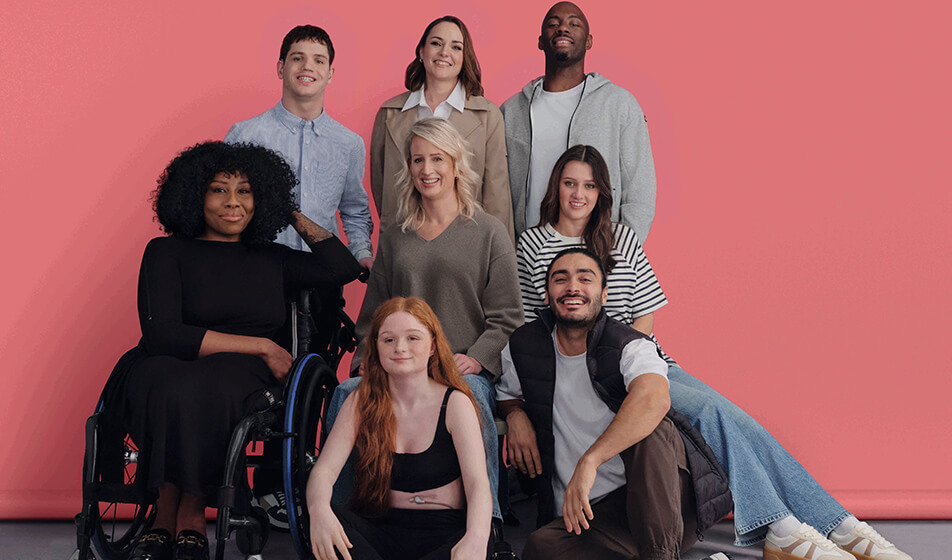
How did the Adaptive line come about, and what does it consist of?
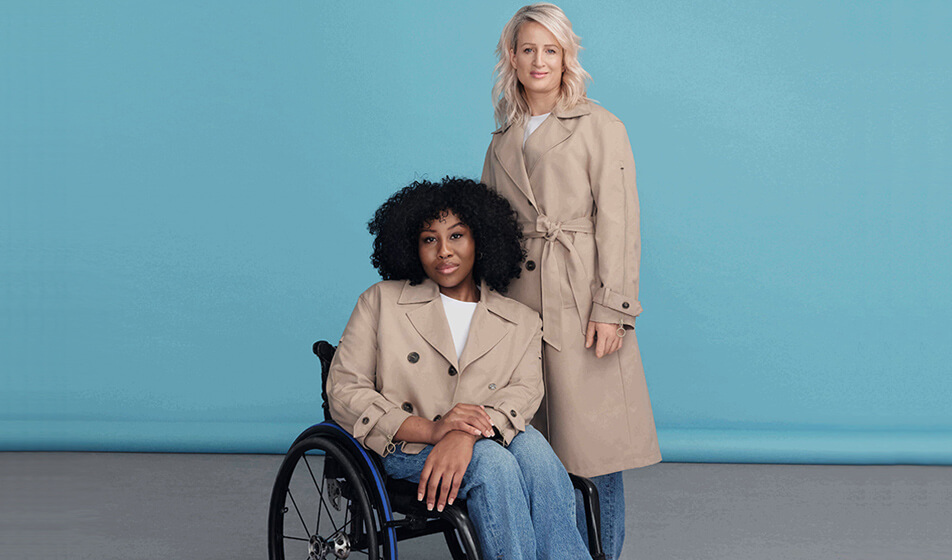
Our Adaptive garments are designed to make fashion accessible to everyone, featuring easy fastenings, soft materials, and inclusive designs, developed in collaboration with the disabled community. This line is a tangible part of our commitment to accessibility, inclusion, and diversity, expanding our product range and setting new industry standards.
When we started developing our Adaptive line, we began with a lingerie collection of four garments, featuring small modifications such as easy fastenings and magnetic hooks to support people with reduced mobility or dexterity. This collection took two years to develop and was created in collaboration with technical specialists and people with disabilities to ensure its suitability for use. Since its initial release, we have been working closely with the community and expanding our range of adaptive products.
Shop windows and visual communication greatly influence how disability is perceived. How is Primark working to ensure an authentic representation of people with disabilities in its shop windows and campaigns?
Primark promotes the participation of people with disabilities in its advertising campaigns. We work with experts and organizations to continuously enhance visual representation and create a retail experience where everyone feels seen, recognized, and welcomed. Since last year, we have increased our partnerships with creators with disabilities on our social media and communication channels and developed a guide to improve the accessibility of future events, informed by our experiences and feedback from the disability community.
Printed materials — from in-store signage to labels and information materials — also help create an accessible experience, both in their design, production, and placement in-store. How are you progressing on this front?
In 2025, we added NaviLens codes to our Adaptive range to help visually impaired customers locate and identify products. Additionally, all our stores in Ireland offer “sensory-friendly” shopping hours to support neurodivergent customers, with dimmed lighting, reduced checkout noise, and specially trained staff. These sensory hours have already been implemented in the UK, with the US and some European markets planning to adopt this practice in 2026.
Accessibility is a journey that involves listening and ongoing updates. Do you work with associations or experts in the field to enhance your standards?
Our work is built on strong partnerships with experts, advocates, and colleagues who bring direct experience and knowledge to every stage of our development process. These include: Dr. Shani Dhanda – Accessibility Consultant, who has played a key role in shaping our strategy; Victoria Jenkins – Adaptive Designer and disability rights advocate, co-creator of Primark’s first Adaptive collection and consultant for future collections; Sophie Morgan – Disability advocate and television presenter, who contributed to the creation of Primark’s first wheelchair-bound mannequin; AccessAble – Accessibility specialists, who reviewed all UK and Irish stores and offices to create detailed accessibility guidelines. Through adaptive fashion, Primark is strengthening its role as a responsible, forward-thinking retailer, dedicated to making fashion truly accessible to everyone and ensuring no one is left behind.
GIRLS WHO PRINT ITALIA
It is a community of women, men, and people of all identities that promotes initiatives and activities to overcome prejudices based on ethnicity, gender, sexual orientation, and disability, and that reflects on themes of diversity, inclusion, accessibility, and social justice. It operates specifically in the printing, converting, and visual communication industries. The association is part of a movement that originated in the United States and has spread to several countries worldwide.