

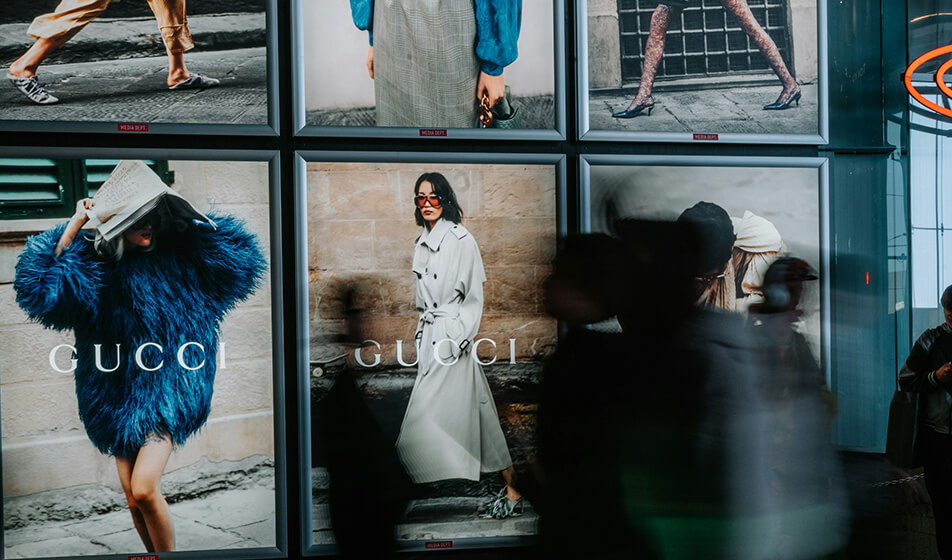
Luxury has always been a selective market, but today it is becoming even more focused on high-spending customers and the quality of the relationship built around them. For packaging, print and retail environments, this is creating a landscape in which materials, personalisation, physical experience and traceability are increasingly strategic. And to support packaging companies in adapting to EU Regulation 2025/40 – the PPWR – the Istituto Italiano Imballaggio has developed its Guidelines for the Environmental Management of Luxury Packaging.
The luxury market is going through a period of rebalancing that directly affects those who design and produce packaging and communication tools for brands. On the one hand, BCG and Fondazione Altagamma’s “True-Luxury Global Consumer Insight 2025” records a slowdown among aspirational consumers and the growing importance of so-called top-tier customers. On the other, Deloitte’s “Global Powers of Luxury 2026” depicts an industry increasingly focused on value, margins and customer relationships rather than volume growth. In short, luxury is investing in perceived quality and experience.
Lower volumes, greater value per customer
According to BCG-Altagamma, top-tier consumers account for less than 0.1% of the luxury customer base, yet generate 23% of total spending, rising to 37% when luxury mobility and wellness are included. These consumers look for connection, intimacy, excellence and recognition: 89% consider craftsmanship and quality essential, while 80% prefer exclusive, private retail environments. At the same time, aspirational consumers have become more selective and increasingly sensitive to whether price genuinely corresponds to the quality and value of a product. For suppliers, this means addressing a market in which materials, execution and attention to detail carry renewed weight. Primary and secondary packaging, presentation boxes, shopping bags, catalogues, invitations and materials created for VICs can all help build the sense of exclusivity the market is seeking to restore. There is also growing room for more targeted production, versioning, short runs and personalisation capable of supporting increasingly precise clienteling strategies.
Retail remains a fundamental part of the experience
According to Deloitte, 28.6% of surveyed executives see customer experience and loyalty as the leading growth opportunity for 2026. At the same time, the industry is rethinking its retail network, focusing on the quality of flagship stores and their ability to become experiential destinations. Galleries, cafés, pop-ups, installations, ateliers and private spaces for top clients are expanding the role of the physical environment, which is increasingly expected to express the brand and build relationships.
For the print industry, this opens up opportunities that extend well beyond packaging. Visual communication, interior decoration, displays, tactile materials, catalogues, lookbooks and special editions can become part of a coordinated system in which physical media contribute to the overall quality of the experience. Digital technologies are also entering this relationship: QR codes, NFC and connected tools cited by Deloitte point to a growing integration between objects, environments and digital content.
Materials, circularity and traceability
Sustainability remains another crucial driver, but it is increasingly taking on an industrial dimension. Deloitte identifies innovation in materials and production processes as the second most important factor expected to transform luxury over the next five years, after artificial intelligence. R&D, lower-impact materials, circularity and advanced lifecycle management are progressing alongside traceability, while the Digital Product Passport is set to become part of brands’ operational infrastructure.
The growth of pre-owned products, repair and refurbishment is also changing the very concept of a luxury product. The relationship with an object extends over time and requires systems capable of communicating its origin, authenticity and history. For packaging and print, the challenge is therefore to combine high perceived value, sensory quality, verifiable sustainability and information content.
In this landscape, packaging is the first physical space in which product, identity, service and brand storytelling come together. For printers, packaging manufacturers, converters and material suppliers, as well as companies involved in retail environments and printed communication, the direction highlighted by the two reports rewards above all design expertise, innovation and close collaboration with customers.
A new idea of luxury packaging
This evolution is also reflected directly in the Linee Guida per la gestione ambientale del packaging per il lusso – “Quando il contenitore fa il valore” (Guidelines for the Environmental Management of Luxury Packaging), published in 2026 by the Istituto Italiano Imballaggio. Conceived as a technical and operational tool, the Guidelines are intended to support the luxury supply chain in adapting to EU Regulation 2025/40 – the PPWR.
The document addresses packaging sustainability by seeking to reconcile environmental and regulatory requirements with the characteristics that define high-end products: manufacturing quality, aesthetics, brand identity, emotional value and user experience. It also proposes a shared working method across the entire value chain, from the initial brief and design phase through production and compliance verification.
The Guidelines were developed by the Italian Packaging Institute through its Luxury Packaging Commission, with contributions from experts in regulation, materials, design, printing and converting. They are intended for all stakeholders involved in managing the transition of luxury packaging towards the new regulatory framework, and their approach is deliberately multidisciplinary: according to the document, compliance must be built through coordinated involvement across the entire supply chain.
The Guidelines therefore emphasise the importance of involving creative, technical, production, regulatory and environmental expertise from the earliest stages of development. For suppliers, this means increasingly moving beyond the role of executor to become a design and development partner, capable of proposing materials, structures, finishes and industrially scalable processes that respond simultaneously to the aesthetic brief and to new environmental requirements.
–
Mass-market
In the mass-market consumer goods sector, implementation of the PPWR is also a pivotal point in a transformation that has been underway for several years. At the same time, the industry is having to contend with the effects of the international geopolitical situation on sourcing and logistics, alongside the slow – but decisive – maturation of advanced digital tools. Together with the drive towards more sophisticated design approaches, these are the key issues explored by the Pack Around 2026 survey.
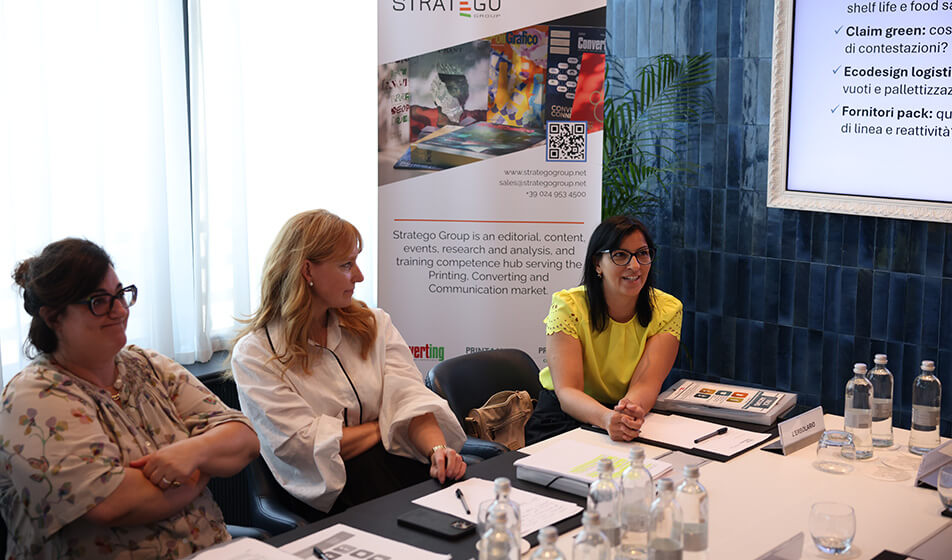
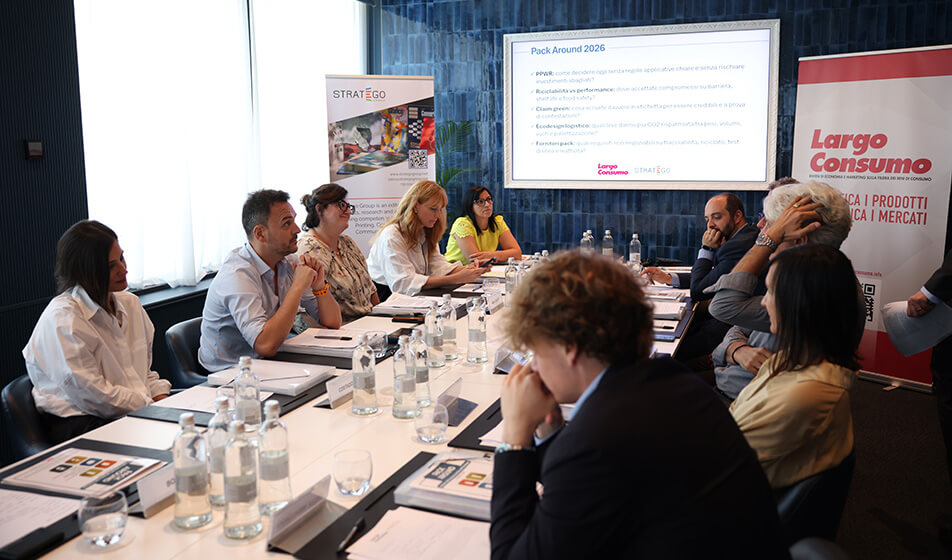
For essential goods and large-scale consumer markets in Italy, a detailed picture is provided by the Pack Around 2026 survey, conducted by Stratego Group and Largo Consumo with the support of a technical-scientific committee bringing together expertise from academia and research and coordinated by Marco Scatto.
Based on a sample of 142 managers from manufacturing and distribution companies, the research portrays a packaging supply chain that is fully aware of the strategic role of packaging, yet still working to translate that awareness into efficient operating models. According to the survey, the PPWR is accelerating change, while choices continue to be driven by efficiency, continuity of supply, costs and measurable return on investment. One recurring theme is the growing need for collaboration across the entire value chain.
Trends in mass-market packaging
In Design & Communication, packaging is used first and foremost to communicate product quality, while sustainability appears to be less overtly displayed and increasingly embedded in design itself. Attention is growing around readability, recycling instructions and digital tools such as QR codes and NFC, although accessibility remains only partially addressed. More than 68% of companies say they apply a “Design for All” approach, although the research highlights a gap between the language of inclusion and the actual adoption of user-centred methodologies. Ergonomics, tactile materials and neuroscience are gaining ground, while user research and design for disassembly remain marginal.
Digitalisation is now a priority, although progress is uneven. Material traceability is the most advanced area, while data interoperability, the Digital Product Passport and information governance remain relatively underdeveloped. Some 69.2% of respondents identify traceability and interoperability as a priority investment area for the next three years. Companies are looking at tools capable of assigning recyclability scores, generating digital passports and reducing errors or non-compliance, although ROI remains decisive. Artificial intelligence is also being approached cautiously: its potential is recognised, but adoption depends above all on cost and the availability of reliable data. Smart packaging remains largely centred on QR codes, used by more than half of the sample.
The section on organisational models highlights an internal challenge: packaging is considered strategic, yet decisions are often still highly centralised. CEOs and senior management lead investment decisions, followed by marketing and procurement, while R&D, quality and sustainability carry less weight. Slow decision-making, skills shortages, fragmented budgets, misaligned KPIs and organisational silos all hinder ecodesign. Supply stability is the most structured criterion, while end-of-life and recyclability considerations are less mature. Innovation is driven above all by relationships with packaging, machinery, print and converting suppliers, while universities and research centres still play a marginal role. The result is innovation that is predominantly incremental and geared towards short- to medium-term outcomes.
In Materials & Printing, a pragmatic approach prevails. Paper and board remain strong, while mono-material plastics are consolidating their position as a more manageable solution from both an industrial and recycling perspective. Multi-material structures, by contrast, are under increasing pressure. Recycled content has now become part of practical decision-making: a large proportion of respondents report using shares above 30%, while 42.1% exceed 50%. Choices are driven by sustainability, costs, margins, availability and supply-chain considerations. No single printing technology dominates. Offset, flexography and digital printing coexist according to volumes and applications, while gravure plays a more marginal role within the survey sample. Recent investments have focused primarily on reducing waste, consumption and environmental impact.
Logistics is turning packaging into an infrastructure for resilience. Geopolitical instability and raw-material volatility are pushing companies away from single sourcing: 50% rely on a limited number of qualified suppliers for each category, while strategic stockholding and dedicated warehousing are increasing. Design is increasingly focused on transport and handling efficiency, placing secondary packaging at the centre of optimisation efforts. A truly systemic view, however, remains weak: only a minority of companies assess in advance the interaction between primary, secondary and tertiary packaging. Reverse logistics is even less developed. As a result, the supplier relationship is evolving towards consultancy, co-design and optimisation of total costs.
Finally, the Environment & Sustainability section shows a supply chain that has moved beyond sustainability as a simple communication tool: for almost half of respondents, it is now integrated into corporate strategy. The main obstacle remains economic, followed by regulatory uncertainty. Design for recycling is driving the transition towards mono-material structures, lightweighting and higher recycled content. Some 33.3% consider the introduction of recycled material a strategic priority. Yet major end-of-life issues remain unresolved: recovery infrastructures, separability, reuse, reverse logistics and effective monitoring of EoL pathways are still insufficiently structured.
The packaging of the future will depend on the ability to integrate design, data, organisation, production, logistics and recycling into a single supply-chain system.

A direct dialogue with industry
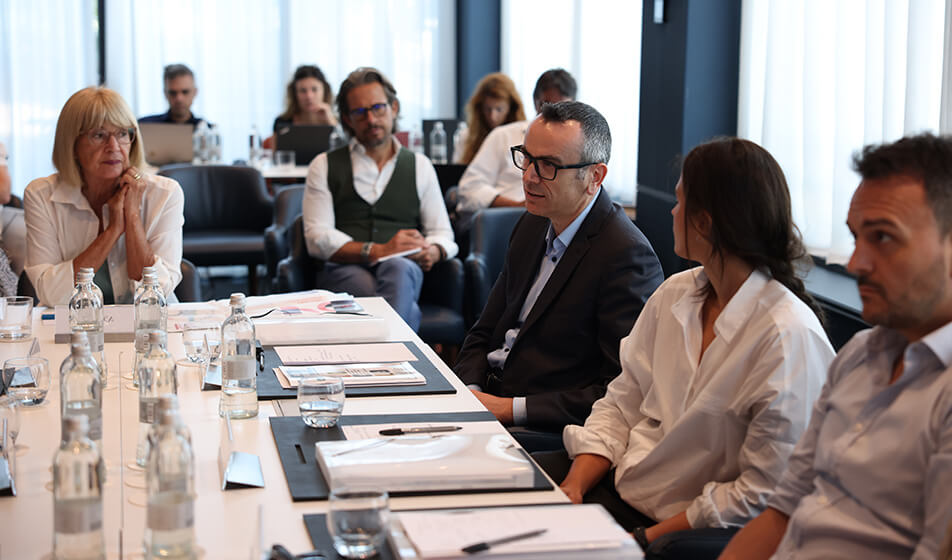
To conclude the Pack Around 2026 project, a forum was held in Milan on 23 June 2026, bringing together industry, retailers, brands and suppliers to discuss the transformations affecting packaging.
The event opened with Giuseppe Vignali, Professor of Food Pack Technology at the University of Parma, who presented the main findings of the survey in his role as a member of the Technical-Scientific Committee. The discussion that followed translated the trends identified by the research into concrete company experiences.
Antonio Esposito, Global Pasta and Condiments Packaging Director at Barilla, described a sustainability journey that began in the early 2000s and is based on recyclability, format optimisation and cross-functional collaboration. The redesign of packaging for tagliatelle nests, for example, made it possible to reduce packaging by 11% and distribution and storage requirements by 25%.
Olga Astapets, Packaging Manager at Molino Nicoli, outlined investments in high-speed packaging, automation, mono-material films and certified recycled paper. On the supplier side, Alberto Pecorelli, CEO of SayHay Italia, presented the company’s experience with bio-based, compostable materials derived from agricultural by-products and developed to run on existing equipment with minimal adjustments. Giacomo Loreto, Sales Manager at Cielle Imballaggi, focused on flexible mono-material polyethylene structures, downgauging and multilayer extrusion technologies.
A second strand of discussion addressed packaging as a communication tool. Looking ahead to Print4All 2027, Paola Sarco, Head of Business Unit Building & Industrial Exhibitions at Fiera Milano, highlighted the role of printing, converting and finishing in creating brand identity and recognition through labels, textures and embellishments.
Federica Trombetta, Head of Marketing and Online Operations at Costadoro, explained how graphics, premium materials and content can support the perceived value of a product, together with a careful review of claims and logistics optimisation.
Simone Salvioni, Marketing Director at Abafoods, stressed the importance of clear, verifiable and consistent labelling, particularly in product categories where consumers pay close attention to ingredients, benefits and product characteristics. For Anita Casamento, founder of Azienda Agricola Oliviera, dark, heavy glass protects the product while becoming an integral part of the story surrounding the oil.
The supply-chain approach was another particularly significant theme during the forum. Sara Bernabeo, Packaging Manager at Unigrà, described new packaging development as a collective effort involving R&D, quality, production, purchasing, IT, marketing and sales, supported by the scouting of new materials and the gradual replacement of non-recyclable solutions.
Through its Private Label Packaging Manager Diego Lazzarin, Bennet highlighted ecodesign, reduced overpackaging, transparent environmental messaging and logistics control, while stressing that functionality remains essential.
Michele Cantisani, R&D Packaging Manager Home Care & Personal Care at Bolton, focused on circularity, mono-material solutions, increased use of recycled content and the selection of suppliers capable of delivering innovation. Finally, Clara Sasso, Regulatory Affairs Manager at L’Erbolario, described investments in recycled and bio-based plastics, airless systems, mono-material solutions and format standardisation, identifying technical expertise, consistency with the brand and traceability as key requirements when selecting partners. Together, these experiences portray a supply chain that increasingly sees packaging as an integral part of both industrial and brand strategy.