



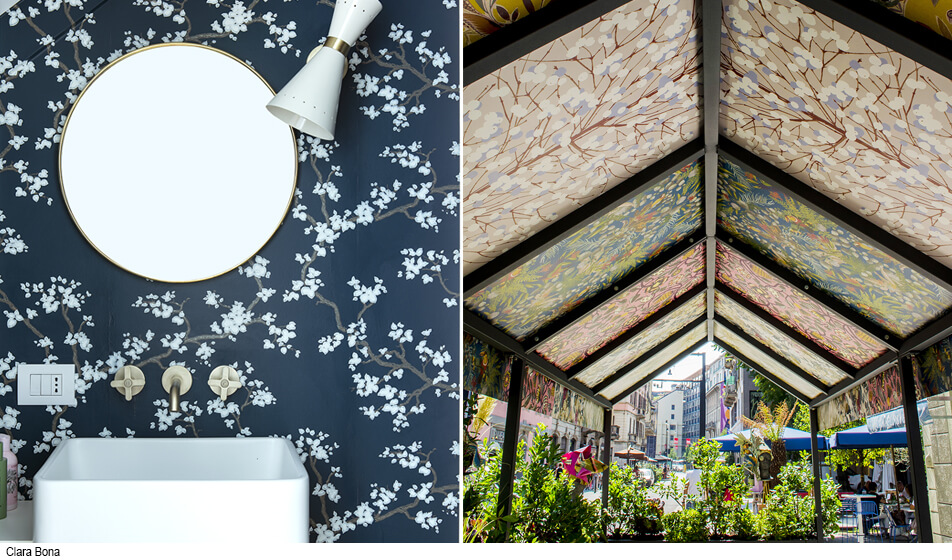
Space that blends the warmth of home with the functionality of contract design, integrating sustainability, innovation, and material research. We discussed the latest trends in interior design with Cecilia Anselmi (Effimero Barocco), Alessandro Marchelli (AIPI – Italian Association of Interior Designers), Cinzia Pagni (ADI Lombardia – Association for Industrial Design), Andrea Roscini (23Bassi), Lycia and Gaia Trapani (Lyga Studio), and architect Clara Bona. We also collected a series of unusual applications.
Spaces where technology enables the realization of visions once thought impossible. But also spaces that improve the local community, showcase craftsmanship, and preserve the memory of materials. Spaces that see Made in Italy not just as a brand but as an ecosystem of skills to nurture and pass down, interpreting sustainability not as a sacrifice but as a creative opportunity. What designers are creating are interiors that engage all the senses, where every surface tells a story and holds ethical and aesthetic value.
The end of barriers: the new dialogue between residential and contract
For decades, the residential and contract sectors have been two separate worlds: the former focused more on personal expression, while the latter prioritized functionality. However, today those boundaries are increasingly merging. “International hotel chains used to focus on standardization, but now the pursuit of identity and uniqueness is dominant. Hotels are no longer just places to sleep,” emphasizes Cinzia Pagni, president of ADI Lombardia, “but also living spaces that include co-working areas, bistros, and lounges. They serve as venues for socializing and meeting people, even for non-guests. The new horizon of hospitality centres on offering travellers not only comfort and efficiency but also authenticity, achieved through design that creates experiences and tells stories about the local area—recreating domestic atmospheres even in service zones.” The blending of these two worlds is most visible through materials. “Today, we see an overall mix of surfaces and textures,” says Andrea Roscini of Studio 23Bassi. “There is less hesitation to mix styles: wood and metal, stone and resin, fabrics and technical surfaces coexist freely. This eclecticism reflects a new confidence among designers and a more experimental approach, tailored to the specific context”.
Advanced surfaces: new performance and visual effects
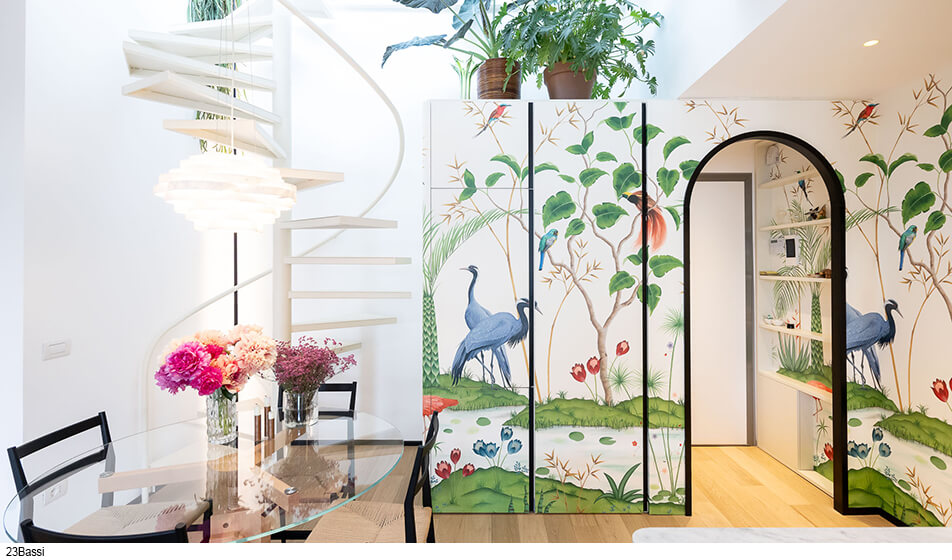
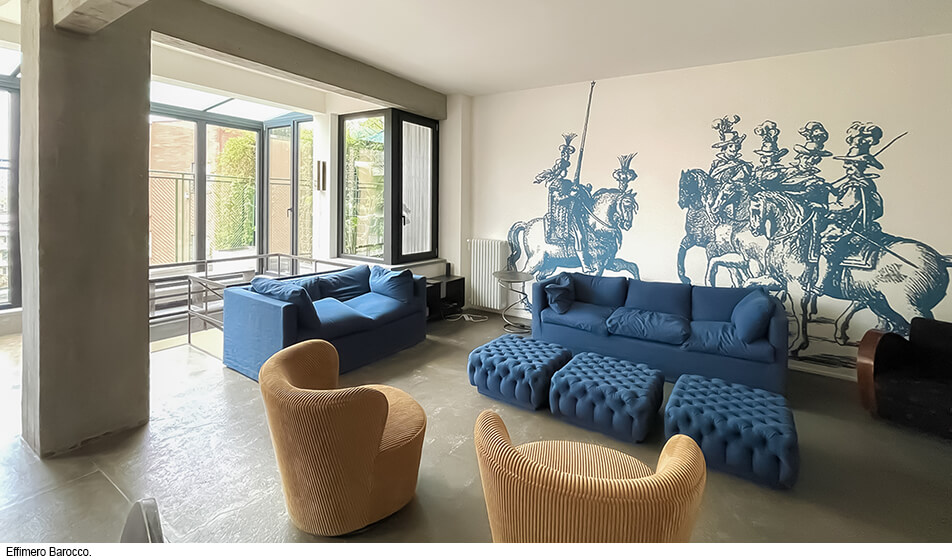
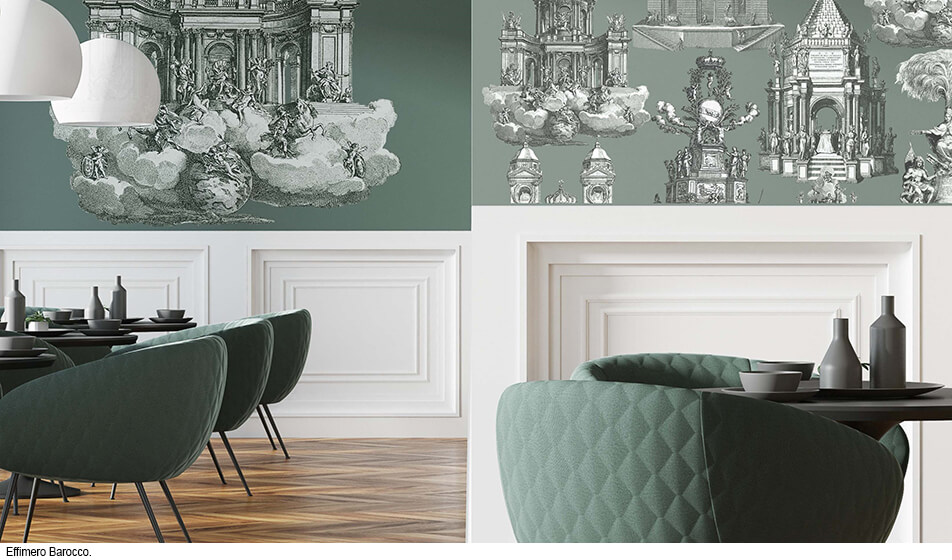
The concept of surface has evolved. Wallpaper, for example, has shifted from just decorative to functioning as a “narrative tool”. Thanks to new large-scale digital printing technologies, designers can transform graphics, photos, or custom designs into architectural surfaces that complement furnishings and coverings. These advancements also enable the printing of customized, personalized wallpapers that offer high technical performance—such as sound-absorbing, breathable, flame-retardant, and moisture-resistant qualities—while still maintaining their aesthetic and scenic appeal.
“Today, digital printing is not just an industrial process but a means of expression that allows us to create visual and tactile identities,” observes Cecilia Anselmi of Effimero Barocco. “Through printing, we can translate suggestions, textures, and memories into personalized surfaces capable of interacting with light and space. It is a way of restoring the artistic and sensory dimensions to the project that had been sacrificed to standardization for years.”
This approach is also supported by Lycia and Gaia Trapani of Lyga Studio, who use wallpaper to create contrasts and visual focal points within monochromatic, often unclad environments. “In bathrooms, for example, we put waterproof wallpaper inside the shower, creating a scenic backdrop that breaks up the neutrality of the space and adds depth.” In residential settings, the same freedom results in custom solutions. “I often use wallpaper to cover wardrobes and furniture, favouring textured and material effects,” says Clara Bona, an architect specializing in residential projects. “I like to create textures reminiscent of fabrics from the past, such as raffia or straw, but using practical materials that are easy to maintain, washable, and resistant.”
After years of extreme minimalism and neutral surfaces, interior design is seeing a comeback of natural materials. These materials, which bring warmth and sensory connection, are once again in focus: natural stones like marble, travertine, or onyx used to create striking focal points with a strong visual impact. Or woods, especially those with prominent grain and finishes that highlight their natural beauty. Among natural fabrics, linen, wool, and cotton stand out—the most notable technological advancement concerns ceramics. “Today’s tiles,” adds Pagni, “are thinner and more resistant. With just a few millimetres, very wide slabs can be produced, and flooring now offers greater aesthetic and communicative value than a few years ago. Thanks to digital printing, porcelain stoneware can reproduce marble and wood with remarkable accuracy.” Far from being a limitation, this mimetic ability ensures performance that isn’t always possible with real materials: low costs, reduced thicknesses, and easy maintenance. A clear example is resin flooring, which is highly valued for its lack of joints, as Alessandro Marchelli of AIPI confirms: “We very often use resins in our work to create continuity, both indoors and between indoor and outdoor spaces, because the dialogue between indoor and outdoor is increasingly important in contemporary design.”
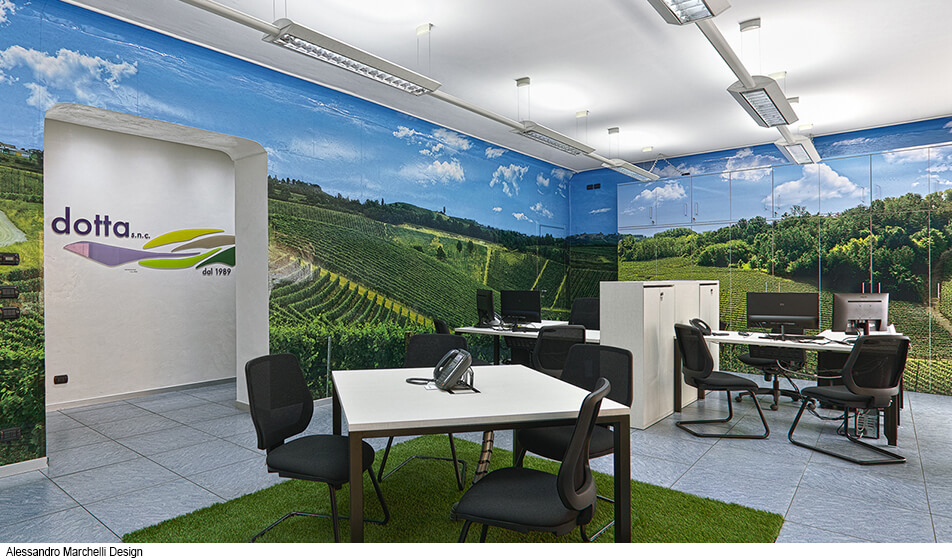
But the true novelty is not just the return to traditional materials or the evolution of technical ones, but the freedom with which they are combined today. Furnishing fabrics exemplify this new sensibility particularly well. “From linen to bouclé wool, from smooth velvet to corduroy, to felt: there is no limit to the imagination,” adds Bona. From temporary building coverings to ventilated facades, from sound-absorbing panels to sun screening systems, fabric is a living material in design and can be used to meet a wide range of needs. The challenge is to blend the beauty of imperfection with technological precision, combining the expressiveness of traditional materials with the adaptability of innovation.
Sustainability, from ethical constraint to aesthetic language
The concept of sustainability has also undergone a significant change. According to Cecilia Anselmi of Effimero Barocco, “Today, sustainability is no longer a regulatory constraint, but an aesthetic and design principle that redefines the codes of contemporary interior design. Environmental responsibility is intertwined with the aesthetic and narrative dimension, allowing us to decorate without invading, to create reversible, regenerative settings that respect the context. We can excite and amaze with the awareness of leaving a lighter footprint, but one that is equally lasting in the character and memory of spaces.”
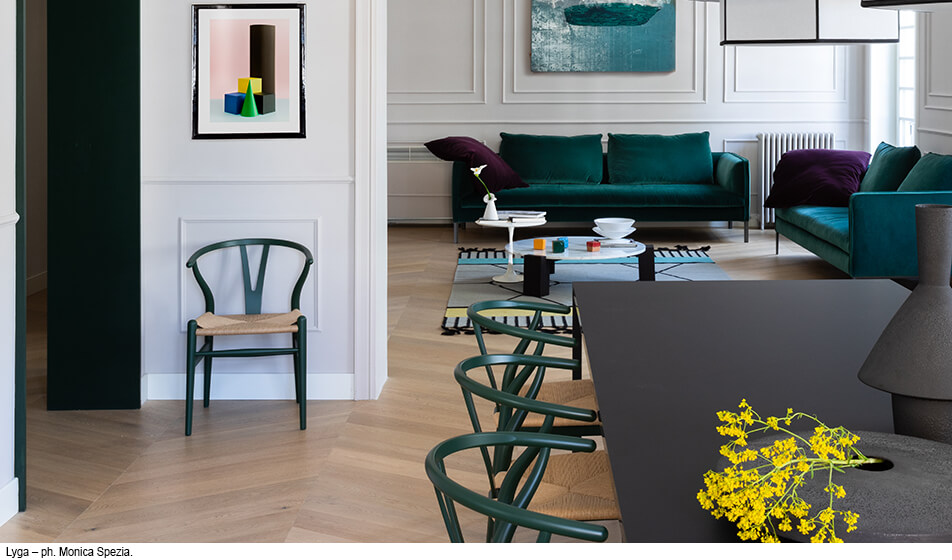
The first revolution was cultural: learning to recognize the beauty of materials like untreated wood, rough stone, natural fabrics, and uneven surfaces restores a tactile truth that contrasts with industrial perfection and celebrates provenance, craftsmanship, and durability. Sustainability has become so central that ADI has made an important symbolic choice—excluding sustainability from the parameters of the ADI Design Index because, as Pagni points out, “It is an ethical value, as ergonomics once was. Italian companies operate with a great sense of responsibility, often anticipating regulations. It is a quiet effort, but one that is transforming the sector. Clearly, when discussing sustainability, social sustainability must not be forgotten—valuing local skills, promoting short supply chains, and restoring value to the territory.” The research centres on recycled or recyclable materials: resin flooring that connects indoor and outdoor spaces, PET felt, ceramics made from waste, and sound-absorbing panels crafted from regenerated fabrics. Lyga Studio embodies this philosophy through tangible operational choices. “We are increasingly using natural-based plasters and designing systems that utilize photovoltaics and solar thermal energy,” explain Lycia and Gaia Trapani, “preferring semi-artisan materials produced by local companies and designed by designers.”
Technological innovation: when materials think
Materials are no longer just inert coverings, but intelligent surfaces capable of responding, adapting, and self-repairing. Technological research is opening up scenarios in which performance, sustainability, and aesthetics converge in new-generation solutions. The 23Bassi studio cites the example of a laminate that, thanks to nanotechnology, can regenerate itself, eliminating small scratches and marks. The world of ceramics is also evolving, integrating antibacterial properties, an important feature especially in the contract sector, where hygiene is an essential requirement. “Coatings have made great strides,” adds Roscini. “As a studio, we have experimented with wooden elements made from very large multilayer panels, coated with iron arc techniques, which at first glance appear heavy but are actually very light and easily transportable.”
The same is true for digital printing on rigid surfaces: companies are experimenting with ceramic inks and nanoparticle-based techniques that ensure durability, brilliance, and sustainability. Another area of innovation is vinyl materials, which are becoming more durable, efficient, and capable of mimicking a stone or cement look. The development of laminates also allows for incredible creative expression on surfaces, offering remarkable flexibility and affordability. Carpets have also advanced, “thanks to the use of more natural dyes,” says Marchelli of AIPI. “It is this ability to combine memory and innovation that is the key to the materials that will shape the language of interior design in the coming years.” Printing is also entering this experimental realm: from ceramic to metallic surfaces, research is focusing on eco-friendly inks and UV polymerization techniques that ensure durability, brilliance, and waste reduction. This innovation blends technology and craftsmanship, opening new possibilities for customization.
In this convergence, interior design is reclaiming its core purpose: to craft spaces that convey the story of those who use them, whether in homes, hotels, public, or private settings. These environments blend comfort, materials, and storytelling into a single, beautiful experience.
Towards new balances The emerging picture is of interior design that has moved beyond past divides. No longer does it pit aesthetics against function, technology against nature, or seriality against customization. Contemporary designers easily navigate these contrasts, creating new combinations. The real revolution isn’t in individual trends (like the return to natural stone, wallpaper use, customized printing, or applied nanotechnologies) but in the overall mindset: more fluid, less rigid, able to embrace apparent contradictions. This might be the true luxury of modern interior design—the ability to craft beauty by blending elements, where everything contributes to a harmonious and meaningful experience.