


Digital advertising, a data-driven approach and sustainability are driving the revolution that has been sweeping the OOH sector for a few years
Digital advertising, a data-driven approach and sustainability are driving the revolution that has been sweeping the Out-Of-Home sector for a few years. We discussed it with industry specialists such as IGP Decaux, Clear Channel, Printable, Bìllalo, Wayap and SarLed.
By Caterina Pucci | On PRINTlovers #94
We had two years of telling ourselves that staying indoors wasn’t so bad. Then, poof, suddenly it happened; we were back. Going to the office, taking crowded transportation, standing in traffic, going out to dinner, travelling: every time we put our noses outside the door – these industry experts tell us – we pay much more attention to outdoor communication than before. This behaviour can be explained by our progressive familiarisation with online advertising, which, however effective, leads us to dwell more on billboards and maxi posters. But the explanation also lies with the advent of structural changes in the world of Out-of-Home that were in place well before the pandemic and that see industry leaders taking full advantage of the potential of new digital advertising tools (especially mobile) to consolidate (or build from scratch) their offline image, amplify the visibility of a campaign and make it more “tangible” in the eyes of users. In short, it’s a rosy period for OOH, which, in the first four months of 2022 alone, got back to 2019 levels (+101% compared to the same period in 2021).
Juggling the challenges and contradictions of modernity is not easy (think about the use of users’ personal data and compliance with privacy regulations), but it is nevertheless true that this is a period of profound experimentation, which opens up immense creative opportunities for the entire supply chain, whether brands, agencies, designers, advertisers, or outdoor printing professionals. We talked about this with Luca Stucchi and Filippo Gulli (IGP Decaux), Eszter Sallai (Clear Channel), Fabio Pellizzoni (Printable), Nicola Palmas (Bìllalo), Mita Aga Rossi (Wayap) and Carlo Podda (SarLed).
Within reach of smartphones
A Market Insights report predicts that the Digital Out of Home (DOOH) market will reach more than $34 billion by 2025. According to GroupM, campaigns that integrate traditional and digital media are highly effective in persuading consumers to take direct action. “While once the goal of a campaign was primarily to consolidate brand awareness, today the focus is on a data-driven approach, which leverages data analytics and new digital advertising tools to engage users, prompting them to interact with the brand. Information about users’ tastes and habits is used to design increasingly omnichannel, immersive and personalized communication,” explains Filippo Gulli, Sales Director of IGP Decaux.
Among the most effective strategies is the use of MOOH (Mobile Out of Home) and QR codes, which can be associated with static advertising (billboards, maxi posters, banners) and allow users to be taken to a website, app or landing page, but also to monitor the effectiveness of a campaign in real-time.
As long as it is sustainable
The pandemic has also stimulated reflection on the urgency of making outdoor advertising sustainable. In addition to encouraging the development of innovative, recyclable and reusable materials, green solutions need to be increasingly competitive to be a natural alternative for advertisers and end customers. IGP Decaux, a leader in outdoor communication in Italy, has developed a keen awareness of the issue, operating a reorganization of processes that are increasingly orientated toward a decisive reduction in environmental impact. “We prefer water-based printing and the use of innovative media, often developed exclusively by our suppliers,” explains Luca Stucchi, executive director of IGP Decaux. “Ninety per cent of the paper we buy is recycled and, at the end of the exhibition, is recovered to produce new paper and packaging. We were the first in Italy to set up a system to recycle and recover PVC adhesives used to coat streetcars, buses and station domination in Milan, Turin, Genoa, Bologna, Florence, Rome and Naples.” The recovered adhesives help make artificial road bumps, irrigation pipes, shoe soles, window frames or soundproofing panels for the automotive industry. Polypropylene and polystyrene tables are also used to produce everyday objects such as fruit boxes, coat hangers and planting pots.
Walls that talk and talk the talk
As we have seen, the pandemic has accelerated a process of digitization already underway that makes possible increasingly personalized and real-time communication. “Brands expect the possibility of versatile, last-minute programming, so we place a lot of importance on measurement both in the pre-programming phase and at the end of campaigns,” says Eszter Salli, managing director of Clear Channel, a leading OOH media company. “The expansion of digital has not undermined traditional, which still plays an important role. These two complementary set-ups can be combined to achieve diverse communication goals.”
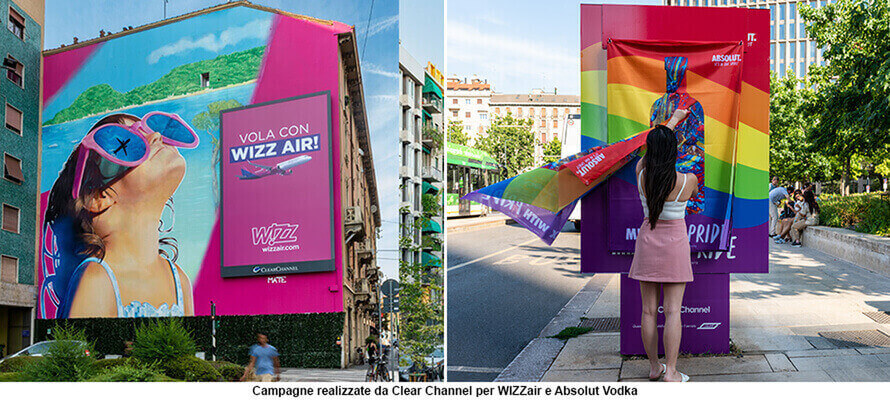
The classic format lends itself perfectly to creative customizations that catch the eye, while digital harnesses the power of diffusion and versatility. “Mural advertising is an example of OOH communication that aims for spectacularity, turning a campaign into something newsworthy and viral,” Salli continues. “It’s impossible not to notice them – the walls of apartment buildings turn into real points of interest within the neighbourhood; they are immortalized and shared on social media with extreme naturalness. For us, this is not a simple reproduction of a classic campaign but a real work of art. This is why we prefer that the street artists involved maintain a level of autonomy on stylistic and subject choices while still ensuring a close connection with the brand that commissioned the work.” People who hang out in Milan will have recently come across the two murals commissioned by the WIZZ Air company, with the involvement of street artist Mate, or the installations that Absolut Vodka wanted to personalize for Pride, with the event’s iconic colours.
Big format for big impact
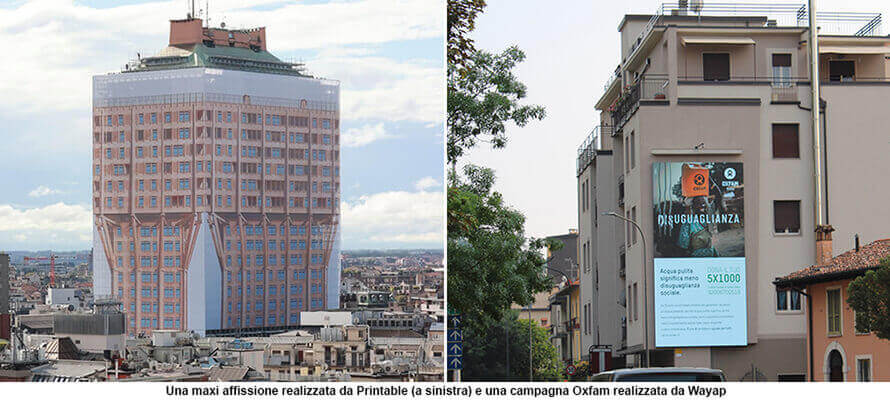
The Out-of-Home sector is one in which the use of large format printing finds the greatest application. Extraordinary locations, significant square footage, especially in the city centre: no small investment – within the reach of well-known and ambitious brands – but sure to make an impact. Founded as an advertising concessionaire some forty years ago, Printable has specialized in the supply of maxi posters – it created Europe’s largest maxi sheet in Milan’s Via Melchiorre Gioia, 55×57 m – relying on state-of-the-art technology, speed of delivery and competitiveness. “Fortunately, the pandemic did not affect us much, and thanks to the recent integration with digital advertising, we were able to differentiate our offer,” explains Mattia Pellizzoni, Sales Director of Printable. “On the sustainability front, back in the day, we committed ourselves to acquiring all the necessary certification (ISO 9001, 140001, FSC, etc.) and created an energy team, which is in charge of monitoring the company’s energy efficiency and ecological footprint, collecting useful data to optimize processes and reduce waste. Research and development on the materials front is making great strides. However, especially for clients from the luxury world, it is still difficult to find a compromise between the aesthetic and structural requirements of a large billboard and those of sustainability.”
Data analysis reduces waste
How to use data functionally in the context of traditional advertising? Bìllalo is a Sardinian company whose name comes from the union of the English word billboard (poster) and the Sardinian “billare,” which means to control, to keep an eye on. The service it offers is a tool that allows advertiser companies and advertising concessionaires to monitor the advertising space available in a given geographic area and check its degree of OTS, that is, the extent of audience exposure to a given message. “With geolocation, we can suggest the best locations for advertising campaigns, providing data on traffic, the socio-demographic composition of the population living in a certain area, the presence of any points of interest in the circumstances,” explains owner Nicola Palmas. “This information, combined with the parameters and characteristics of the advertising spaces, makes it possible to reach a level of precision in planning that only experienced operators in each area would otherwise be able to achieve.” Thanks to Bìllalo, a company can decide to plan a campaign by choosing only the illuminated advertising spaces located at a certain height above the ground in a given radius from its outlets throughout Italy, within minutes, from its computer or smartphone. “We have improved the use of historical data to offer additional possibilities for analysis on the competitive and strategic level; soon we will be able to know which campaigns have been executed on each advertising space over the years,” adds Palmas.
Good baseline analysis and knowledge of one’s target audience and goals reflect not only on business performance and ROI but also on aspects of corporate social responsibility: reducing waste and the environmental impact of one’s operations by digitizing processes in part or whole. “Among our historical clients is a major live performance organization in Sardinia that used to advertise for events using considerable amounts of small-format posters and some large billboards. Today it has drastically reduced the quantities, focusing on larger spaces in locations with high traffic levels and a definite concentration of the potential audience of the individual artists it promotes. In particular, through the combined use of geosociodemographic analysis on the resident population, it has found new audiences and tracked conversions through QR codes with landing links to in-depth pages, newsletter sign-ups and ticket purchases. We calculated that compared to 2019, they were able to cut the cost of purchasing space by almost 30 per cent, and by about 23 per cent on the cost of printing despite last year’s price increases.”
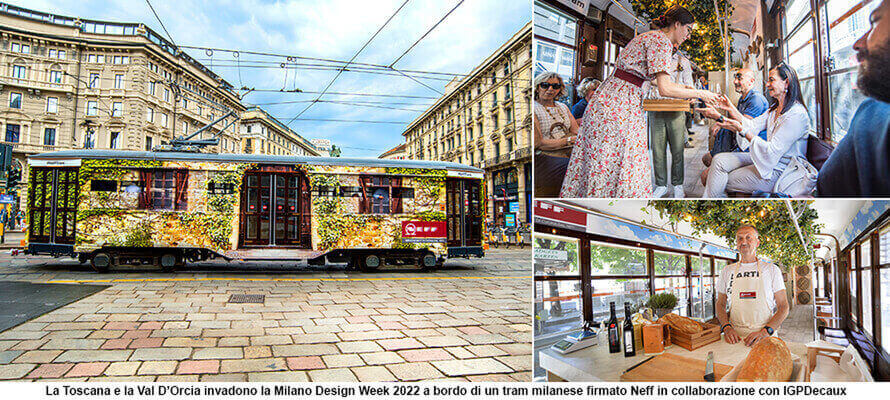
Smart not only in metropolises
Among Bìllalo’s clients is Wayap, a company specializing in outdoor advertising established in 2014 as a natural continuation of A.P. Italia, founded in 1964. In addition to serving as a concessionaire of advertising space for billboards and roadside billboards, it provides consulting services for planning and selecting the most strategic locations in each territory based on the needs and size of the client, whether it is a small business owner or a multinational corporation. “The unpredictable scenario generated by the pandemic allowed us to field test all the resilience and energy of a lean and fast structure that has been able to maintain direct contact with companies, ready to get back on the road as early as the second half of 2020,” says Mita Aga Rossi, Wayap’s marketing director. “Also at this time, we are signing important new agreements with other Italian cities to define a strategy that integrates traditional and digital, with smart bus shelters and solutions to support electric mobility and cities that are becoming increasingly smart and sustainable.”
While some companies are leading the way and pushing Wayap to “raise the bar” in designing new technological solutions, a lot of energy needs to be invested in supporting local customers and the many Italian companies in the mid-range. “There is a lot of interest in digital advertising, not only in metropolises but also in more human-scale cities, because it is now well established that the public tends to be more impressed by moving forms of advertising or 3D effects.”
Compared with traditional billboarding, the question regarding the rotation of advertising messages remains open. “The question that companies must necessarily ask themselves is whether it is better to be seen “moment by moment” on a static installation with a fixed image or within a fixed rotation mechanism, with up to six different brands per minute,” Rossi continues. “It is hard to say whether the image seen on a static billboard or a rotating ledwall is better consolidated in the subconscious of an advertising user. Probably much of the ultimate effectiveness remains in the quality of the creative concept, as well as the strength of the message.”
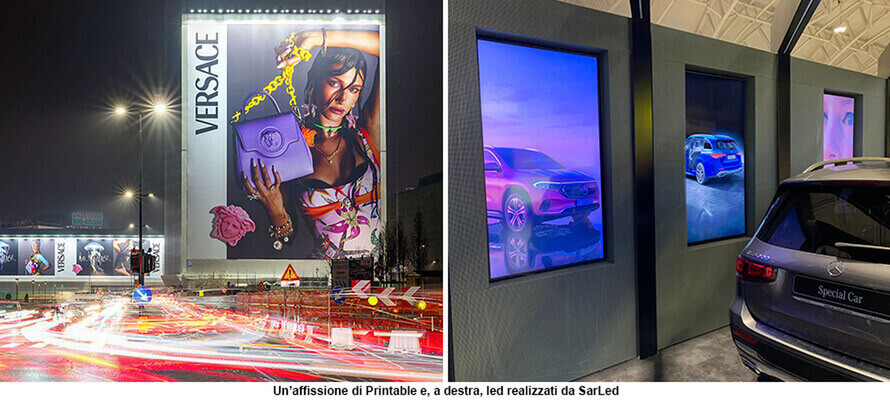
One company that has chosen to invest in digital signage is SarLed. Established as an advertising agency in the 2000s, it has specialized in creating promotional campaigns in both ADV and promotional printing, both offset and digital. “In 2000, we established specialized sections in digital web, roadside billboards, and tourist signs, creating thousands of roadside installations both in Sardinia and Northern Italy, thanks to the collaboration with the largest national companies in the sector. The natural evolution of roadside advertising led us in 2019 to move into digital signage, launching partnerships with the best ledwall and videowall manufacturing companies for both indoor and outdoor use,” says Carlo Podda, director of SarLed Led Wall & Co. “Technologies change, but the intent to stimulate the user’s attention with lively, attractive campaigns that stick in the mind does not change. And this is as much a reality in big cities as in smaller towns.”