


Museum, but not exaggeratedly so
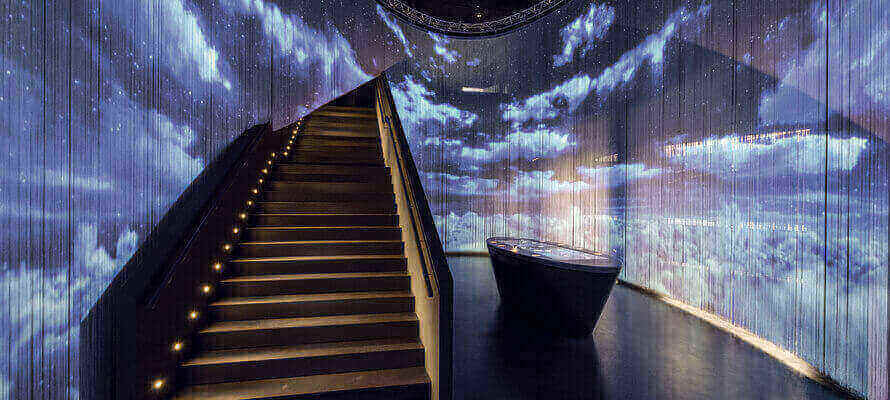
Museums, but not exaggeratedly so. They aren’t document archives, simple memory-containers, but spaces similar to concept stores, furnished with innovative solutions and attention to contemporary design. They’re environments for dialogue, designed to enhance companies’ historical heritage, able to attract new publics and new universes of ideas. How? With interactive libraries, exhibitions, tasting areas, direct views on the company productions, and integrated trips in the local area. All of this is told through the use of printed materials, monographs, commemorative packaging, designs, posters, postcards, personalised shopping bags, and merchandising. In short, company museums have changed their appearance and become friendly, enticing even – they’re stages for digital printing and its endless possibilities.
By Anna Aprea | On PRINT #81
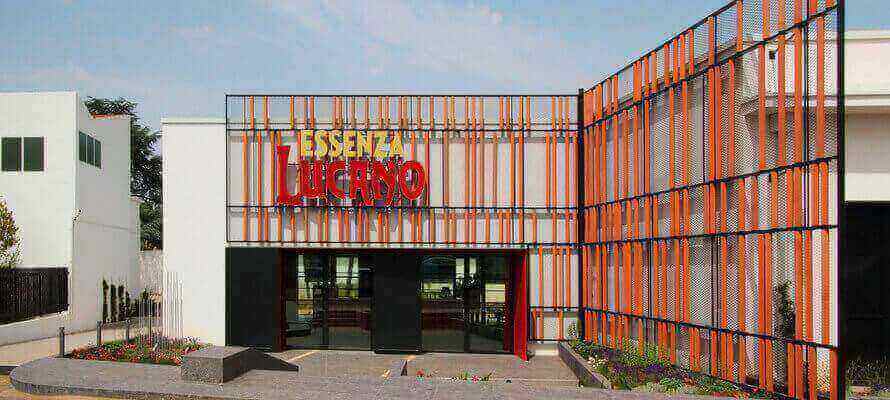
The most recent is the Amaro Lucano museum, inaugurated at the end of October 2019 in Pisticci, a delightful village in the province of Matera, in the company’s original base. “Essenza Lucano”, as the space has been named, is one of the more than 200 company museums that have opened one after the other in recent years in Italy. This is the result of a growing attention from our companies – especially the ones dealing with excellence – to experiential marketing strategies. By which we mean that entirety of initiatives often focussed on digital interactivity, designed with the aim of generating entertainment, sharing and positive relationships with clients and suppliers. We must do so without undervaluing the need to grab a diverse public who we can put the company forward to as a cognitive laboratory, a source of knowledge and culture.
The era of company museums understood as simple archives is over. Today we talk about places of community and dialogue, centres for exhibitions and cultural events, functional tools for the development of new synergies with the local area, and therefore also tourist destinations.
Integrated places
In this context we can understand how communication has taken on an ever more important role: precisely because of that desire to include cross-sector-targets and new universes of ideas within the company sphere. There are several cases where individual museums have proposed creating a network with the local area and the cultural system they belong to, suggesting routes for their visitors that are integrated with artistic sites and food and wine locations.
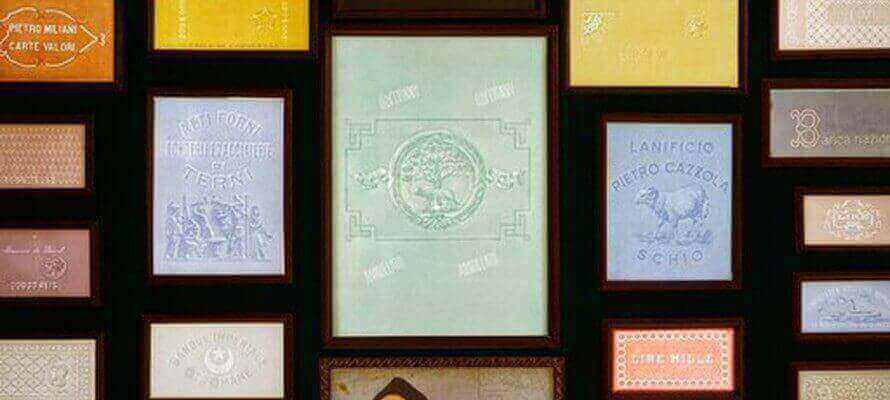
Commemorative printing
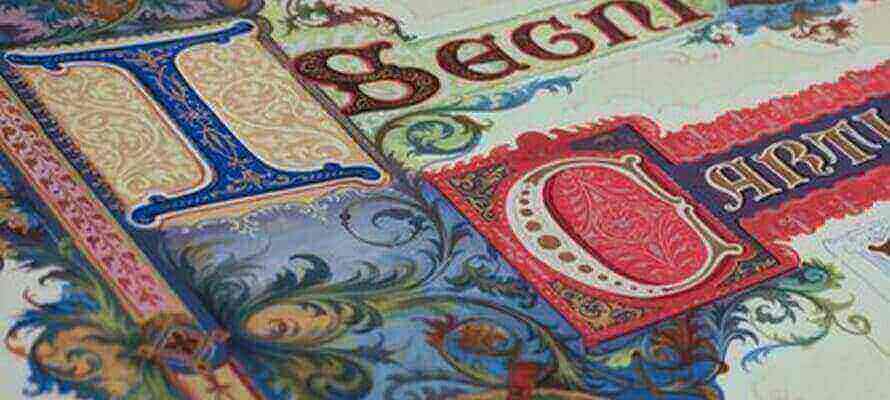
The printed material destined to fulfil the role of markers of the new settings connected to the company is being given a double function: on the one hand, communicate these spaces’ aesthetic mission; on the other, intensify the endless present of history. Everything comes together in illustrated volumes, commemorative books, catalogues, special packaging lines, billboards, posters, artistic reproductions, themed series of postcards. In short, it’s a vast collection of documents that originated in the company’s past. “We start off from the premise that a museum, with its literally conservative nature,” says Matteo Mocchi, Design Innovation Manager at RobilantAssociati, “needs to safeguard and protect important documents, which are often fragile or delicate. Their initial digitalisation and later reproduction on different substrates therefore becomes one of the many widespread activities whose purpose is to be able to freely exhibit this material.” What is the most widely used medium for telling the history of a company? “Undoubtedly the commemorative monograph,” answers Mocchi, “a prestige volume that remains over time and that often becomes almost a collector’s item.” On the level of content organization, “different substrates are used,” the designer specifies, “for elements such as the title of a section, the individual caption, the descriptive texts, and also dioramas or reconstructions produced in packaging. Increasingly often leaflets or genuine mini-catalogues are associated with the museum visit. These let you look in depth at the sequence of the display, and at the history of the structure or collection.”
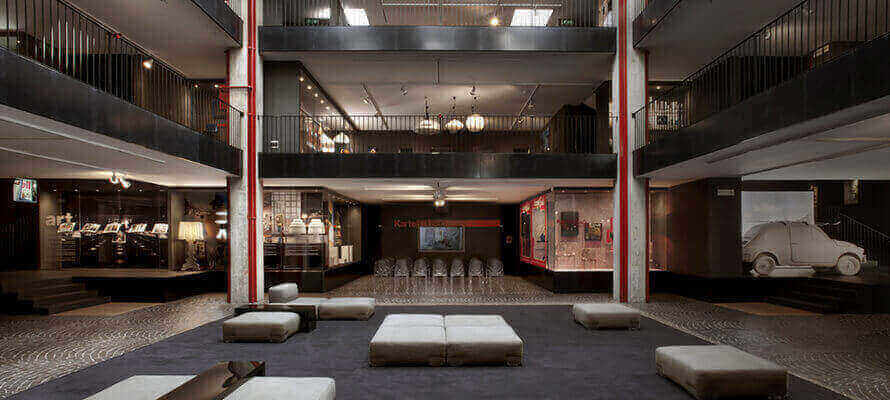
Brand ambassadors
Contributing to the new image of company museums is also the system of digital story-telling that individual organisations put forward – “from videos to apps, from augmented reality experiences to offering personalised content, from interactive workstations to audio-visuals – still with the purpose of transforming the visitor into an ambassador and follower of the company. “Using augmented reality technologies,” continues Mocchi, “you can increasingly mix the physical and digital worlds, going in depth into content that is often difficult to manage materially, on different levels.”
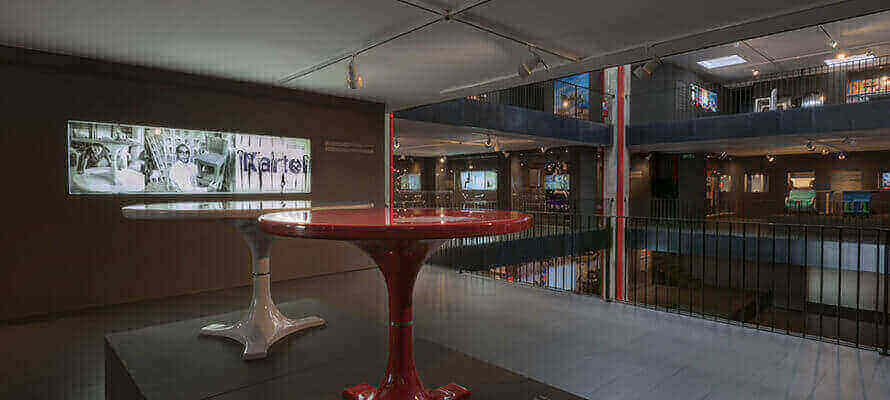
Design spaces
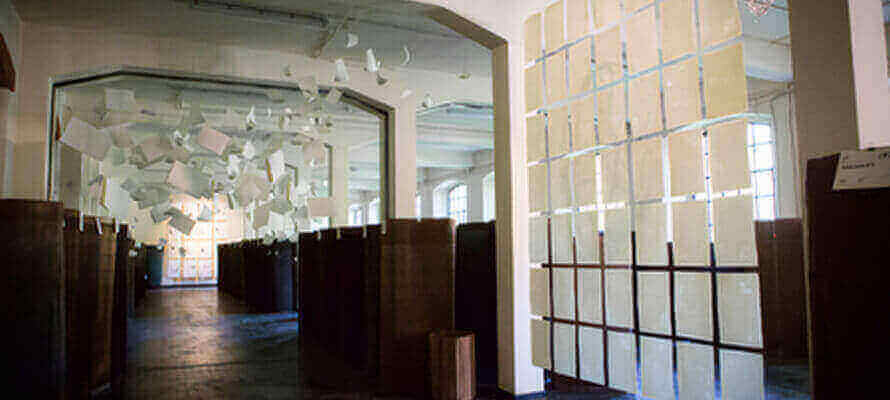
As you can imagine, the settings – furnished to meet the museum’s new mission – are also stages for the endless combining possibilities of digital printing. Walls, floorings, decorated pieces, digital tables, interactive structures, screens, signposted routes, installations… it’s all a kaleidoscope of special materials, evocative atmospheres, sophisticated surfaces, graphic and immersive display locations.
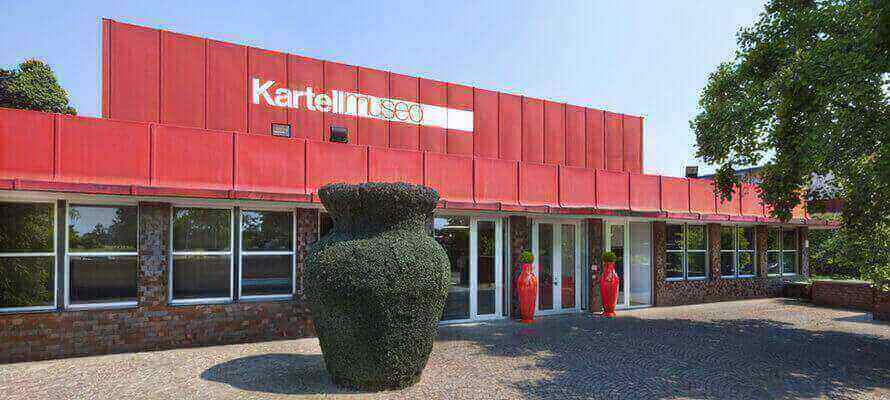
The past becomes future
Enhancing the value of the historical heritage, developing synergies, creating an emotional connection with the customer to imagine, through the construction of a space, a new company future: these are the steps that all companies can take or have taken to preserve their heritage of history, tradition and experience. We’re thinking of the famous museums tied to the mythical companies in our country, from the Branca museum to Poltrona Frau’s; from the Spazio Campari to Ducati and then Kartell, Alfa Romeo, Aurora and many others.
Brand Heritage
There was a long discussion of these organisations that have, in a certain sense, re-positioned companies by focussing on their history, during an interesting seminar organised in 2019 by RobilantAssociati alongside Museimpresa, the Italian association of company archives and museums, founded in Milan in 2001 and promoted by Assolombarda and Confindustria (Italian business associations). Francesca Appiani, curator of the Museo Alessi and member of the Museimpresa Board, contributed on the specific topic of the role museums play. She said, “Company archives and museums are an unparalleled source of inspiration for companies that want to face up to the challenges of the future, suggest new products or re-issues from the past, offer hints for marketing, communication and merchandising; they’re useful for documenting and dealing with projects, and resolving critical issues; they can ‘leave’ the company and become an exhibition, event or placement. Ultimately they create a positive wave towards the inside, where they’re food for a shared culture, and towards the outside, where they generate a sense of pride and benefit in a wide sense for the local area and the community that hosts them.”
Between brand and history
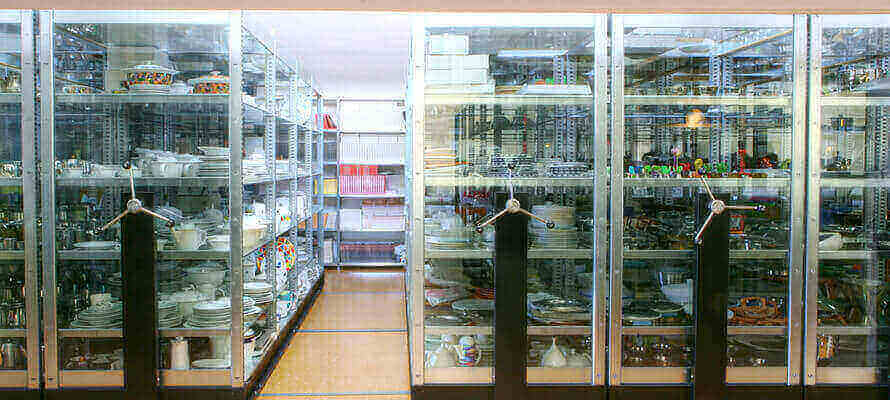
Another focus of the RobilantAssociati seminar was the attention to adding value to the Brand Heritage, companies’ historical heritage. But what are the tools to turn the brand’s history into a driving force for its future? “The tools can be different,” explained Matteo Mocchi again, “and every company can choose to use one or more of them that work in synergy together. For example, an anniversary or a special occasion may be celebrated with a limited edition of a product, as in the case of the Foscarini Lumiere table lamp in its 25th year or the Pepsi Perfect bottle, sold in a limited edition to commemorate its unique appearance in the film Back to the Future in the 1980s. Other tools include a commemorative brand, such as the one for the 50 years of B&B Italia, or a specific packaging, like Amaro Montenegro, whose pack and glass shape we re-designed for its 130th anniversary. Or again, a temporary exhibition, such as Eltro’s Generation Paisley, or the publication of a monograph like Vanity Fair’s for its centenary. Other methods use digital’s widespread narrative potential: that’s what happened with the video made by Johnnie Walker or with the site/museum produced by Chanel. To finish off then with the most institutional company archives and museums, which are the crown jewel and greatest expression of the relationship between brand and history – they too, if they’re appropriately planned, can be transformed from ‘places of memory’ in places for experience, culture, discovery and – why not? – shopping: like Emporio Carli of the Ligurian company Fratelli Carli.”
“Amaro” in a museum
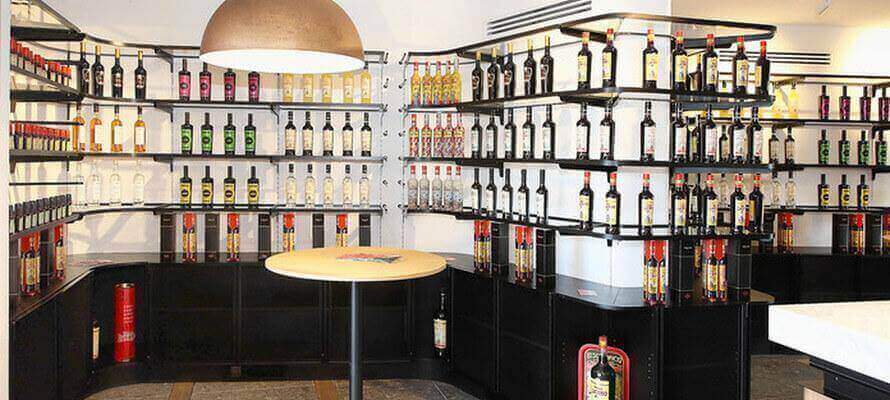
The favourite base for many of the cultural events planned for the celebrations of Matera European City of Culture 2019, the Amaro Lucano museum (which we mentioned at the beginning of this article) extends over an area of 20,000 square metres. The entrance courtyard welcomes us with a highly scented garden where we sniff the 32 herbs that make up the liqueur’s formula. There follows a flagship bar for tastings that borders large rooms for sensorial paths, food and drink masterclasses, exhibition spaces, libraries full of documents, photos and reports on the company and its founders. The path leads us finally to an immense panoramic glass window that allows us to look directly at the procedure through which the workers obtain the liqueur. Particularly interesting is the space for the historical advertising campaigns where there are outstanding examples of labels, bills and posters, and where the company motto, ‘Lavoro e Onestà’ [Work and Honesty], is written on a band held by an eagle. Advertising has been at Amaro Lucano’s side since its historical debut until today (the group invested €3 million in communication in 2017). Initially it was with high visibility print campaigns up to the renowned claim ‘Cosa vuoi di più dalla vita?’ [What more do you want from life?] of the 1990s.
Temple of Printing
It’s a museum, archive, library, print shop, gallery and auditorium. We’re talking about the TipoTeca Museum, a Type and Printing Museum in Cornuda (province of Treviso). A fundamental reference point for the print sector, this jewel of a museum offers its visitors the chance to discover that typographic art is pure beauty. Managed by a private foundation created by the brothers Franco, Silvio, Mario and Carlo Antiga, owners of Grafiche Antiga, it welcomes us with a majestic archive of type designs and print machines, which is considered one of the most important in the world. As well as the type design documents, preparatory designs and samples have been collected also with the aim of building up a ‘paper archive’, parallel to that of the types, crucial for the full understanding of the stories connected to the type designs. TipoTeca is also the location of workshops attended by designers from all over the world. With its various activities – meetings, exhibitions, workshops – it aims to enhance the cross-sector value of the typographic art, which is connected to artistic disciplines, publishing, photography, architecture, music and design.
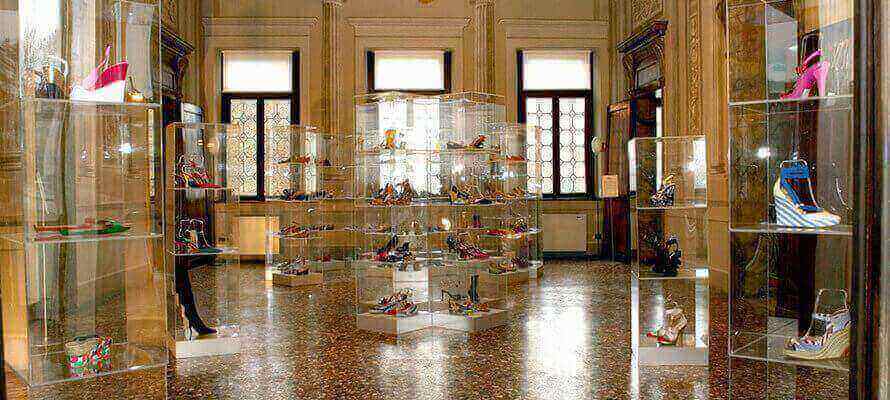
Designer shoes on display
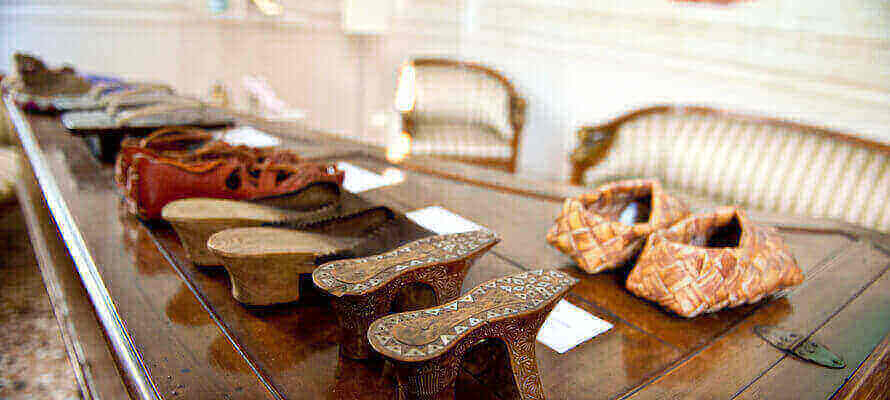
A definite trip for the ‘shoe addicted’ (and not only them) is the Museo della Calzatura [Museum of Shoe Making] at Villa Foscarini Rossi, an historic 16th century mansion on the banks of the river Brenta, which contains 1500 models of women’s shoes – produced from the end of the Second World War until today by Rossimoda (a company that since 2003 has been part of the LVMH group) – that come from work with the most prestigious designers on the international stage.
It’s an immensely charming space with frescoes, decorations and works of art that dialogue with shoes by Christian Lacroix, Dior, Kenzo, Marc Jacobs, Vera Wang, Donna Karan, Nicholas Kirkwood, Yves Saint Laurent and many others. The museum also houses a small, precious collection of Venetian shoes. We asked Roberta Di Dia, Head of Teaching and Communication, to describe to us the idea behind the founding of the museum: “The basic idea was to describe the business path of Rossimoda shoe makers,” she told us, “with the aim of outlining the company’s history, bearing witness to the knowledge of the local area, spreading knowledge of the shoe making tradition of the Riviera del Brenta, and documenting the evolution of the customs and fashions of the late 20th century, through footwear accessories. The museum,” she continued, “works also as an impressive place to bring important guests in the fashion system or people from the LVMH group.” Have you produced publications, volumes, brochures starting off from your archive material? “There are a lot of brochures that we’ve done but I’d mention a book called ‘La filosofia della Scarpa di Luigino Rossi’ edited by Francesco Jori and, at the company’s 50th anniversary, we produced a catalogue – ‘Calzature d’autore Rossimoda, 50 anni per le grandi firme’ [Rossimoda Designer ShoeMaking – 50 years for the major designers] that contains pictures of particularly important shoes for the Rossimoda company.
150 years of the “Strega” magic
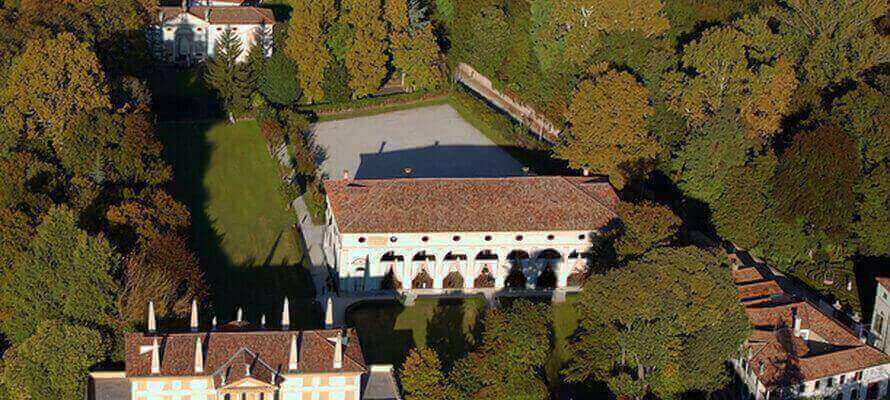
An irresistible perfume of herbs and spices inebriates the entry to Spazio Strega, in Benevento, which gathers over 150 years of the famous liqueur’s history through objects, images, equipment and perfumes. This museum’s beating heart is the room dedicated to the Premio Strega, where the history is told of the literary award with historical images, covers of the winning books and the historical background that for over 70 years has been used to nominate the winner at Villa Giulia. There’s also a zone for the iconic images that describe the evolution of Strega’s advertising and communication. Another interesting point is the room of imitations, where over 400 bottles of counterfeit Liquore Strega, discovered all over the world, are displayed. “The museum,” explains Emanuele Sacerdote, Board Member – “communicates the undertaking, the effort and the values that the Alberti family has always worked with. It’s the celebration of our history since 1860 to the present day and for the future, it commemorates our identity and our memory by showing the people and characters, the raw material and the finished products, the production and the buildings that contributed to set it out. Its particular aspect is that it’s ‘active and productive’, in the sense that inside there is the distillery that produces the famous Strega liqueur.” Along the route we also find a location for the images and icons that describe the evolution of the brand’s advertising and communication. “Still today,” Sacerdote tells us, “we use and renew our packaging with heritage images by Depero and Dudovich as an integral part of our history and our identity. For the more relevant anniversaries we renew the communication with images from unpublished collections.”