

A conversation with Nicola Guelfo, Head of Industrial Design at Italdesign, allow us to explore the state of the art and the future prospects of packaging
A conversation with Nicola Guelfo, Head of Industrial Design at Italdesign, allows us to explore the state of the art and the future prospects of packaging, benefiting from the vision of someone who understands the technical aspects of industrial design, can welcome innovations and can build them into the aesthetic and sensorial dimension. On the one hand, we have the brand’s identity and spirit, and on the other each product’s own message. It’s a circuit in which packaging is the decisive co-author of the communicative successes and relationship with the recipients.
By Marilde Motta | On PRINT #81
Packaging conveys both the brand’s world and the product’s functional promise. Do you let one or the other win out, or try to find a balancing point?
The packaging world has developed and continues to do so in all sectors. In Italdesign we’ve dealt with all of them, from food to premium to tech. In designing a package many factors play a part with many variables: the company’s brand image, functionality, quality promise, perceived quality, cost and – more and more frequently – sustainability.
From an aesthetic point of view, the packaging’s mission is to communicate the product’s value just as it does the company image so as a result, it’s fundamental to understand above all the product, its positioning and the company’s history. In this sense the cosmetics world is a reference point: the package of a perfume or cream has the task of telling a story, a dream that has to reflect a product’s values which, in itself, is “physically” identical to others.
In the tech world, the ‘usual’ Apple was the trailblazer in realising that even a power cable has to be packaged as part of a value system. Today we’re witnessing the proliferation of social videos that relate the unboxing of products of different types and get thousands of views, testifying to the interest that packaging arouses.
The functional content is often, however, inalienable from the casing, and not only for companies like Tetrapak who have built their flagship on uniqueness and technology but also for companies who want to communicate their attention on the demands of an increasingly more sophisticated clientele that pays attention to the environment. This demand is satisfied through the choice of materials but also with graphics solutions that are in line with the growing wish to respect the environment.
Information and entertainment: with the intermediation of the smartphone we can access advice, games, online sharing simply by framing the label. What can we further expect on this road?
Clearly the interactivity of systems like virtual reality, augmented reality, IOT, AI and global connectivity offered by the latest generation smartphones, combined with the use of the imminent 5G, opens up unpredictable scenarios in the packaging world too. This will come about not only because of the implementation of content, recipes and advice, or tutorials on the use of products through QR codes and bar codes but in the near future these systems will be able to organise – through chips as well – the shopping and its optimisation in a supermarket, and – in the same way – the arrangement of the fridge, or they’ll be able to answer technical questions about the electronic devices they contain.
The sensory experience is an absolute, involving value for packaging too? How can we stimulate the five senses both to strengthen brand identity and to lock down the emotional tie between brand and client?
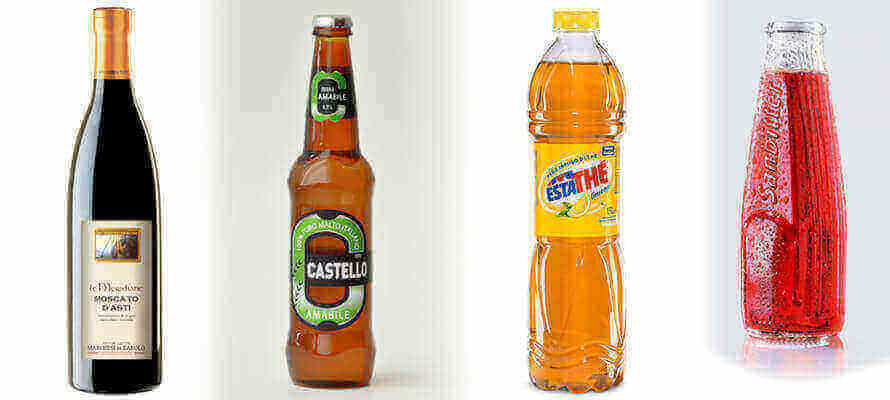
For some years we’ve been witnessing an ‘evangelisation’ by companies on their own clientele. Products in the food sector, but especially in tech, have been going through standardisation and what is coming out is the ever stronger need to tell, and sometimes create, a story that enchants and conquers the brand’s ‘disciples’. This task has been entrusted to advertising and marketing agencies but an important role undoubtedly lies with packaging. More and more companies are asking us for particular attention to be paid to the materials, their combination, their processing and their reuse. We’re witnessing a return to simple materials like paper, wood and metal, but enhanced and re-invigorated by innovative treatments that intensify the sensorial experience during the first visual and tactile contact with the product’s image and history even before getting to the product itself. Plastic itself – in all its thousands of varieties – is being reinvented as an organic, sustainable material. The promise is the guarantee of a value. The ‘disciple’ becomes affectionate towards and connected to what a brand represents through its marketing, advertising and packaging choices, and creates his or her lifestyle almost out of the product itself. The act of purchasing that container, that material, that graphic becomes part of the statement of his or her own personality.
‘Made in Italy’, in the Food and Beverage sector, expresses many points of excellence that should be preserved, apart from being made known. How can packaging become a tool against counterfeiting and for promotion?
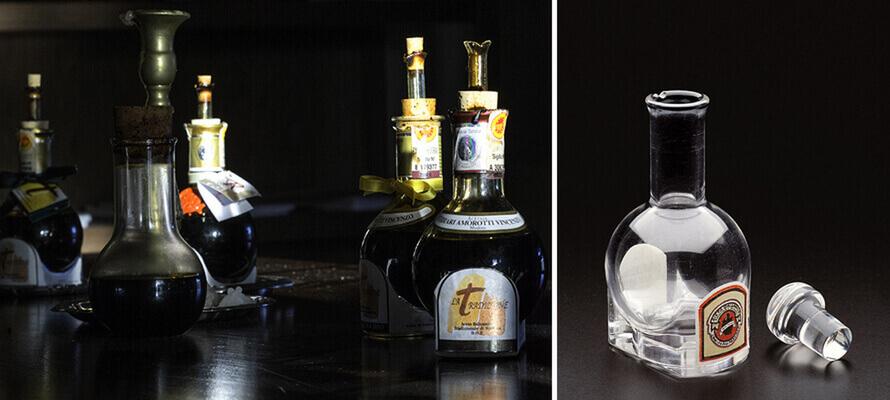
The choice of innovative technologies and materials by historic brands and by excellent Italian products in the development of its own products’ packaging will increasingly become a must. Blister packs, vacuum packs, jars, tubes will become – despite their effectiveness – synonymous with low quality, insufficient attention to the product and a serial, industrial and anonymous approach to foodstuffs. High-quality products’ added value must pay attention to how they are preserved and put forward to an increasingly demanding public. The form in which Italian excellence is put forward is Italian excellence itself.
Let’s look at the situation of Eataly and how it’s influenced the food sector: its way of reinventing the supermarket, lifting it up to a space for sharing, catering with and selecting excellence has spread to the entire retail market, compelling historic brands and multinationals like Coop, Auchan, Esselunga to significantly raise the level of what they have on offer. The supermarket is becoming an experience and packaging a new way of understanding foodstuffs, a place/rite to testify to its status also through food and its selection/consumption.
The e-commerce in luxury goods has only taken over the function of commercial transaction but hasn’t yet replaced the relationship dimension. What contributions can the packaging for this segment make in the future?
Given the irreplaceability of the physical store’s relationship and human experience in its entirety – especially for luxury goods – here too, apart from the attention to materials, functionality and refinement, packaging will have to play a role of mediator between the brand and its high-level clientele.
Technology and innovation in the future could offer the chance of, at least in part, recreating that attention to clients that boutiques pay. Through personalised packaging with specific, personalised information material with which, for example, you can get access via a QR code to multimedia content that refers exclusively to the purchaser, or to dedicated contact line for every type of demand, request or complaint. Without getting too far into science fiction in the relatively near future it isn’t impossible that we’ll have packaging that once it’s activated will recreate a holographic experience of an assistant or personal shopper who can accompany us in the discovery of the purchased product.
The future is being written every day, on packaging too.
Nicola Guelfo,
Head of Industrial Design at Italdesign
He studied Business Administration and foreign languages and his career in Giugiaro Design began in 1984, in the pre-digital era when designs were produced using manual techniques that required very high abilities and real artistic sense. His activity developed over the years, taking on increasingly responsible posts. Since 2000, he has been Head of Industrial Design at Italdesign, where he leads and coordinates research into design concepts and their transformation into concrete projects, with real value for whoever benefits from them.
Italdesign
If Giorgetto Giugiaro, who founded the company in 1968, was the designer of the cars that changed the game in automobile history, then Italdesign has explored, developed and brought into production designs in a variety of fields. Today the company, with its many branches all over the world, works in product design, graphic and communications, corporate identity, food, packaging, and in cutting edge sectors like aeronautics and transport understood in the widest possible sense.