The Renaissance of Magazines
For years, newsstands were the centre of every neighbourhood and magazines a weekly ritual, but the arrival of online news has profoundly changed readers' habits. However, periodical publishing is undergoing a transformation, and projects with a strong identity are emerging. There is room for hybrid and research formats, in which the expertise of the printer is an integral part of the project philosophy. We discussed this with Anna Frabotta (Frab's), Arianna Cavallo (Il Post) and Sveva Ciaravolo (Corraini Edizioni).
By Roberta Ragona | On PRINTlovers 107
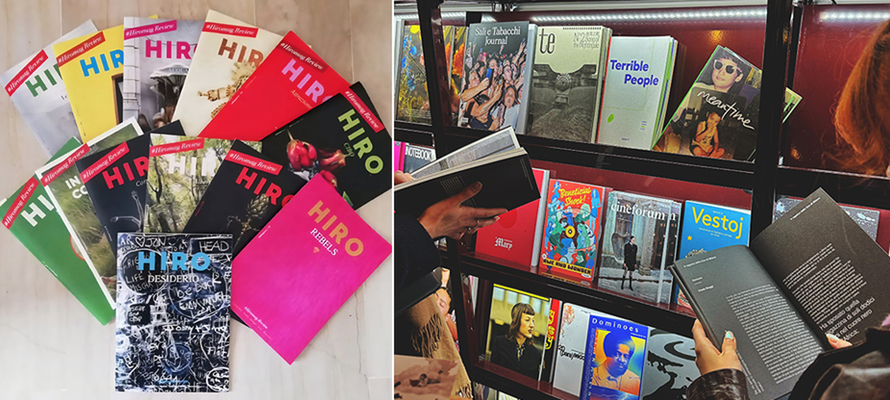
There are still those who love periodicals, but their habits have definitely changed compared to the past. In the space created by online information, new periodicals have emerged that use paper as a medium for content that is destined to last. From independent magazines to bookzines, from bookshops to museums, passing through newsstands, it is necessary to reach those who love magazines in the right space. Anna Frabotta, founder of Frab's, a shop dedicated to independent magazine culture, says: “I started with an Instagram profile where I talked about a magazine from my collection every day. A community gathered around it. So I started with an e-commerce site, and then opened Frab's as a physical shop, a place to spread magazine culture. Every week we hold events and organise a festival, Mag to Mag, the only one in Europe exclusively dedicated to independent magazines.”
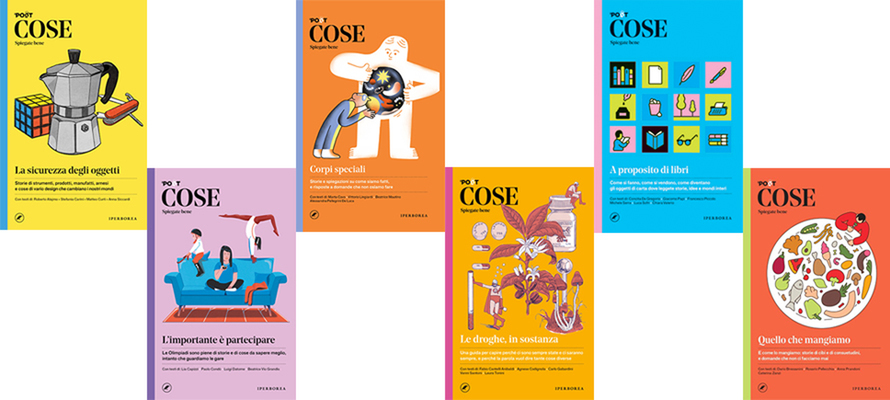
Reaching audiences in the spaces they inhabit can also mean transferring a newspaper's voice from online to print, as Arianna Cavallo, a journalist who worked for “Il Post” on the design of the magazine “Cose,” tells us. The magazine was created to showcase a very rich archive through thematic collections. "We created a prototype using a print-on-demand service, but when it arrived, we saw that it didn't work; we had underestimated the importance of the graphic design. A few years later, we revisited the project thanks to our collaboration with Iperborea, which in 2020 launched “Passenger”, a periodical in which each issue was dedicated to a different travel destination. From there, we imagined offering a comprehensive overview of a theme in each issue, through recurring columns and a glossary, visually marked with colours and graphic design. The design work carried out with Giacomo Papi, Iperborea, and the Tomo Tomo studio for the graphics brought the content into a format with different limitations from those encountered online: it was a matter of translating the voice of “Il Post” into a different medium.”
But how do you design a periodical intended to be collected and consulted? First of all, by taking into account the fact that it is a format with its own specific characteristics, as Frabotta points out: “In Italy, magazines are still seen as a secondary product compared to books, yet they can cost as much as a book, if not more. The editorial design of a collectable magazine is different from a consumer magazine: the paper is more durable and higher quality, the type of printing is different – often offset – and the formats are not necessarily standard. The bindings are more robust, sometimes paperback or thread-sewn, but also with Swiss or Bodonian bindings. The production cost of a single piece can be higher because we work on actual numbers, knowing that almost nothing will get scrapped.”
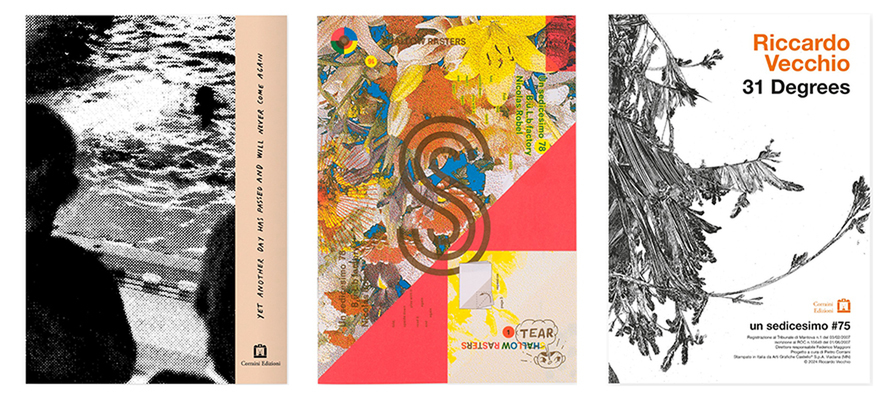
An example of a periodical publication that has made graphic design its raison d'être is “Un Sedicesimo”, as Sveva Ciaravolo explains: “It originated in 2007 from an idea by Pietro Corraini for a magazine that did not talk about graphics but did graphics, entrusting each issue to a different artist. For us, for the artists and for the printers, it is a space for research, with total freedom in terms of content and construction: “Un Sedicesimo” has no graphic constraints, it has used different papers, Pantone inks, cuts and die-cuts, some were a single folded sheet, in other cases they are bound. The only fixed aspect is the “sedicesimo” (the sextodecimo), a format optimised for printing because each machine sheet contains two sixteen-leaf sections. Such a heterogeneous work, in terms of materials, techniques, and processes, means that printers are partners in the project, engaging in a continuous dialogue. The artists make requests, and the printer responds with the best proposal for the project, including the order of colours, as in the case of the latest “Sedicesimo”, in which one of the Pantones is metallic, and, to achieve certain overlaps, you should rely on the expertise of the printer.”
In short, the specificities of periodical printing should be an integral part of the project's philosophy, from the timing to the potential audience to be reached. The main sales channel, whether newsstands, bookshops or dedicated spaces, should be part of the editorial design phase.
But who is the audience for this range of such diverse publishing products, and how can it be reached? Subscribers are often at the centre, but they are only part of the potential audience, as Arianna Cavallo points out: “Finding a balance between a page count that allows a topic to be dealt with exhaustively and printing costs is a design issue if you want to make a product that fits within our readers’ cultural consumption budget. At first, two issues of “Cose” were published per year; now there are four, and they are always offered in preview to subscribers: they are our avid readers, who also give it to people who did not read “Il Post” to introduce them to our work. The magazine is a calling card for our way of doing journalism: the newspaper, but also the newsletters and podcasts.”
Subscribers are also at the heart of “Un Sedicesimo”, as Sveva Ciaravolo explains: “First it goes to subscribers, then there is the communication, so that it is a total surprise for those who trust us. From the outset, we have aimed to keep the sale price as low as possible to make it accessible to a young audience and students, while still offering them a quality magazine featuring graphic and artistic research. “Inventario” (the bookzine on design edited by Beppe Finessi, who also won the Compasso d'Oro in 2014) is supported by the Foscarini company, in a purely patron role. Once sold out, neither “Un Sedicesimo” nor “Inventario” are reprinted. In both cases, the work on the magazines is integrated with the publishing house. Once they reach subscribers, the following steps are bookshops and bookstores around the world, particularly museum bookshops. In the last couple of years, “Un Sedicesimo” has also been on display in spaces dedicated to graphics and design, such as Salotto New York and the MMCA Museum in Seoul.”
Amidst all this ferment, newsagents and large publishers have also begun to encounter a world very different from that of the periodical press of the past, as Anna Frabotta notes: “Lately, many publishing groups are launching publications similar to independent magazines in terms of language and format to target specific audiences. The attention of large groups can give a boost to the sector, but it risks taking oxygen away from the independents from whom it draws inspiration.”
At the heart of it all are the habits of two generations of readers who experience the relationship with periodicals very differently, as Arianna Cavallo points out. "This comeback perhaps stems from the intersection between millennials, who grew up with physical media and experienced the advent of the internet, and Gen Z, who did not experience magazines as a ubiquitous presence and are discovering the appeal of the format. Subcultures have always found their aspirational and gathering space in magazines. Magazines and books offer a moment of isolation and concentration compared to social media, where reading tends to be more fragmented and disjointed."
It is precisely on this audience of old and new enthusiasts that the second life of a sector that has changed shape but continues to be relevant, albeit in different ways than in the past, is being built. Anna Frabotta concludes: “Young people buy magazines based on the content of the issue, rarely becoming attached to a particular title. Authentic collectors are often older, have spending power and are methodical: if a magazine comes out with a variant cover, they buy all the variants. Between these two extremes is the majority of the public, including many professionals in the creative sectors, for whom a research magazine is like a work tool. Then there are the curious and the enthusiasts. In recent years, many creative academies have introduced a publishing course on magazine design: before, it didn't carry as much weight. When I see twenty-year-old girls and boys in the shop, I think we are conveying the importance of one of the few things that can become an archive and tangible testimony of an era.”
19/12/2025


