See you in the shop
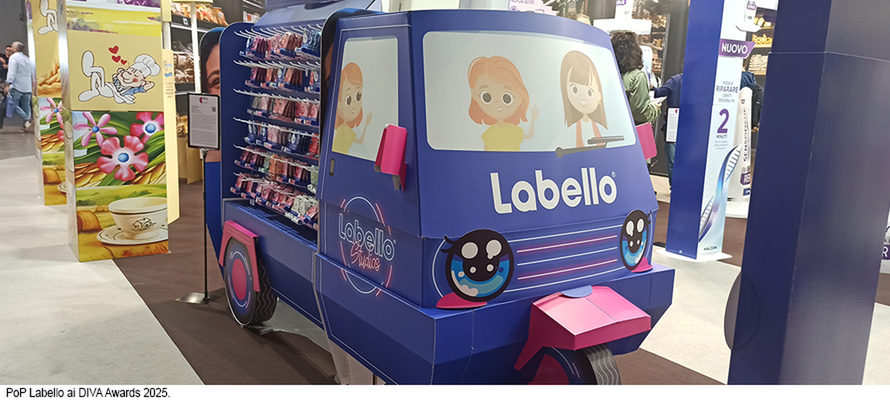
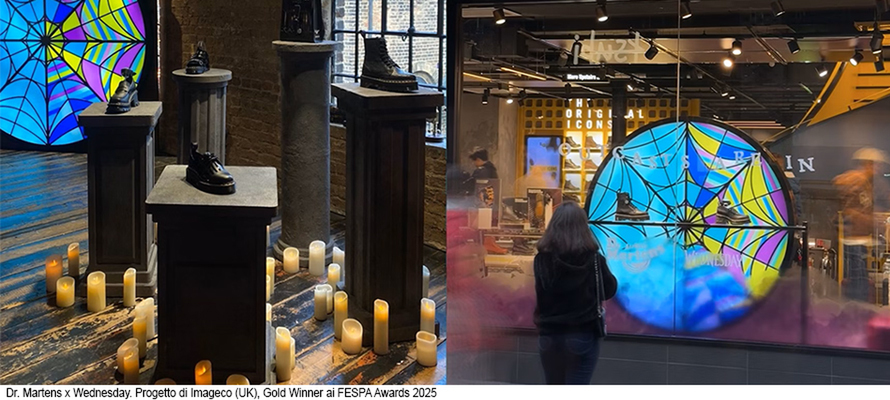
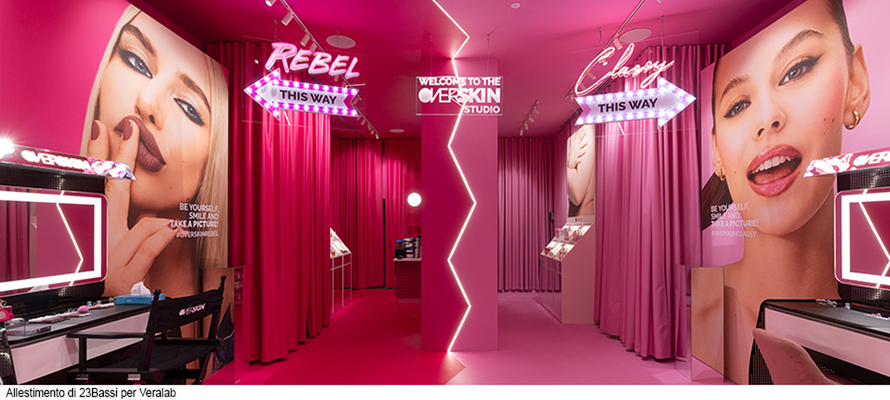
It's a commercial space, but also a place for connections. To stay strategic, shops must increasingly prioritize the quality of the experience: printed materials, interior design, interactive technologies, and people must all speak the same language. We review the retail world and its “print mix” with the help of FESPA Italia, 23Bassi, and Creostudios.
by Michela Pibiri | On PRINTlovers 108
It's true that online commerce appears to be resilient, even though the surge during the pandemic has undergone a predictable correction. However, this does not diminish the renewed importance of brick-and-mortar stores, which remain central precisely because of what e-commerce cannot provide: relationships, personalized service, and brand experience, created through an atmosphere generated by the intelligent combination of various factors. Although this is true across all product sectors, it is most apparent in the non-food segment, where buying motivations differ from those of necessities. In Italy, the modern non-food retail network includes over 30,000 stores (data from the GS1 Italy Non-Food Observatory), with 43% located in central urban areas, although there has been a steady shift toward shopping centres and suburban locations. These statistics are part of a larger picture in which the formats, roles, and locations of stores are being redefined—often with smaller retail spaces, but with more services and enhanced customer experiences.
The shop as a medium
This shift is also highlighted by the Digital Innovation in Retail Observatory at the Politecnico di Milano, which defines a clear trend: the store is becoming the centre of omnichannel strategies, where physical and digital channels collaborate. The latest data from the Politecnico's retail communication working group shows that shop digitization is now a fundamental tool. In 2024, leading Italian retailers allocated an average of 3.2% of their revenue to technological innovation projects (up from 2.5% in 2022), focusing mainly on interactive kiosks and in-store information screens. Nearly 40% of top groups have already invested in digital kiosks, and over a third in monitor-based communication systems. Meanwhile, retail media—advertising through retailer channels—is emerging as a major trend. The store is increasingly becoming a communication platform, combining physical and digital spaces—signage, screens, kiosks, in-store radio—that enable targeted messages to be delivered near the point of sale.
Digital natives in search of physicality
On the demand side, the “Gen Z and Retailers” survey, conducted by Retail Institute Italy and Ipsos, confirms that physical stores remain a key source of information for young people aged 14 to 29, helping them navigate the abundance of stimuli and offers, as well as serving as a place for inspiration and hands-on experience. Generation Z expects spaces that “breathe technology and innovation” throughout the shopping process, while also demanding personalization, guidance, and opportunities to participate in content creation. The shop thus becomes a platform for messages and micro-experiences that must be consistent, recognizable, and easy to update. In short, in-store communication should not be viewed as just signs, displays, and screens, but as a coordinated system with a unified narrative structure.
Universal design for accessible shops
In this scenario, the issue of accessibility can no longer be postponed. A useful example is the “Guidelines for Commerce - Solutions for Accessibility” developed by the Municipality of Ferrara, inspired by the principles of Universal Design and translated into practical requirements for the quality of spaces, service, and customer relations. The document goes into detail not only on architectural elements but also on often-overlooked aspects such as the design of the checkout counter, fitting rooms, tactile and visual signage, and furniture arrangement, with dimensions, heights, tactile paths, and Braille use indicated. These principles also encourage a rethink of in-store communication: clear text, appropriate colour contrasts, understandable icons, consistent message positioning along the route, and reduced “noisy” sensory stimuli. A shop designed according to the principles of universal design allows people with different abilities, ages, and levels of digital familiarity to move around, find their way, and make decisions with greater autonomy.
Printing as part of narrative architecture
If brand identity in retail is built through visual languages and material elements, printing plays a crucial role in layout design. Andrea Roscini, co-founder with Chiara Frigerio of the Milan-based studio 23Bassi, which specializes in interior design, retail, and hospitality, explains this well: “Printing is a very powerful narrative tool. I’m thinking of the project we did for Veralab: the floors were printed with a geometric pattern that distorts to create an almost dystopian and artistic effect. Printing has thus become part of the “brand language,” making it recognizable at a glance and also serving as an experiential element capable of engaging the public." For Roscini, advances in printing technology and materials are key to the expressive potential of installations. “Today, synchronized printing technologies, which combine graphics and texture, enable extraordinary results on many substrates. Vinyl materials are also undergoing significant evolution: they are high-performance, durable, and easy to wash. The vinyl flooring created for Veralab, for example, has only two joints, ensuring perfect cleanliness and blending visual appeal with practical efficiency.” Finishing also plays a vital role: “Today, it is possible to give surfaces a creative touch with materials and visual effects that produce extraordinary aesthetic and tactile results. Especially in retail, these materials allow for great design freedom and an excellent balance between quality, sustainability, and cost.” Designing with durability and reuse in mind is also very important: “One of our retail projects, which started as a pop-up, has now reached its fifth installation thanks to reuse and adaptation of the same materials in different settings, with targeted modifications each time. Over 4-5 years, it has maintained consistency and evolved, becoming an example of concrete sustainability linked to anti-waste practices and space transformation. For us, sustainability is above all a comprehensive design approach— a culture of reuse that we also want to share with the brands we collaborate with,” concludes Roscini.
PoP, the backbone of in-store marketing
Balancing the physical and digital aspects of the point of sale, traditional PoP needs to evolve to meet changing space, visibility, and budget demands from brands. Eladia Sillo and Giovanna Guglielmi, respectively Senior Project Manager and Operations Manager at the Turin-based agency Creostudios, discuss how the design and production of printed in-store communication materials are changing and the important role suppliers play in offering solutions. “Recently, communication via screens and LED walls has become increasingly common,” says Guglielmi. “However, this does not replace print, but complements it. We are increasingly being asked to design hybrid systems, integrating digital totems into promotional islands.”
No matter how much digital technology advances, the physical aspect of PoP remains a key part of in-store marketing. “Traditional PoP is holding up well: arches, half arches, floor stands, totems, anti-theft devices, and clothing for digital totems. Displays remain essential: counter displays are still very important for brands,” says Sillo. But today's challenge is to attract attention without being intrusive: in the visual density of large-scale retail, brands are seeking more targeted and lightweight solutions. “On the shelves, materials that occupy little space and cover minimal product area are preferred: the request is always the same, it must be “wow” but in very reduced dimensions.”
In the consumer electronics sector, the expansion of digital surfaces is rewriting the logic of display: in new openings and renovated stores, “large spaces are dedicated to digital, but this creates new opportunities to radically rethink printed material.” One example is the bold entrance adopted by some stores: “The height of the materials is limited, creating a need for more elegant, lower, more integrated solutions.” This morphology has also given rise to special projects such as “the adhesive football pitch created for the European Championships,” which used the floor as a narrative surface, Eladia Sillo continues.
Another trend is the decrease in the number of teams dedicated to assembly: “They ask us for objects that are easy to manage, that work for the point of sale and simplify logistics,” explains Guglielmi. Simplification also applies to installation: “The need is for materials that are easy to assemble: there must be a wow effect, but with streamlined and intuitive structures. That's why we always provide very detailed assembly instructions, sometimes even videos.”
The ability to envision new and adaptable solutions is becoming more crucial, and suppliers play a key role in this by supporting the design process with participation and proactive skills: “You need the right graphic communication and the right physical structure,” explains Guglielmi, “because you have to put yourself in the shoes of those who will be setting up the display, and this is also part of the service we offer to brands.”
by Michela Pibiri | On PRINTlovers 108
It's true that online commerce appears to be resilient, even though the surge during the pandemic has undergone a predictable correction. However, this does not diminish the renewed importance of brick-and-mortar stores, which remain central precisely because of what e-commerce cannot provide: relationships, personalized service, and brand experience, created through an atmosphere generated by the intelligent combination of various factors. Although this is true across all product sectors, it is most apparent in the non-food segment, where buying motivations differ from those of necessities. In Italy, the modern non-food retail network includes over 30,000 stores (data from the GS1 Italy Non-Food Observatory), with 43% located in central urban areas, although there has been a steady shift toward shopping centres and suburban locations. These statistics are part of a larger picture in which the formats, roles, and locations of stores are being redefined—often with smaller retail spaces, but with more services and enhanced customer experiences.
The shop as a medium
This shift is also highlighted by the Digital Innovation in Retail Observatory at the Politecnico di Milano, which defines a clear trend: the store is becoming the centre of omnichannel strategies, where physical and digital channels collaborate. The latest data from the Politecnico's retail communication working group shows that shop digitization is now a fundamental tool. In 2024, leading Italian retailers allocated an average of 3.2% of their revenue to technological innovation projects (up from 2.5% in 2022), focusing mainly on interactive kiosks and in-store information screens. Nearly 40% of top groups have already invested in digital kiosks, and over a third in monitor-based communication systems. Meanwhile, retail media—advertising through retailer channels—is emerging as a major trend. The store is increasingly becoming a communication platform, combining physical and digital spaces—signage, screens, kiosks, in-store radio—that enable targeted messages to be delivered near the point of sale.
Digital natives in search of physicality
On the demand side, the “Gen Z and Retailers” survey, conducted by Retail Institute Italy and Ipsos, confirms that physical stores remain a key source of information for young people aged 14 to 29, helping them navigate the abundance of stimuli and offers, as well as serving as a place for inspiration and hands-on experience. Generation Z expects spaces that “breathe technology and innovation” throughout the shopping process, while also demanding personalization, guidance, and opportunities to participate in content creation. The shop thus becomes a platform for messages and micro-experiences that must be consistent, recognizable, and easy to update. In short, in-store communication should not be viewed as just signs, displays, and screens, but as a coordinated system with a unified narrative structure.
Universal design for accessible shops
In this scenario, the issue of accessibility can no longer be postponed. A useful example is the “Guidelines for Commerce - Solutions for Accessibility” developed by the Municipality of Ferrara, inspired by the principles of Universal Design and translated into practical requirements for the quality of spaces, service, and customer relations. The document goes into detail not only on architectural elements but also on often-overlooked aspects such as the design of the checkout counter, fitting rooms, tactile and visual signage, and furniture arrangement, with dimensions, heights, tactile paths, and Braille use indicated. These principles also encourage a rethink of in-store communication: clear text, appropriate colour contrasts, understandable icons, consistent message positioning along the route, and reduced “noisy” sensory stimuli. A shop designed according to the principles of universal design allows people with different abilities, ages, and levels of digital familiarity to move around, find their way, and make decisions with greater autonomy.
Printing as part of narrative architecture
If brand identity in retail is built through visual languages and material elements, printing plays a crucial role in layout design. Andrea Roscini, co-founder with Chiara Frigerio of the Milan-based studio 23Bassi, which specializes in interior design, retail, and hospitality, explains this well: “Printing is a very powerful narrative tool. I’m thinking of the project we did for Veralab: the floors were printed with a geometric pattern that distorts to create an almost dystopian and artistic effect. Printing has thus become part of the “brand language,” making it recognizable at a glance and also serving as an experiential element capable of engaging the public." For Roscini, advances in printing technology and materials are key to the expressive potential of installations. “Today, synchronized printing technologies, which combine graphics and texture, enable extraordinary results on many substrates. Vinyl materials are also undergoing significant evolution: they are high-performance, durable, and easy to wash. The vinyl flooring created for Veralab, for example, has only two joints, ensuring perfect cleanliness and blending visual appeal with practical efficiency.” Finishing also plays a vital role: “Today, it is possible to give surfaces a creative touch with materials and visual effects that produce extraordinary aesthetic and tactile results. Especially in retail, these materials allow for great design freedom and an excellent balance between quality, sustainability, and cost.” Designing with durability and reuse in mind is also very important: “One of our retail projects, which started as a pop-up, has now reached its fifth installation thanks to reuse and adaptation of the same materials in different settings, with targeted modifications each time. Over 4-5 years, it has maintained consistency and evolved, becoming an example of concrete sustainability linked to anti-waste practices and space transformation. For us, sustainability is above all a comprehensive design approach— a culture of reuse that we also want to share with the brands we collaborate with,” concludes Roscini.
PoP, the backbone of in-store marketing
Balancing the physical and digital aspects of the point of sale, traditional PoP needs to evolve to meet changing space, visibility, and budget demands from brands. Eladia Sillo and Giovanna Guglielmi, respectively Senior Project Manager and Operations Manager at the Turin-based agency Creostudios, discuss how the design and production of printed in-store communication materials are changing and the important role suppliers play in offering solutions. “Recently, communication via screens and LED walls has become increasingly common,” says Guglielmi. “However, this does not replace print, but complements it. We are increasingly being asked to design hybrid systems, integrating digital totems into promotional islands.”
No matter how much digital technology advances, the physical aspect of PoP remains a key part of in-store marketing. “Traditional PoP is holding up well: arches, half arches, floor stands, totems, anti-theft devices, and clothing for digital totems. Displays remain essential: counter displays are still very important for brands,” says Sillo. But today's challenge is to attract attention without being intrusive: in the visual density of large-scale retail, brands are seeking more targeted and lightweight solutions. “On the shelves, materials that occupy little space and cover minimal product area are preferred: the request is always the same, it must be “wow” but in very reduced dimensions.”
In the consumer electronics sector, the expansion of digital surfaces is rewriting the logic of display: in new openings and renovated stores, “large spaces are dedicated to digital, but this creates new opportunities to radically rethink printed material.” One example is the bold entrance adopted by some stores: “The height of the materials is limited, creating a need for more elegant, lower, more integrated solutions.” This morphology has also given rise to special projects such as “the adhesive football pitch created for the European Championships,” which used the floor as a narrative surface, Eladia Sillo continues.
Another trend is the decrease in the number of teams dedicated to assembly: “They ask us for objects that are easy to manage, that work for the point of sale and simplify logistics,” explains Guglielmi. Simplification also applies to installation: “The need is for materials that are easy to assemble: there must be a wow effect, but with streamlined and intuitive structures. That's why we always provide very detailed assembly instructions, sometimes even videos.”
The ability to envision new and adaptable solutions is becoming more crucial, and suppliers play a key role in this by supporting the design process with participation and proactive skills: “You need the right graphic communication and the right physical structure,” explains Guglielmi, “because you have to put yourself in the shoes of those who will be setting up the display, and this is also part of the service we offer to brands.”
06/02/2026


