Longanesi, non-conformity and bibliodiversity
Founded almost 80 years ago by Leo Longanesi, a publisher-craftsman with Bodoni's typography manual on his desk, the publishing house of the same name is now part of Gems and stands out in the field of fiction, non-fiction and miscellaneous works. Amidst digitisation, new approaches to reading and the economic situation, we discussed current and future challenges with Giuseppe Strazzeri, publishing director at Longanesi.
By Michela Pibiri | On PRINTlovers 107
Leo Longanesi was a non-conformist, a publisher with a passion for typography – it was his friend, the painter Giorgio Morandi, who passed on to him a love of researching and recovering typefaces – as well as a writer and artist; in 1946, he founded the publishing house in Milan that still bears his name and the magazine “Il Libraio”, a publishing information bulletin.
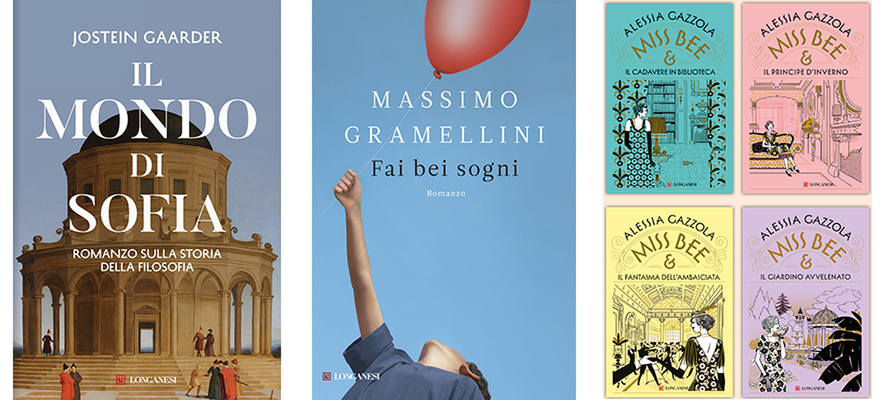
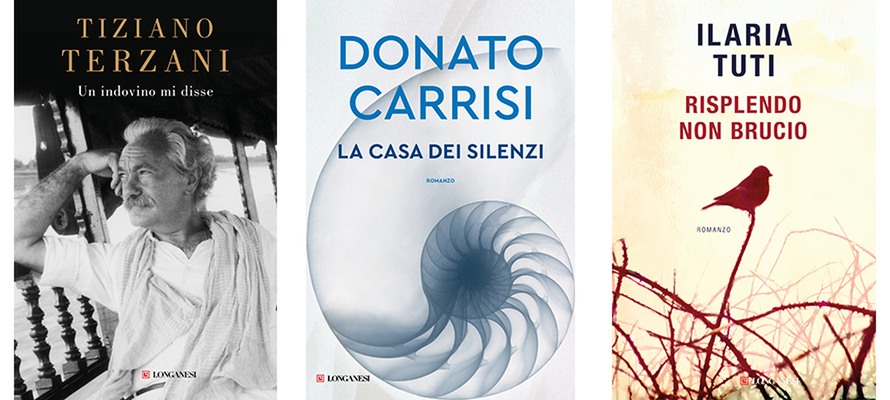
Taken over by Messaggerie Italiane in 1977 after various setbacks and restored to its former glory in the 1980s and 1990s by Mario Spagnol, Longanesi is now part of the Messaggerie Holding Group as part of Gems (Gruppo Editoriale Mauri Spagnol). It retains its founder's original DNA: a vocation for thinking outside the box, originality of proposals and a 360-degree horizon spanning fiction, non-fiction and miscellaneous works. Among its great successes of the past, the publishing house counts authors and titles such as “The Neverending Story” by Michel Ende, “Sophie's World” by Jostein Gaarder and “Another Spin on the Merry-Go-Round” by Tiziano Terzani, alongside names such as Donato Carrisi, Massimo Gramellini, Ilaria Tuti and Alessia Gazzola. We spoke with Giuseppe Strazzeri, Longanesi’s publishing director since 2009, to look at publishing as a whole and the specifics of the publishing house.
What are the publishing genres that Longanesi is focusing on most today, and how is distribution structured?
Longanesi issues around 100 new titles per year, approximately 60% of which are fiction and 40% non-fiction and miscellaneous. The genres that are traditionally most characteristic of the publishing house, and which are most immediately recognisable to booksellers, are crime and thrillers. Authors such as James Patterson, Lee Child, but also Donato Carrisi and Alessia Gazzola have made Longanesi a mark of quality entertainment. Thanks to widespread distribution, Longanesi books are available simultaneously across all sales channels, from retail to large-scale distribution, digital and, more recently, audiobooks, in varying percentages depending on genre and type of author. There are established crime fiction writers, such as Child and Patterson, whose sales are evenly split between print and digital formats, while for non-fiction, the digital share is still largely in the minority.
Can paper books, e-books and audiobooks coexist profitably in your strategy?
Absolutely yes, and the recent take-off of a market such as audiobooks, which has been growing steadily for a few years after decades of substantial stagnation, clearly indicates that there is a new way of using publishing products, which should be supported and followed closely because it has its own features. For example, we now know for sure that the success of an audiobook can be dictated by the quality of its reader, according to criteria that are not purely about delivery (the audiobook reader, although it may seem the opposite, is not an actor and has different characteristics). As for ebooks, they are now a method that is commonplace for a minority of the market that does not seem to want to grow beyond 10% of the market, except for individual authors or specific genres, especially those linked to series, which encourage digital use well above this average percentage.
In a highly competitive market, how important are the optionals in terms of format, graphics, paper, printing techniques and binding in the success of a paper book?
There is undoubtedly an apparently counterintuitive and therefore fascinating phenomenon underway, namely the fact that recently the segment of younger readers (and perhaps I should more correctly say female readers) - I am talking about the so-called “Young Adult” or “New Adult” segment, between adolescence and early adulthood, i.e. the most “digitally native” group imaginable - increasingly seems to appreciate editions with high-quality graphics, non-standard formats, “rich” materials such as metallic foils or “soft touch” surfaces, or editions with special features such as “sprayed edges”. These features are mainly sought after in the world of romance, particularly in its more contemporary form known as “romantasy”, a mix of romance and fantasy, but the same can be seen in the genres of pure fantasy and science fiction. The purchase of a tangibly embellished physical object seems to have a double effect on this audience: firstly, an “Instagram” (or TikTok) effect, in other words, an object that is nice to share on social media; and, secondly, a “presence” effect, i.e. an object to take with you to presentations and book signings by authors, real events where the digital communities of these readers come together, united by their passion for the same author and for the book as a tangible and valuable testimony to their passion.
Are there any examples of publishing projects that you’ve had to manage with your suppliers outside the usual creative or industrial standards?
At Longanesi, such cases are rare, as we are a rather traditional “trade” publisher and do not have any illustrated or non-standard format series. A historic exception for Longanesi is the original edition of “The Neverending Story”, which features two colours for printing: red and aqua green. Red represents scenes from the real world, while aqua green represents the world of Fantàsia. We reissued this edition to mark the anniversary of its first publication in 2021, and fans of this timeless book greatly appreciated it.
What aspects do you pay most attention to – both as a publishing house and as a Group – when choosing supply chain partners for book production?
Without a doubt, alongside the undisputed quality of printing, flexibility in production times: books that are not commissioned but are the result of individual creativity, particularly fiction, have delivery times that are closely linked to the author's craftsmanship, and delivery and printing times cannot always be guaranteed in advance with absolute precision. Therefore, suppliers need to be both adaptable and reliable, not least because we are talking about print runs that can sometimes pass 100,000 copies.
What role does environmental sustainability play today in the book production chain?
One thing is now certain, at least in our country: for the vast majority of readers, books remain paper books, and there are no indicators to suggest that this situation will change in the short or medium term. This necessarily involves the implementation of sustainability policies, ranging from the now widespread use of PEFC-certified paper in all the group's publishing houses, to a careful policy of paper recycling and document dematerialisation, to increasingly careful management of reprinting, returns and pulping cycles, as well as the progressive reduction of packaging.
AIE (Italian Publishers Association) data for 2025 point to a general contraction in the Italian publishing market. How is Longanesi dealing with the economic situation, and what proposals could be made to increase the interest of different audiences in the use and purchase of books?
I believe these are cyclical and periodic trends, specifically linked, as far as the present moment is concerned, to a lower spending intention on the part of Italians due to a widespread climate of uncertainty and unease that obviously does not only affect the book sector but also other sectors of goods that we can define as luxury items. I believe that the only possible response that trade publishing can offer to these periods of stagnation is publishing creativity and product reinvention. A successful example I can give in this regard is the recent series of novels by Alessia Gazzola, a best-selling author who has been on the market for more than a decade, about the new character of Miss Bee. For these novels, compared to the established publishing tradition reserved for this author, we have rethought a different format, moving from a hardback with dust jacket to a paperback with flaps, which, on the one hand, has reduced production costs and, on the other, has allowed us to adopt new graphic and production enhancements such as colour-printed endpapers and the use of metal cutting for both lettering and to embellish the cover. All this, combined with a radical change in the release schedule (three novels at intervals of only three months, with a fast pace that was intended to mimic the anticipation mechanisms of television series), determined the particular success of the initiative. The author's creative inspiration, packaging, publishing and planning thus interacted in a new way, enabling a well-established writer, whom the publisher could have opted for cautious continuity, to see her print runs and popularity grow further, even in an unfavourable market situation.
28/11/2025


